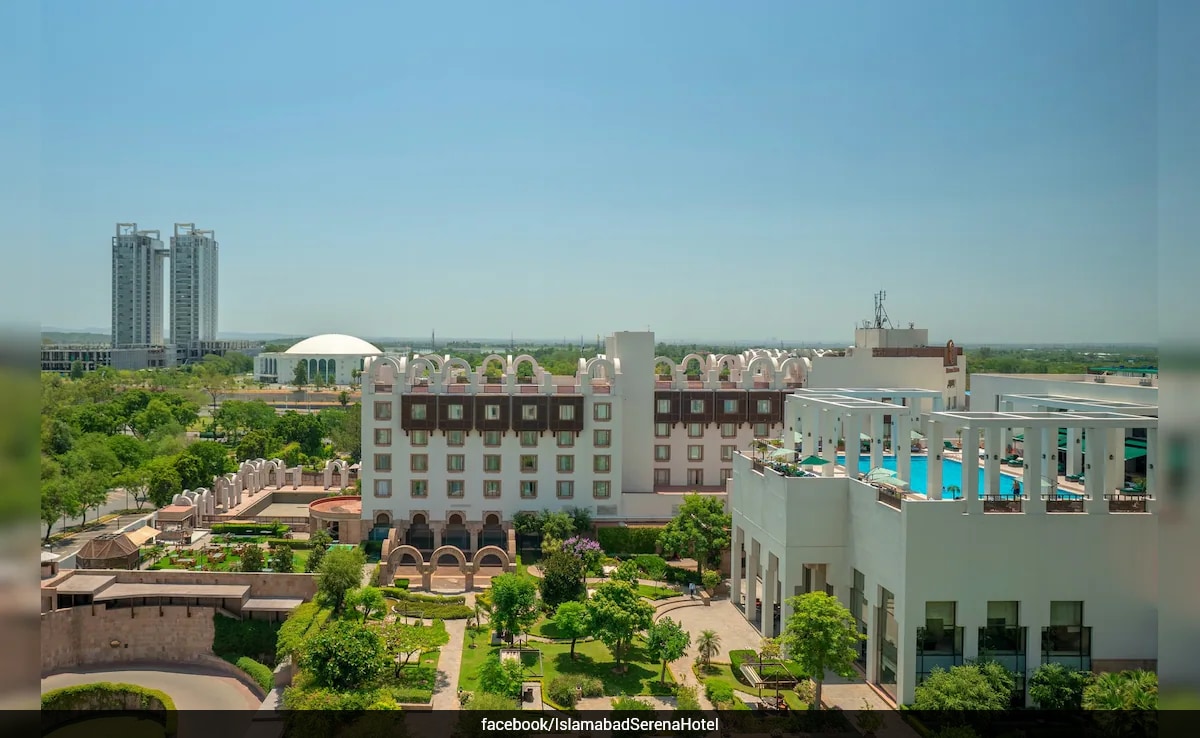
If you're trying to book a room at the Islamabad Serena Hotel this week, you’re out of luck. The most prestigious address in Pakistan's capital has effectively turned into a fortress. On April 8, 2026, the management issued a blunt notice: every single guest had to be out by 5:00 PM. The government of Pakistan officially requisitioned the entire property.
Why the sudden evacuation? It's the site of what might be the most consequential diplomatic meeting of the decade. Following a surprise two-week ceasefire announced by US President Donald Trump and a cautious green light from Tehran, delegations from both nations are descending on Islamabad.
Pakistan has stepped into a role many didn't see coming. It's acting as the primary mediator between two old enemies who don't even have direct diplomatic ties. The Serena isn't just a hotel anymore. It's the neutral ground where the map of Middle Eastern security might get redrawn.
The Serena Hotel Islamabad as a Diplomatic Powerhouse
Choosing the Serena for US-Iran talks wasn't an accident. In a city built for bureaucracy, this hotel is the crown jewel of the Diplomatic Enclave's edge. It sits on 14 acres of lush gardens, tucked between the Margalla Hills and Rawal Lake. It’s built like a palace and guarded like a treasury.
Architecturally, it’s a tribute to Moorish design and Islamic heritage. Think hand-carved woodwork, marble floors, and local artwork that makes it feel less like a corporate chain and more like a historical monument. For high-level talks, aesthetics matter, but security matters more. The hotel is legendary for its "ring of steel" capability. It has the physical infrastructure to isolate entire wings, ensuring that a US Secretary of State and an Iranian Foreign Minister can be in the same building without their security details tripping over each other in the lobby.
Inside the Presidential Suites and Secret Lounges
When you’re dealing with players like Field Marshal Asim Munir and Prime Minister Shehbaz Sharif brokering deals, you need space that reflects that weight. The hotel features 336 rooms, but the action is happening in the 52 suites.
The Presidential Suites are basically private compounds within the hotel. Spanning nearly 200 square meters, they feature:
- Private open-air terraces with views of the gardens.
- Bulletproof glazing and reinforced entries.
- Dedicated workspaces and kitchenettes for private staff.
- Formal dining areas where the real "pre-meeting" conversations happen over tea.
The Maisha Spa and the executive lounges have likely been converted into temporary command centers. It's not just about where people sleep; it's about having "clean" rooms—spaces swept for bugs daily where diplomats can speak freely without worrying about a hot mic.
Pakistan as the Unlikely Middleman
It’s easy to ask: why Islamabad? Why not Geneva or Muscat? Honestly, Pakistan has a unique leverage that others don't. It represents Iran’s interests in Washington through an interests section, giving it a direct line to both capitals that few others possess.
Prime Minister Shehbaz Sharif and Field Marshal Asim Munir have spent weeks on "unseen diplomacy." They’ve been coordinating with Saudi Arabia, China, and Turkey to build a framework that both Trump and the leadership in Tehran could live with. For the US, Pakistan offers an "off-ramp" from a conflict that was spiraling. For Iran, Pakistan is a "brotherly state" that understands their regional security concerns, especially regarding the Strait of Hormuz.
The talks, scheduled to intensify around April 10, focus on a 10-point proposal. We’re talking about massive stakes:
- Control over maritime routes.
- The lifting of primary and secondary sanctions.
- Withdrawal of US forces from specific zones.
- Iranian uranium enrichment limits.
What Happens When the Doors Close
The atmosphere inside the Serena right now is probably tense. When a hotel is requisitioned, the staff isn't just serving coffee; they’re part of a massive security apparatus. The local police and military have set up cordons blocks away.
You won't see any "casual" tourists at the Al-Maghreb or Rakaposhi cafes for the next few days. Instead, those tables are filled with analysts, intelligence officers, and diplomatic aides. Every movement is choreographed.
This isn't just about a two-week ceasefire. It’s a test of whether a mid-tier power can leverage its geography and military relationships to stop a global catastrophe. If these talks succeed, the Serena Hotel goes from being a luxury stay to the birthplace of a new regional order.
If you’re traveling to Islamabad anytime soon, check the news before you head to the airport. The city is in lockdown mode, and the Serena is the eye of the storm. Keep an eye on the official government travel advisories. If you had a booking, don't expect a simple "sorry" from the concierge—you’re witnessing history from the sidewalk.