You probably spent your childhood being told to get that mud out of your mouth. Your parents were worried about parasites, grit, or just the general "grossness" of the backyard. But at the Museum of Edible Earth, that lifelong taboo isn't just challenged—it's served on a platter. This isn't some fringe conspiracy theory or a survivalist workshop. It's a massive, cross-cultural exploration of geophagy, which is the fancy scientific term for eating earth.
If you’re in London, you can find this collection inviting you to rethink everything you know about what’s "clean" and what’s "food." Most people think eating dirt is a sign of mental illness or extreme poverty. That’s a massive misconception. Humans have been munching on clay and minerals for millennia. It happens in rural Africa, the deep South of the US, and parts of Asia and South America. The Museum of Edible Earth brings this practice into a gallery setting, turning a stomach-turning thought into a genuine sensory experience.
The logic behind the crunch
Why would a sane person eat a handful of clay? It’s not about calories. Nobody is getting fat on silt. Instead, it’s about mineral supplementation and detoxification. Think about what happens when you have an upset stomach and you take a dose of Pepto-Bismol or Kaopectate. Those medications traditionally used minerals like bismuth or kaolin clay to coat the stomach lining and absorb toxins. The people who practice geophagy are basically doing the same thing, just straight from the source.
Masharu, the artist behind the project, has spent years traveling the world to collect over 400 samples of earth. This isn't just garden variety dirt. It's specific clays, chalks, and volcanic soils that local communities have identified as beneficial or culturally significant. Some of these samples are prized for their high calcium or iron content. Others are used by pregnant women to settle morning sickness.
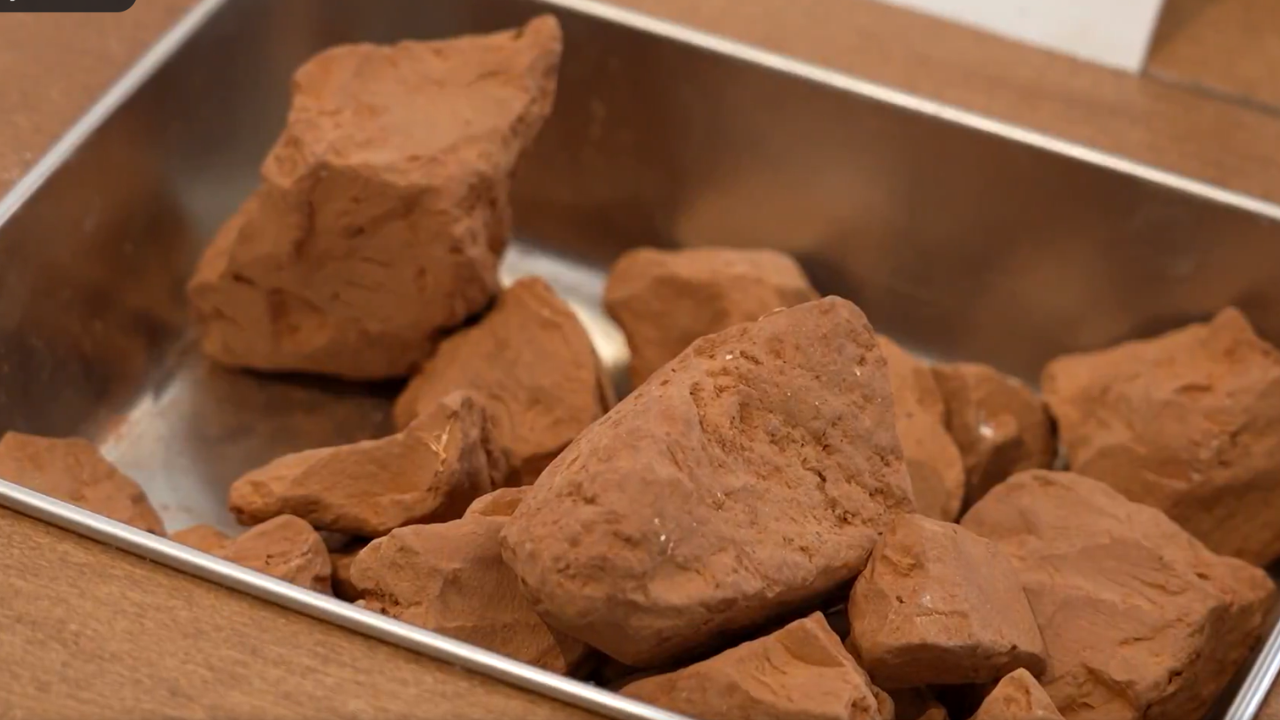
When you look at the collection, you see textures ranging from fine, silky powders to hard, brittle chunks that look like grey chocolate. It’s a visual reminder that the ground beneath our feet isn't just "waste." It’s a complex chemical cocktail.
A taste of the world under your fingernails
Walking into the museum feels like entering a high-end apothecary. You aren't just looking at jars of brown mud. You’re seeing the diversity of the planet’s crust. Each sample comes with a story. There’s white kaolin from Nigeria, smoky clay from the Ural mountains, and even processed "earth cookies" from Haiti.
The experience isn't passive. You’re often invited to actually taste the samples. If you’re brave enough to try it, don't expect it to taste like a steak. It’s an earthy, metallic, and sometimes surprisingly creamy sensation. Some clays stick to the roof of your mouth like peanut butter, while others have a sharp, flinty snap.
What your palate is actually detecting
- The Crunch: High quartz content makes for a gritty experience.
- The Stick: Fine clays like bentonite expand when wet, creating a thick paste.
- The Scent: That "rain on dry earth" smell is called petrichor, and it’s often present in the flavor profile.
- The Aftertaste: Many edible earths leave a lingering mineral tang, similar to drinking hard well water.
Cultural stigma versus historical reality
Western society has a weird relationship with the earth. we’ve spent the last century trying to sanitize every inch of our lives. We use antibacterial soaps and wash our vegetables until they’re sterile. This obsession with cleanliness has disconnected us from the microorganisms and minerals that our ancestors interacted with daily.
The Museum of Edible Earth acts as a mirror. It forces you to ask why you find eating a shrimp (a bottom-feeding sea bug) perfectly normal, but find a piece of clean, mineral-rich clay revolting. In many cultures, geophagy is a respected tradition. In parts of Ghana, "shile" (white clay) is sold in markets specifically for consumption. In the United States, particularly in Georgia and Mississippi, eating white dirt was a common practice for generations, often tied to ancestral knowledge passed down through the African diaspora.
Ignoring these traditions doesn't make them go away. It just makes us more ignorant of how humans have survived and adapted to their environments. The museum doesn't preach. It just presents the evidence and lets you decide if you're ready to take a bite.
The safety question everyone asks
Is it safe? Well, you shouldn't go out and start digging up the flowerbed in your local park. Urban soil is often contaminated with lead, pesticides, and animal waste. That’s the "bad" dirt your parents warned you about. The samples at the museum are curated. Masharu looks for sources that have been used by locals for generations, often coming from deep underground where the soil is protected from modern pollutants.
Even so, geophagy isn't a "health hack" you should start doing every morning. Too much clay can cause constipation or interfere with nutrient absorption if you overdo it. The point of the museum isn't to replace your breakfast with a bowl of silt. It’s to foster a deeper understanding of our biological connection to the planet. We are made of the same elements found in that clay—carbon, calcium, iron. Eating earth is, in a very literal sense, consuming ourselves.
How to approach your visit
Don't go in looking to be "grossed out." If you go with the intention of seeing a freak show, you’ll miss the point. Instead, treat it like a wine tasting or a visit to a perfumery. Focus on the nuances.
Tips for the first time dirt eater
- Start small: Take a tiny piece, no bigger than a pea.
- Let it dissolve: Don't just chew and swallow. Let the moisture in your mouth break the minerals down.
- Notice the texture: Is it smooth? Sandy? Waxy?
- Wash it down: Keep some water handy. Clay is incredibly absorbent and will dry your mouth out fast.
If you’re planning to check it out, look for the workshops. Masharu often hosts sessions where you can learn about the specific chemistry of different soils. It’s much more than an art installation; it’s a chemistry lesson, a history lecture, and a culinary experiment rolled into one.
Check the museum’s current residency status before you go. It’s a traveling collection, so it pops up in different galleries and spaces across London and Europe. You’ll want to confirm the exact location and whether they have a "tasting menu" available during your visit. Bring an open mind and maybe a pack of gum for afterward. You’re about to experience the planet in a way you haven't since you were three years old.