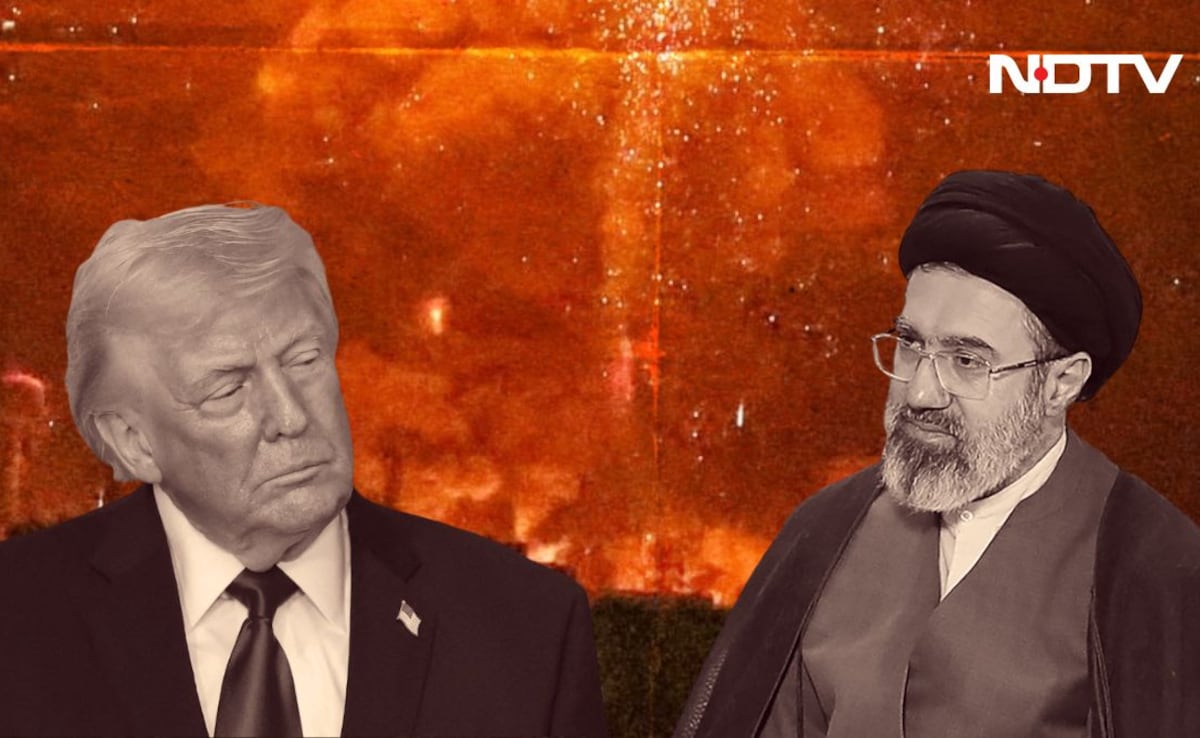
The Iranian state’s strategic communication apparatus has pivoted toward a specific historical-rhetorical framework: the "Vietnamization" of current United States involvement in Middle Eastern maritime and proxy conflicts. This is not merely a propaganda exercise; it is a calculated application of the Sunk Cost Dilemma and Asymmetric Attrition Theory. By invoking the Vietnam War, Tehran seeks to influence U.S. domestic risk-aversion and trigger a decoupling of American military presence from regional security architectures. The objective is to force a re-evaluation of the cost-benefit ratio of U.S. power projection through the lens of historical failure.
The Triad of Iranian Rhetorical Transposition
Tehran’s strategy rests on three distinct logical pillars designed to map the 1960s-70s Southeast Asian theater onto the contemporary Levant and Red Sea regions. If you liked this article, you might want to read: this related article.
1. The Proxy Legitimacy Framework
In the Vietnam era, the National Liberation Front (Viet Cong) was framed by anti-war critics as a grassroots movement resisting foreign intervention. Iran is currently applying this same "Indigenous Resistance" label to the "Axis of Resistance." By defining groups like the Houthis or Hezbollah as local actors defending sovereignty rather than Iranian proxies, Tehran attempts to strip the U.S. of its "stabilizer" status. This forces the U.S. into the role of the "external aggressor," a position that historically leads to domestic political erosion in Washington.
2. The Quagmire Cost Function
Strategic attrition relies on the imbalance of costs. Iran understands that the U.S. military operates on a high-cost, high-tech basis. For another look on this story, see the latest update from BBC News.
- The Interceptor-to-Threat Ratio: Launching a $2,000 loitering munition that requires a $2 million SM-2 interceptor to neutralize creates an unsustainable economic feedback loop.
- The Political Will Decay: Just as the Tet Offensive signaled that the "light at the end of the tunnel" was a fallacy, Iran uses persistent, low-level drone and missile strikes to signal that U.S. presence will never reach a "steady state" of peace.
3. The Moral Parallels of Domestic Dissent
The Iranian leadership is specifically targeting the American demographic divide. By drawing parallels between the anti-Vietnam protests of 1968 and current university campus demonstrations regarding Gaza, Iran aims to synchronize its external military pressure with internal American social friction. The goal is to make the political cost of staying in the region higher than the strategic cost of leaving.
The Mechanics of Asymmetric Attrition
The "Vietnam Script" works only if the adversary can be convinced that the conflict is un-winnable in conventional terms. To analyze this, we must examine the Operational Tempo (OPTEMPO) vs. Political Sustainability curve.
In Vietnam, the U.S. won nearly every tactical engagement but lost the strategic initiative because the North Vietnamese Army and Viet Cong controlled the "escalation ladder." They decided when to fight and when to melt away. Iran’s current naval strategy in the Bab el-Mandeb operates on this exact principle. By using non-state actors to disrupt global trade, they force the U.S. Navy into a defensive posture that is reactive, expensive, and indefinitely prolonged.
The Decoupling of Security Interests
A critical mechanism in this strategy is the "Security Decoupling." Iran posits that U.S. interests are no longer aligned with regional partners. In the Vietnam era, this was the "Vietnamization" policy—the attempt to hand over the war to the South Vietnamese. Iran is betting that if the pressure remains constant, the U.S. will eventually adopt a similar "Regionalization" strategy, withdrawing its kinetic assets and leaving a vacuum that Tehran is positioned to fill.
Structural Fault Lines in the Analogy
While the rhetorical mapping is sophisticated, the analytical rigor of the "Vietnam Script" faces significant structural limitations that Tehran’s planners may be discounting.
The Absence of a Monolithic Jungle
Vietnam provided a physical "sanctuary" in the form of dense canopy and the Ho Chi Minh Trail. The Middle East, conversely, is a theater of high visibility. Satellite intelligence, signals intelligence (SIGINT), and persistent drone surveillance mean that the "stealth" required for a Vietnam-style insurgency is significantly harder to maintain. The "Axis of Resistance" relies on hardened infrastructure and urban centers, which are susceptible to targeted precision strikes in ways a jungle-based insurgency was not.
The Economic Interdependency Variable
Vietnam was largely an ideological battleground with minimal impact on global supply chains. The current conflict involves the primary arteries of global trade.
- The Suez Canal Bottleneck: 12% of global trade passes through the Red Sea.
- Energy Volatility: Unlike the 1970s, the U.S. is now a net exporter of oil, but the global price is still tied to Middle Eastern stability.
This creates a paradox for Iran: If they succeed in making the "Vietnam Script" real by causing a total U.S. withdrawal, they risk a global economic collapse that would also dismantle their own remaining economic lifelines, specifically their clandestine oil exports to East Asia.
The Psychology of the "Endless War" Narrative
Iran’s critique leverages the American public's "intervention fatigue." This is a quantitative psychological state where the marginal utility of military action is perceived as negative.
The Feedback Loop of Skepticism
Each time a U.S. official states that an objective has been "largely met," only for another drone strike to occur, the credibility gap widens. This is the Credibility Gap 2.0. Iran is not fighting to destroy the U.S. military; they are fighting to destroy the American public’s belief in the efficacy of its military.
By referencing Vietnam, Iran invokes a specific "Failure Archetype." Once a conflict is categorized as a "Vietnam-style quagmire" in the collective consciousness, the policy options for the U.S. Executive Branch shrink significantly. Congressional oversight tightens, funding becomes conditional, and the path to exit becomes the only politically viable route.
Strategic Forecast: The Shift from Kinetic to Normative War
Iran will continue to refine this historical narrative, moving beyond mere television broadcasts into digitized influence operations. We should anticipate a focus on the following maneuvers:
- The Equalization of Atrocities: Iranian media will increasingly frame U.S. defensive actions as equivalent to the indiscriminate bombing campaigns of the 1960s (e.g., Operation Rolling Thunder).
- The Pursuit of a "Paris Peace Accords" Equivalent: Tehran will likely seek a diplomatic off-ramp that mirrors the 1973 accords—a deal that allows for a "dignified" U.S. withdrawal while leaving the regional landscape fundamentally tilted in favor of the "Axis of Resistance."
The U.S. counter-strategy requires a refusal to accept the Vietnam framing. This involves shifting the metric of success from "total elimination of threats" to "denial of strategic objectives." If the U.S. can maintain maritime flow while minimizing its footprint through automated defense systems, it breaks the "Asymmetric Attrition" model.
The primary danger is not the military comparison to Vietnam, but the political acceptance of it. If Washington adopts the "Vietnam Script" as its own operating manual, the prophecy becomes self-fulfilling. The strategic move for the U.S. is to decouple "presence" from "vulnerability," utilizing long-range strike capabilities and autonomous systems that do not offer the "body bag" metric that was so critical to the anti-war movement of the 1970s.
Monitor the Domestic Political Absorption Rate—the speed at which the "Vietnam" label migrates from foreign state media to mainstream U.S. legislative debate. This is the leading indicator of whether Iran’s rhetorical strategy is achieving its intended kinetic result. Would you like me to analyze the specific economic impact of Red Sea shipping diversions on Iranian oil revenue?


