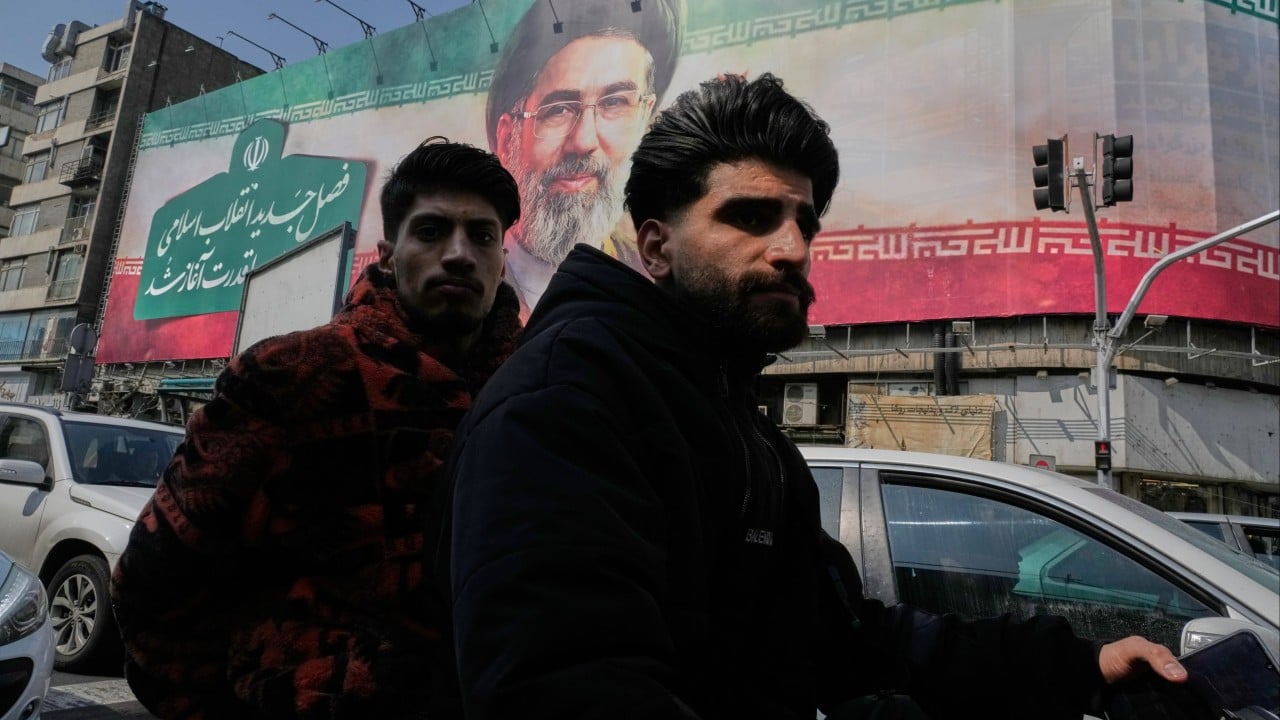
The targeted assassinations of Hezbollah’s senior leadership and the subsequent decapitation of Hamas’s political bureau created a power vacuum within the "Axis of Resistance" that traditional diplomatic channels were structurally incapable of filling. Mohammad Bagher Ghalibaf, Speaker of the Iranian Parliament and a former commander in the Islamic Revolutionary Guard Corps (IRGC), has moved to occupy this void, signaling a shift from purely clandestine military coordination to a "Securitized Diplomatic" model. This transition is not merely a change in personnel but a fundamental reconfiguration of how Iran projects power during periods of extreme kinetic attrition.
The structural necessity of Ghalibaf’s emergence is defined by three specific operational requirements: the need for a high-level state actor with direct military lineage, the requirement for an "un-assassinatable" diplomatic envoy to maintain theater presence, and the stabilization of the Lebanese political infrastructure. Ghalibaf’s recent actions, specifically his self-piloted flight into Beirut during an active bombardment, serve as a calculated signal of state-level commitment that transcends the informal networks previously managed by the Quds Force.
The Triad of Iranian Influence: Military, Diplomatic, and Legislative
To analyze the current shift, one must categorize Iranian foreign policy into three functional pillars. Historically, these pillars operated with significant autonomy, but the current conflict has forced a vertical integration under the legislative branch’s leadership.
- The Kinetic Pillar (IRGC-Quds Force): Responsible for the tactical supply chains and operational training of non-state actors. The attrition of its field commanders has necessitated a more visible political shield.
- The Formal Diplomatic Pillar (Ministry of Foreign Affairs): Often constrained by international protocol and the optics of nuclear negotiations. This pillar lacks the "street credibility" required to command respect from battle-hardened proxies.
- The Oversight Pillar (Parliament/Majlis): Traditionally domestic-focused, but under Ghalibaf, it has become the bridge between the IRGC’s raw power and the state’s formal diplomatic immunity.
Ghalibaf occupies a unique Venn diagram between these three spheres. As a "technocratic commander," he possesses the logistical expertise to understand the battlefield and the constitutional authority to speak for the Iranian state. By assuming the role of the primary interlocutor for Lebanon and the broader resistance network, he effectively merges the kinetic and diplomatic pillars. This prevents a "decoupling" of Iranian policy where the diplomats might sue for peace while the military remains committed to escalation.
The Logistics of Presence: Symbolism as a Hard Power Variable
In asymmetric warfare, "presence" functions as a measurable asset. The degradation of Hezbollah’s communication networks (the "pager attacks" and subsequent radio interceptions) created a psychological deficit among the rank-and-file. Ghalibaf’s physical arrival in Dahieh—the heart of Hezbollah’s administrative district—operates as a high-density information signal. It communicates to three distinct audiences:
- To the Resistance Network: Iran remains physically present, willing to risk a high-ranking state official to ensure continuity.
- To the Israeli Defense Forces (IDF): A challenge to the "Rules of Engagement" (ROE). Targeting a sitting Speaker of a sovereign Parliament represents a massive escalation toward total regional war, a threshold Israel has historically approached with more caution than when targeting non-state leaders.
- To the Lebanese State: A reinforcement of the "Dual-Track Strategy," where Iran supports Hezbollah while simultaneously engaging with the Lebanese Parliament (Speaker Nabih Berri) to prevent the total collapse of the Lebanese political framework.
This is a departure from the "Shadow Commander" archetype defined by Qasem Soleimani. Where Soleimani thrived on invisibility and deniability, Ghalibaf utilizes high-visibility statecraft. This is a deliberate "de-cloaking" designed to deter further decapitation strikes by attaching the weight of the Iranian state directly to the targets.
The Cost Function of Regional Attrition
The assassination of Ismail Haniyeh in Tehran and Yahya Sinwar in Gaza disrupted the primary feedback loops of the resistance. These events increased the "friction of coordination"—the time and energy required to align the various nodes of the axis (Houthis, PMF, Hezbollah, Hamas).
Ghalibaf’s intervention seeks to lower this friction by centralizing the decision-making process within the Iranian legislative structure. This creates a more "Robust Command Logic." If the Quds Force is the nervous system of the axis, the Speaker’s office is currently acting as its exoskeleton, providing external support while the internal system repairs itself.
However, this strategy carries a significant risk: the "Exposure of the State." By placing a key political figure so close to the tactical front, Iran removes the layer of plausible deniability it has maintained for decades. If Ghalibaf were to be caught in a strike, the Iranian response would, by constitutional necessity, have to be a direct state-on-state retaliation, bypassing the proxy model entirely.
Technical Limitations of the Ghalibaf Pivot
While Ghalibaf’s emergence provides immediate stabilization, it faces two structural bottlenecks that could render it a short-term palliative rather than a long-term solution.
The first limitation is the Internal Power Competition. In Tehran, the "Securitized Diplomatic" path creates friction between the Ministry of Foreign Affairs and the Parliament. When Ghalibaf signaled a willingness to negotiate the implementation of UN Resolution 1701 (which mandates Hezbollah’s withdrawal from the border), he faced immediate domestic pushback from hardline factions within the IRGC. This suggests that while he can project power externally, he does not yet have a "unilateral mandate" to negotiate terms.
The second limitation is the Intelligence Asymmetry. No amount of high-level diplomacy can offset the technical penetration of the axis’s communication networks. Ghalibaf’s presence provides moral and political cohesion, but it does not fix the underlying vulnerability to SIGINT (Signals Intelligence) and cyber-espionage that has allowed Israel to target leadership with surgical precision.
Strategic Reconfiguration of the Resistance
The shift toward a legislative-led foreign policy indicates that Iran is preparing for a "War of Position" rather than a "War of Maneuver." By using Ghalibaf to engage with the Lebanese state and international actors, Iran is attempting to institutionalize the resistance. This involves:
- Legalizing the Presence: Framing the resistance not as an extralegal militia but as a core component of Lebanese national defense, backed by Iranian state-to-state agreements.
- Economic Sustenance: Using the Speaker’s ability to influence the Iranian budget to ensure that the reconstruction of Lebanon’s south (post-conflict) is tied directly to Iranian interests, bypassing Western-led NGO frameworks.
- Crisis Management: Providing a single, authoritative point of contact for international mediators (France, the US) who are reluctant to speak to the IRGC but cannot ignore the Speaker of the House.
This model treats the resistance as a "Sovereign Proxy"—a hybrid entity that maintains the flexibility of a militia with the protections of a state. Ghalibaf is the primary architect of this hybridity.
The current trajectory suggests that Iran will continue to use high-ranking political figures to "shield" its degraded proxy assets. The immediate strategic play is the solidification of a "Beirut-Tehran Pipeline" that is political in appearance but logistical in function. To counter this, opposing powers must decide whether to respect the diplomatic immunity of these "State Commanders" or treat them as valid targets within the chain of command, a decision that will dictate the transition from a regional proxy conflict to a direct inter-state war.
Watch the next 90 days for a formalization of the "Ghalibaf-Berri" axis in Lebanon; if successful, this will provide the blueprint for a similar legislative-led stabilization in Iraq and Syria, effectively moving the "Axis of Resistance" from the shadows of the IRGC into the formal halls of the Iranian Parliament.
Would you like me to analyze the specific legislative mechanisms Ghalibaf is using to bypass traditional Iranian foreign policy protocols?