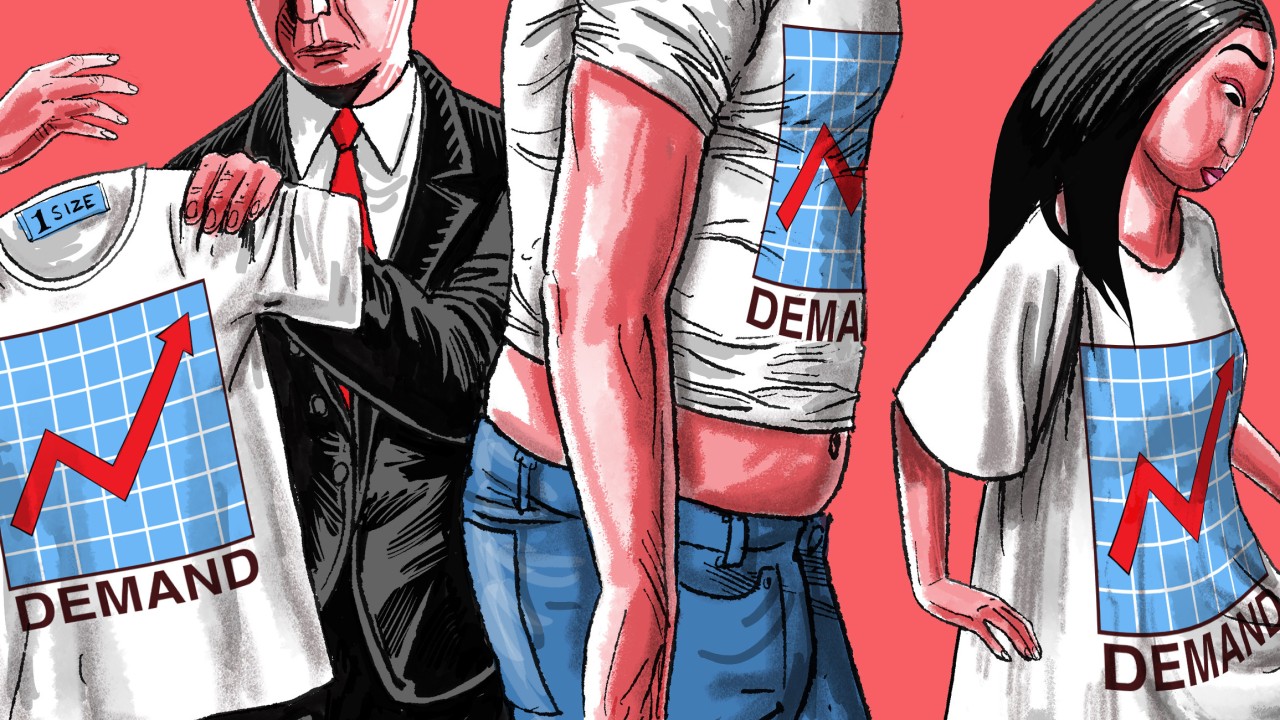
China’s transition from an investment-led growth model to a consumption-driven economy is stalled by a systemic misalignment between household income shares and state-led industrial policy. While standard commentary suggests a "lack of confidence" is the primary inhibitor of demand, the reality is a math problem: the household sector’s share of GDP remains stuck near 40%, roughly 20 percentage points below the global average. This structural deficit means that even if every Chinese citizen spent every yuan they earned, the sheer volume of output generated by the country’s massive industrial base would still require external vent—exports—to clear the market.
To understand why a "one-size-fits-all" stimulus fails, we must deconstruct the Chinese economy into three competing balance sheets: the central state, the local governments, and the households. If you found value in this post, you might want to check out: this related article.
The Wealth Transfer Bottleneck
Domestic demand in China is not a psychological variable; it is a function of the disposable income-to-GDP ratio. For decades, China’s growth was fueled by suppressing household income to subsidize infrastructure and manufacturing. This was achieved through artificially low interest rates on savings (which benefited state banks), a lack of portable social safety nets, and land requisition policies that favored municipal development over private equity.
The Liquidity Trap of Real Estate
For the average Chinese household, 70% of total wealth is concentrated in real property. When property values stagnate or decline, the "wealth effect" reverses. This is not merely a loss of paper wealth; it is a destruction of the primary collateral used for small business loans and consumer credit. For another look on this story, see the latest update from Forbes.
- Negative Equity Drag: Households are shifting from spending to debt acceleration. Even with lower interest rates, the priority is paying down mortgages rather than incremental consumption.
- Precautionary Saving: In the absence of a comprehensive national pension and healthcare system, the Chinese "high saving rate" is a rational response to systemic risk. Households are self-insuring against old age and illness.
The Local Government Debt Constraint
The primary mechanism for stimulating demand in previous cycles was local government spending. However, the Local Government Financing Vehicle (LGFV) model has reached its logical limit. With total local debt estimated at over $9 trillion, the marginal utility of another bridge or industrial park is near zero, while the debt service costs are cannibalizing the budgets needed for social welfare.
- Revenue Mismatch: Local governments rely on land sales for approximately 40% of their revenue. The property market downturn has evaporated this income stream.
- Service-Level Austerity: To balance books, many municipalities are cutting subsidies for public transport, heating, and healthcare, which directly increases the cost of living for residents, further suppressing their ability to purchase discretionary goods.
The Industrial Overcapacity Feedback Loop
China’s response to flagging domestic demand has been to double down on the supply side, specifically in "New Three" industries: electric vehicles, lithium-ion batteries, and solar products. This creates a logical paradox. By subsidizing production to maintain GDP targets, the state inadvertently suppresses the very wages and prices that would drive consumption.
The Deflationary Spiral
When capacity exceeds domestic demand, firms engage in price wars to maintain market share. This leads to producer price deflation. When companies earn less, they cut wages or freeze hiring.
- Step 1: Overinvestment in manufacturing leads to excess supply.
- Step 2: Prices drop to clear inventory.
- Step 3: Corporate margins shrink, leading to reduced labor compensation.
- Step 4: Households, facing stagnant wages, further reduce spending.
This cycle renders traditional monetary policy—like cutting interest rates—ineffective. If a factory owner sees no demand, they will not borrow at 2% to expand, and if a worker fears for their job, they will not borrow at 3% to buy a car.
Segmenting the Solution Space
A singular stimulus package cannot address the divergence between urban elites and the rural population, nor can it bridge the gap between the coastal manufacturing hubs and the inland provinces.
The Urban Middle-Class Ceiling
The urban population in Tier 1 and Tier 2 cities is "asset rich but cash poor." Their consumption is capped by the high cost of education and housing debt. For this segment, demand is unlocked not by vouchers, but by structural tax reform. Reducing the top marginal income tax rates and increasing deductions for dependents would provide the immediate liquidity needed to drive services consumption (healthcare, travel, entertainment).
The Rural Migrant Floor
There are roughly 300 million migrant workers who remain partially excluded from urban social services due to the hukou (household registration) system. This group has the highest marginal propensity to consume.
- The Hukou Barrier: If a migrant worker cannot access local schools or hospitals, they must save a higher percentage of their income for emergencies.
- The Solution: Full equalization of public services. By granting migrants the same rights as urban residents, the state could "unlock" billions in precautionary savings that are currently sitting idle in low-yield bank accounts.
The Cost Function of Redistribution
The ultimate barrier to boosting demand is the political cost of redistribution. To significantly raise household income, the state must transfer resources away from other sectors.
- State-to-Household: Transferring shares of State-Owned Enterprises (SOEs) into national pension funds. This would reduce the need for private saving.
- Central-to-Local: The central government assuming local debt to allow municipalities to pivot from infrastructure to social spending.
- Capital-to-Labor: Strengthening labor laws and minimum wage growth to ensure that productivity gains are reflected in paychecks.
Each of these paths requires a fundamental shift in the power dynamic between the state and the private sector. The hesitation to implement these changes suggests that the current priority remains "security-centric" growth—building industrial self-reliance—rather than "consumption-centric" growth.
The Strategic Path Forward
China’s economic trajectory over the next 36 months depends on whether it can move beyond "tinkering" with interest rates and move toward a Wholesale Balance Sheet Realignment.
The play is no longer about "boosting confidence" through rhetoric. It requires a hard-coded shift in how GDP is distributed. Investors and analysts should monitor the Fiscal Deficit-to-GDP ratio specifically regarding social safety net spending. If the deficit increases to fund more factories, the deflationary pressure will intensify. If the deficit increases to fund a nationalized healthcare floor or a direct income transfer, the transition to a modern consumption economy begins.
The strategic imperative for global firms is to stop viewing China as a monolithic market and start positioning for a bifurcated reality: high-end manufacturing will remain hyper-competitive and state-supported, while the consumer sector will remain stagnant until the state-to-household wealth transfer is codified into law. Focus operations on the specific provinces that are pioneering hukou reform, as these will be the only regions with genuine, non-synthetic demand growth.
Would you like me to analyze the specific impact of the hukou reform on retail sales data in the pilot provinces?