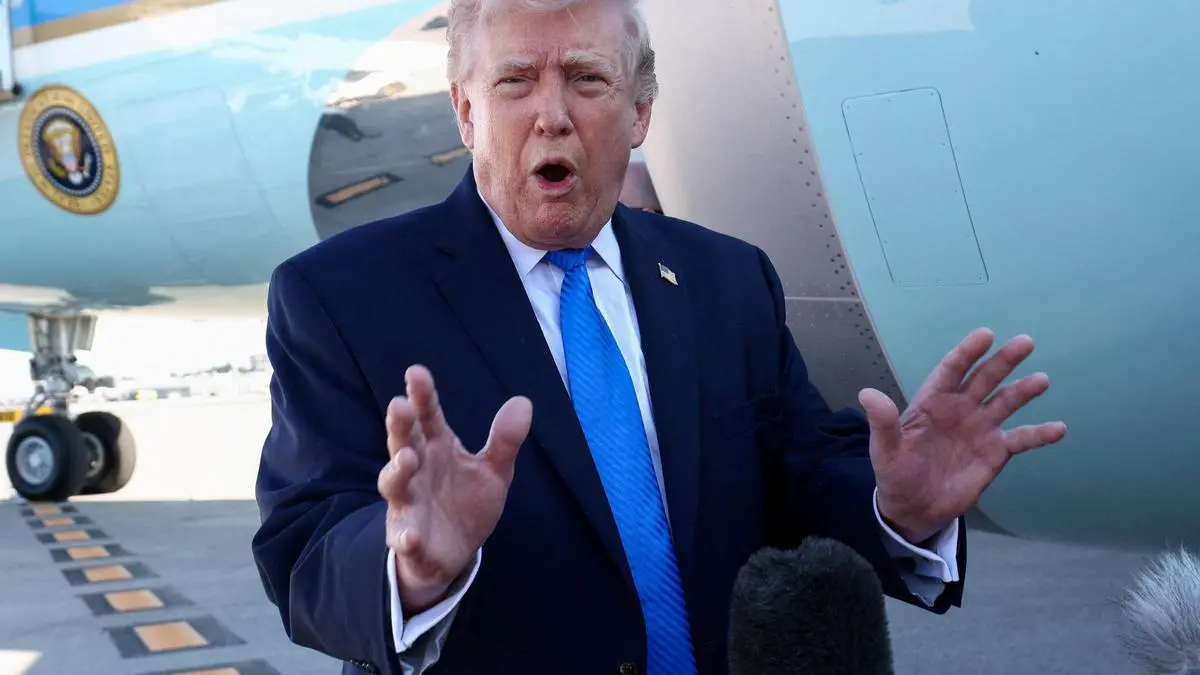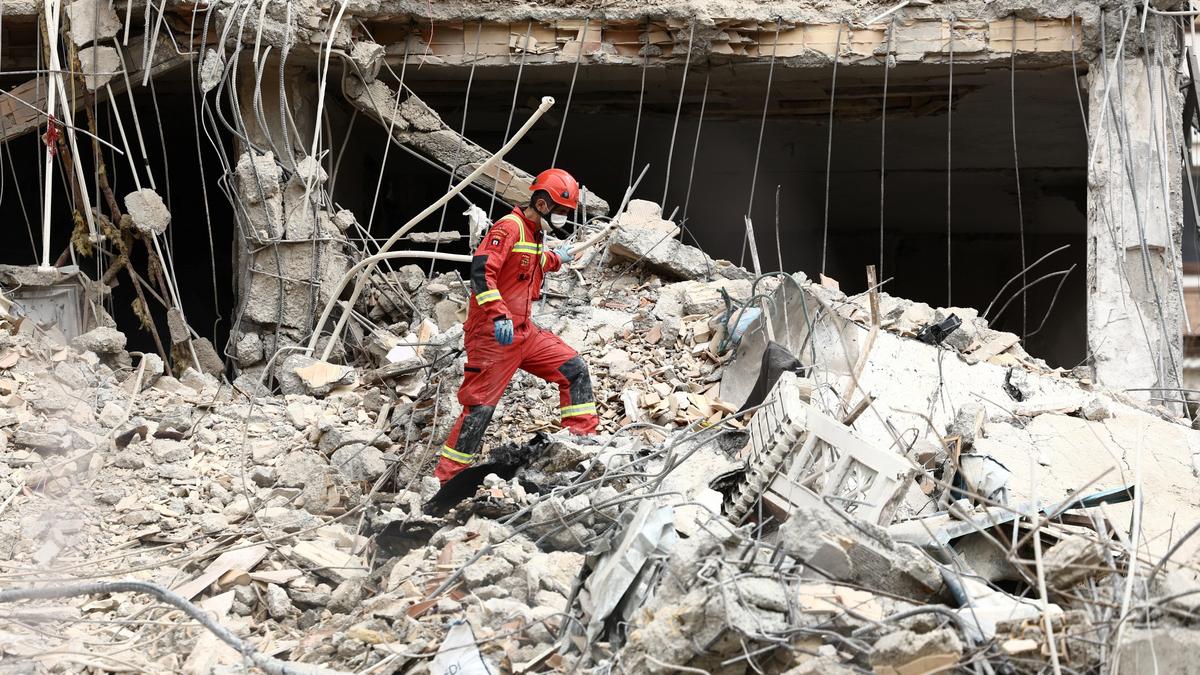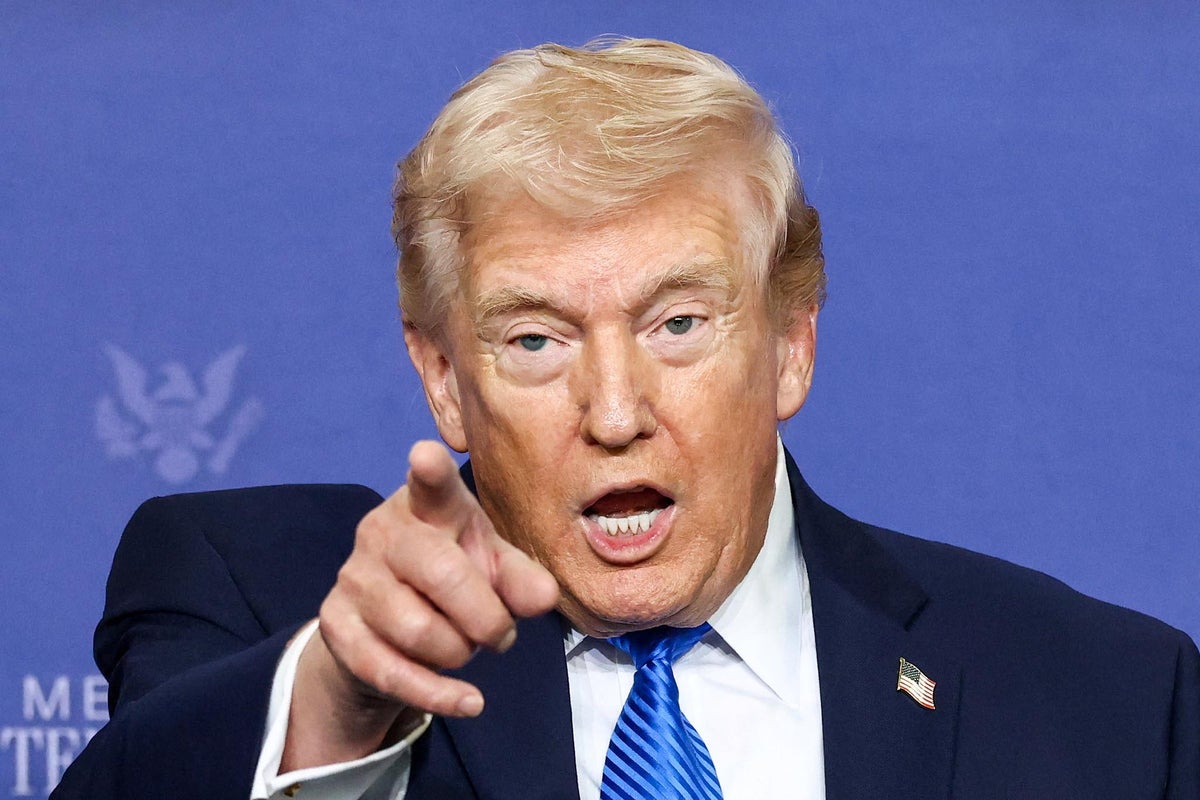
Donald Trump likes to talk about "deals." The media likes to talk about "breakthroughs." Both are feeding you a fairy tale. When the former President claims Iran "agreed" not to have a nuclear weapon, he is treating a complex, multi-decade geopolitical chess match like a real estate closing in Queens. It is a fundamental misunderstanding of how rogue states operate, how nuclear physics works, and how international law is actually enforced—which is to say, it isn't.
The "lazy consensus" here is that a signature on a piece of parchment—whether it’s the JCPOA or some verbal pinky-promise made under the threat of "maximum pressure"—actually changes the structural incentives of a middle-market power seeking regional hegemony. It doesn't.
I have watched diplomats waste decades on this. I have seen intelligence agencies track the movement of centrifuge components through shell companies in Dubai and Kuala Lumpur while politicians stood behind podiums and declared "victory" because a communique was issued. The reality is far uglier.
The Physical Reality vs. The Diplomatic Fantasy
Physics does not care about election cycles. To understand why "agreements" are often irrelevant, you have to understand the threshold of breakout capacity.
The standard narrative focuses on the weapon itself—the "bomb." This is the wrong metric. By the time a nation-state is assembling a warhead, the game is already over. The real struggle is over the fuel cycle. Once a nation masters the enrichment of $U^{235}$ to high percentages, the transition from "peaceful energy" to "weaponization" is a matter of months, not years.
Currently, the enrichment process follows a non-linear path of effort. To get from 0.7% (natural uranium) to 4% (reactor grade) takes a massive amount of "Separative Work Units" (SWU). However, going from 20% to 90% (weapons grade) is statistically much easier.
When Trump or any other leader says Iran "agreed" not to have a weapon, they are ignoring the fact that Iran has already secured the most difficult part of the process: the infrastructure, the specialized labor, and the hardened facilities like Fordow, buried deep under mountains where conventional bunker-busters struggle to reach. You cannot "un-know" how to build a centrifuge. You cannot "un-learn" the chemistry of conversion.
The Verification Trap
The public is led to believe that the International Atomic Energy Agency (IAEA) acts like a global police force. It doesn't. It acts like a librarian with a very limited building pass.
The "People Also Ask" sections of the internet often focus on: Can we trust Iran? This is a flawed premise. Trust is a social construct; verification is a technical one. But even the most "robust" inspection regimes have blind spots.
- Dual-Use Equipment: A high-speed camera used for testing automotive safety is also perfect for measuring the high-explosive lenses required for nuclear detonation.
- The Hidden Cycle: If you have 5,000 centrifuges spinning in a declared site, you likely have the supply chain to run 500 in an undeclared site.
- The "Snapshot" Problem: Inspections are a series of snapshots. A sophisticated actor knows how to clean a room before the photographer arrives.
I've seen analysts get buried in the data of "grams of enriched material" while ignoring the larger strategic intent. If the Iranian leadership believes a nuclear deterrent is the only thing standing between them and the fate of Muammar Gaddafi, no amount of frozen asset releases or "deals" will stop the pursuit. They will simply move the goalposts or take the program underground.
The Sanctions Delusion
Western leaders love sanctions because they are a way to "do something" without actually doing anything that involves body bags. Trump's "Maximum Pressure" campaign was a masterclass in economic strangulation, but it failed its primary objective. Why? Because it assumed the Iranian regime values the economic well-being of its middle class more than its own survival.
They don't.
In fact, sanctions often strengthen the most radical elements of a regime. When the private sector is crushed, the state (and the military-industrial complex behind it) becomes the only employer left. Black markets thrive. The Revolutionary Guard (IRGC) gains more power because they are the ones with the keys to the smuggling routes.
The "contrarian" take here is that economic prosperity is actually a better long-term tool for regime change than poverty. A middle class with something to lose is a threat to an autocrat. A starving populace is just a logistics problem.
The "Agreement" is a PR Stunt
Let’s be brutally honest about why these statements exist. When a President says a country "agreed" to something, they aren't talking to the foreign power. They are talking to you. They are managing the domestic perception of risk.
If the public believes the "nuclear threat" is handled via a deal, the administration can pivot to other issues. But look at the technical debt we are accruing. Every day that passes where we pretend a verbal agreement is a physical barrier, Iran’s scientists are refining their delivery systems.
A nuclear program is a tripod:
- The Material (Uranium/Plutonium)
- The Device (The physics package)
- The Delivery System (The ICBM)
Western diplomacy almost exclusively focuses on the first leg of the tripod. Meanwhile, the development of solid-fuel rockets and satellite launch vehicles—technologies that are 90% interchangeable with long-range missiles—continues unabated. To say they "agreed not to have a weapon" while they are building the truck that carries the weapon is like saying a man agreed not to shoot you while he’s buying a holster and a box of 9mm rounds.
Stop Asking if the Deal is "Good" or "Bad"
The media loves the binary. "Is the Iran deal good or bad?" It’s the wrong question.
The right question is: Is a diplomatic solution even possible with a regime whose foundational ideology requires the absence of Western influence in the Middle East? If the answer is no, then "agreements" are merely tactical pauses. They are a way for the opponent to regroup, access capital, and wait for a more favorable political climate in Washington.
I’ve seen this play out in corporate boardrooms and on the global stage. When one party is negotiating for a "win-win" and the other party is negotiating for "survival and dominance," the party looking for the "win-win" gets fleeced every single time.
The Hard Truth Nobody Admits
The only thing that has ever stopped a determined state from going nuclear is either a more powerful state destroying their facilities (Osirak in 1981, Al-Kibar in 2007) or the regime itself collapsing from within.
Stuxnet—the joint US-Israeli cyberattack—did more to slow down Iran's enrichment than a thousand pages of UN resolutions. It targeted the hardware. It forced the centrifuges to spin at frequencies that caused them to self-destruct while the monitoring software told the operators everything was fine. That is "nuance." That is how you disrupt a program.
Trump’s claim that they "agreed" is a comforting lie. It suggests that the world is a place where strong personalities can sit in a room and solve 1,000-year-old sectarian conflicts over a steak dinner. It ignores the reality of the "Permanent State" in Tehran and the inescapable logic of the nuclear shield.
If you want to understand the next decade, stop reading the headlines about who signed what. Start looking at the number of IR-6 centrifuges being installed. Start looking at the range of the latest Khorramshahr missile tests.
The paperwork is for the voters. The physics is for the victors.
Stop looking for a "deal" to save you. We are living in a post-proliferation world where the technology has outpaced the treaties. The illusion of control is the most dangerous thing we have.
Focus on the capabilities, ignore the rhetoric.
Everything else is just noise.