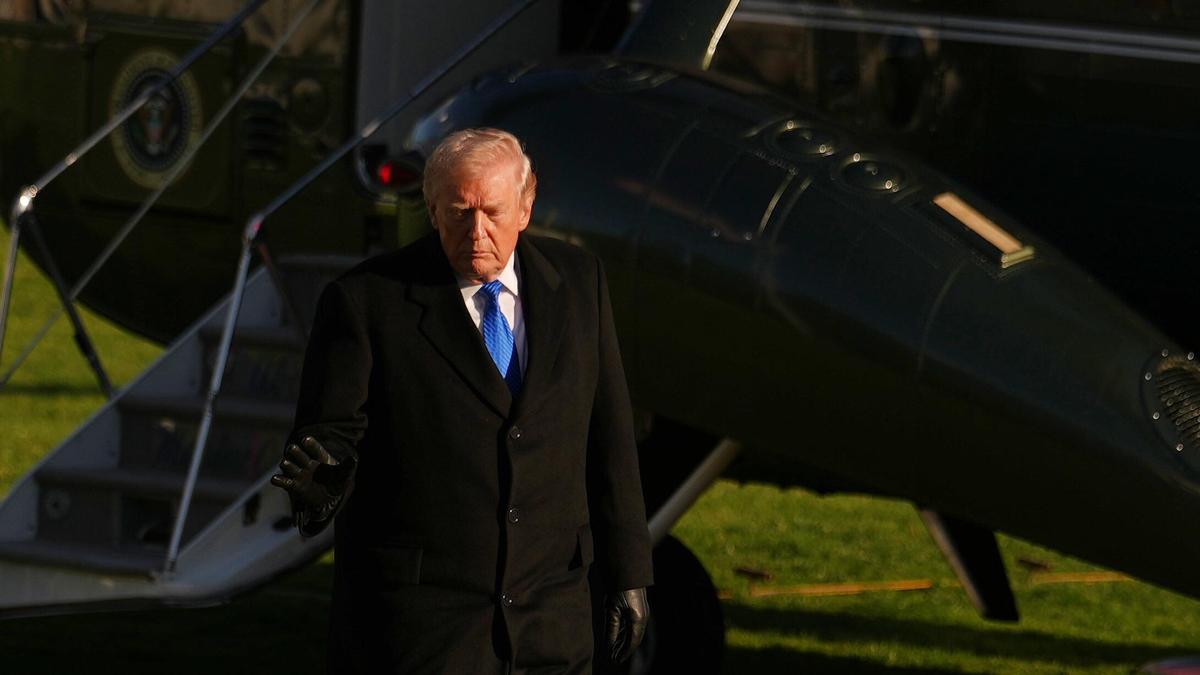
The persistent drumbeat of war between Iran and Israel has entered a phase where rhetoric and reality have become dangerously detached. Donald Trump recently asserted that Tehran is desperate to "make a deal," a claim that suggests a regime on its knees, ready to trade its regional influence for sanctions relief. However, the Islamic Republic’s immediate and sharp denial of any such negotiations highlights a much grimmer reality. There is no secret backchannel currently capable of de-escalating this. The "deal" being discussed in Washington circles is a political ghost, while the "war" being fought in the Levant is a concrete, bloody calculation of survival for both sides.
Understanding this friction requires looking past the campaign trail soundbites. Tehran is not seeking a handshake; it is seeking a shield. Conversely, Israel’s military strategy has shifted from containment to systematic degradation of Iranian proxies. This is not a misunderstanding that can be cleared up over a summit table. It is a structural collision of two powers that have decided the status quo is no longer tolerable.
The Strategy of Deniability and the Weight of Sanctions
For decades, the Iranian leadership has mastered the art of "strategic patience." This involves absorbing hits, using middlemen for combat, and waiting for the political winds in the West to shift. When Donald Trump speaks of a deal, he is referencing the crushing economic pressure of his previous administration’s "maximum pressure" campaign. It did, in fact, hollow out the Iranian economy. Inflation is rampant, and the rial has plummeted. From a distance, this looks like a country ready to surrender.
But the hardliners in Tehran view a deal with the U.S. not as a lifeline, but as a trap. They watched the Joint Comprehensive Plan of Action (JCPOA) vanish with a single signature in 2018. To them, the American political system is too volatile to trust. If they negotiate now, they risk appearing weak to their own domestic base and their "Axis of Resistance" allies in Lebanon, Yemen, and Iraq. The denial of talks is a signal to these proxies that the mothership is not about to abandon them for a shot at the global banking system.
The "deal" Trump envisions likely involves Iran halting its nuclear program and ending its support for groups like Hezbollah and Hamas. For the current Iranian power structure, those aren't just policy choices. They are the pillars of the regime's defense strategy. Asking Tehran to drop Hezbollah is like asking a person to remove their own ribcage. They believe that without these forward-deployed assets, Israel and the United States would have already attempted a direct regime change in Tehran.
Israel and the New Doctrine of Direct Engagement
While the political world focuses on whether or not a deal is possible, the Israeli military establishment has moved on. The old "war between wars" doctrine, which focused on covertly disrupting Iranian shipments, has been replaced by something far more aggressive. Following the events of October 7, the Israeli government reached a consensus: the proxy threat must be broken at the source.
This change is visible in the increased frequency of strikes on high-level Iranian targets. The bombing of the Iranian consulate building in Damascus earlier this year was a definitive moment. It signaled that diplomatic immunity and international norms would no longer protect Iranian commanders if they were seen as orchestrating attacks against Israel. This was a massive gamble. It forced Iran to respond directly from its own soil for the first time, shattering the long-held tradition of shadow boxing.
Israel is currently betting that Iran’s internal economic strife and the technical superiority of the Israeli Air Force (IAF) will deter a full-scale regional conflict. They are testing the limits of Iranian restraint. This is a high-stakes game of chicken where one side believes the other is too broke to fight, and the other believes the first is too divided internally to sustain a long war. Both could be wrong.
The Nuclear Threshold as the Ultimate Bargaining Chip
We cannot talk about an Iran-Israel war without addressing the centrifuge rooms. Iran is closer to weapons-grade uranium than it has ever been. This is the real "deal" on the table. Tehran is using its nuclear progress as a gun to the head of the international community. They want the world to believe that unless sanctions are lifted, the bomb is inevitable.
Israel sees this as an existential deadline. Prime Minister Benjamin Netanyahu has spent his entire career warning that a nuclear-armed Iran is the end of the Zionist project. If diplomatic talks—whether spearheaded by Trump or the current administration—fail to show a clear path to permanent denisification, the likelihood of a massive Israeli kinetic strike on Iranian nuclear facilities increases daily.
Such a strike would not be a clean, surgical operation. It would involve hundreds of aircraft, cyber warfare on an unprecedented scale, and likely a massive retaliatory barrage from Hezbollah’s missile silos in Lebanon. This is the "big one" that planners in the Pentagon and the Kirya have been obsessing over for twenty years.
The Proxy Paradox and the Limits of Influence
A common misconception in Western media is that Iran has total control over its proxies. While Tehran provides the funding, training, and hardware, groups like the Houthis in Yemen or the various militias in Iraq have their own local agendas. Sometimes, the tail wags the dog.
If a deal were struck between Washington and Tehran today, it is not a guarantee that the regional violence would stop. The Houthis have discovered that disrupting global shipping gives them immense leverage and domestic popularity. They might not stop just because a bureaucrat in Tehran told them to. This makes the "deal" even more complicated for any U.S. president. How do you verify that Iran has "called off" its dogs when the dogs might have rabies and a mind of their own?
Israel is aware of this disconnect. Their strategy now focuses on "mowing the grass"—a grim term for the constant, repetitive strikes needed to keep these groups from building up too much power. But the grass is growing back faster than they can cut it, and the cost of the fuel and the blades is becoming astronomical for the Israeli taxpayer.
The Role of Regional Players in the Shadow War
The Arab world is not a monolithic observer in this conflict. Countries like Saudi Arabia and the United Arab Emirates are caught in a terrifying middle ground. They view Iran as a primary threat to their stability, yet they are terrified of a full-scale war that would see their oil refineries and desalination plants targeted by Iranian missiles.
For these nations, the talk of a "deal" is both a hope and a fear. They want the Iranian threat neutralized, but they fear being sold out by Washington in exchange for a temporary nuclear freeze. They are quietly normalizing ties with both sides—hedging their bets because they no longer believe the U.S. has a coherent, long-term strategy for the Middle East.
The intelligence sharing between Israel and some of these Arab states has reached historic levels. This "Abraham Accords" framework is the silent engine behind many of the successful interceptions of Iranian drones and missiles. However, this alliance is fragile. It relies on the perception that Israel is the dominant military power and that the U.S. is still the ultimate guarantor of security. If Iran manages to successfully penetrate Israeli defenses or if the U.S. appears to be retreating into isolationism, this regional coalition could evaporate overnight.
Miscalculation is the Greatest Risk
The biggest danger right now is not a planned invasion, but a mistake. When two militaries are at such a high state of alert, the margin for error disappears. A stray missile that hits a high-occupancy building, a cyber-attack that accidentally shuts down a hospital, or a mid-level commander making an unauthorized call can trigger a chain reaction that neither Netanyahu nor Khamenei can stop.
Both leaders are under immense domestic pressure. Netanyahu is managing a complex coalition and a public that is still traumatized by the failures of October 7. Khamenei is 85 years old and overseeing a succession process while trying to keep a lid on a younger generation that is increasingly hostile to the morality police and the clerical establishment. Leaders in these positions often find that starting a war is easier than maintaining an unpopular peace.
The denial of talks by Iran should be taken at face value for now. They are not ready to sit down because they don't know what they can realistically get that won't result in a domestic uprising or a loss of face. They are waiting to see who wins the U.S. election, and they are using that time to harden their defenses and move their nuclear assets deeper underground.
The Logistics of a Modern Middle Eastern Conflict
If this boils over into a direct, sustained conflict, it won't look like the Gulf War. There will be no massive tank battles in the desert. Instead, it will be a war of "asymmetric saturation." Iran will attempt to overwhelm Israeli air defenses by launching thousands of cheap drones and missiles simultaneously from multiple directions. Israel will counter with high-tech interceptions and long-range precision strikes aimed at decapitating the Islamic Revolutionary Guard Corps (IRGC) leadership.
The economic fallout would be global. The Strait of Hormuz, through which a fifth of the world’s oil passes, would become a combat zone. Shipping insurance rates would skyrocket, potentially triggering a global recession. This is why, despite the aggressive rhetoric, the U.S. is so desperate to find a diplomatic off-ramp, even if that off-ramp is currently built on a foundation of wishful thinking and campaign promises.
The talk of a deal is a political necessity for those who want to avoid this nightmare. But for those on the ground in Tel Aviv and Tehran, the reality is a slow, methodical preparation for a day they all hope never comes, but all believe is inevitable.
Identify the specific military hardware being moved to the northern border of Israel today. Check the satellite imagery of Iranian missile bases near Tabriz. These are the indicators that matter, not the denials of spokesmen or the boasts of politicians. The gap between what is said in the headlines and what is happening in the bunkers has never been wider.
Watch the movements of the U.S. carrier strike groups in the Mediterranean. If they begin to rotate out without a direct replacement, the window for a deal might be opening. If they continue to mass, the "talks" are nothing more than a courtesy before the storm.