The escalating friction between federal immigration authorities and local prosecutorial discretion has moved from rhetoric to a direct legal threat in Philadelphia. When District Attorney Larry Krasner suggested that Immigration and Customs Enforcement (ICE) agents could face arrest if they engage in "unlawful" activities within his jurisdiction, he wasn't just posturing for his base. He was drawing a line in the sand that challenges the very foundation of federal supremacy. This move triggered an immediate, high-decibel response from the Trump administration’s transition team, specifically Karoline Leavitt, who labeled the threat "disgraceful." But beneath the partisan shouting matches lies a fundamental breakdown in how the American government functions across state and federal lines.
The core of the conflict centers on the Fourth Amendment and the limits of federal reach. Krasner’s office maintains that ICE agents often exceed their authority by conducting "administrative" arrests that mimic criminal proceedings without the requisite judicial warrants. ICE, conversely, operates under the mandate that federal immigration law preempts local interference. This is not a minor policy disagreement. It is a high-stakes standoff where local law enforcement is being told to treat federal agents as potential criminals.
The Mechanism of Local Resistance
To understand why a District Attorney would even consider threatening federal agents with handcuffs, you have to look at the "Sanctuary" evolution. Originally, sanctuary status meant local police wouldn't do ICE’s job for them. It was a passive refusal to share data or hold detainees past their release dates. Now, the strategy has shifted from passive non-compliance to active deterrence.
Krasner is utilizing a legal theory that suggests federal agents are not immune to state law if they violate the civil rights of residents. If an ICE agent enters a private residence without a warrant signed by a judge—relying instead on an administrative warrant signed by an ICE supervisor—Krasner argues that constitutes kidnapping or trespassing under Pennsylvania law. It is a bold, some say reckless, application of state statutes against federal officers.
Federal law generally shields agents under the doctrine of Qualified Immunity and the Supremacy Clause of the U.S. Constitution. For a local prosecutor to overcome this, they would have to prove that the agent acted so far outside the scope of their federal duties that they lost their "color of law" protections. It is a mountain of a legal hurdle. Yet, the mere threat serves as a psychological deterrent, creating a hostile environment for federal operations in one of America’s largest cities.
The Federal Counterstrike
The response from the incoming administration signals a shift from the litigation-heavy approach of the past to a more confrontational executive posture. When Leavitt "slams" Krasner, she is echoing a broader strategy to use federal funding and civil rights investigations as a cudgel against "rogue" prosecutors. The Department of Justice has historically held the power to sue cities to force compliance, but the new rhetoric suggests a more personal focus on the officials themselves.
We are looking at a scenario where the federal government might attempt to charge local officials with "obstruction of justice" or "harboring" if they actively interfere with ICE operations. This creates a circular legal firing squad. The feds threaten the locals for interfering; the locals threaten the feds for violating state law. The casualty in this arrangement is the clear chain of command required for public safety.
The Reality of ICE Operations in Philadelphia
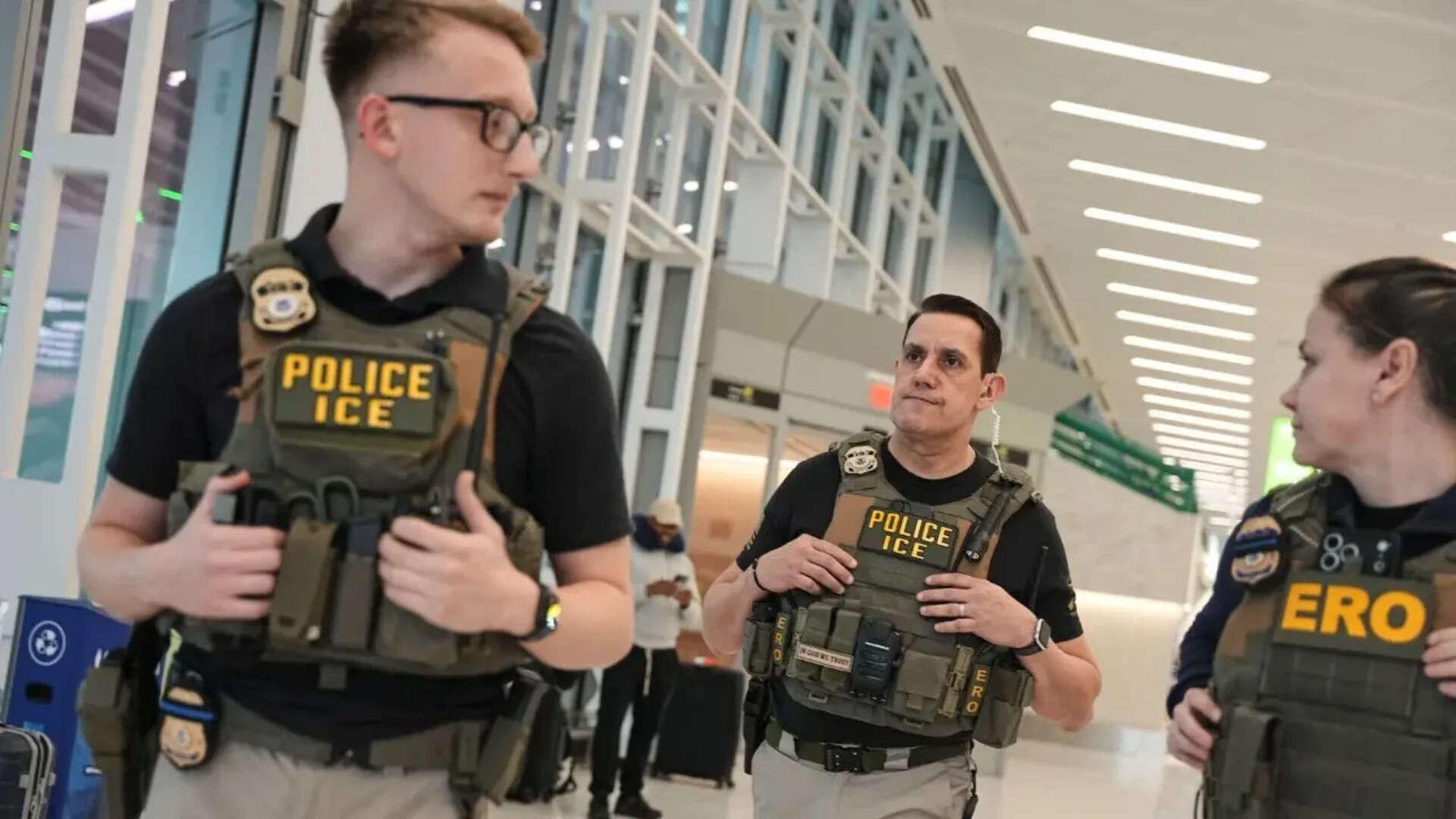
In the streets of North Philly or the Italian Market, the abstract legal theories of the DA’s office meet the gritty reality of enforcement. ICE agents often rely on "collateral arrests." They go looking for Subject A, don't find them, but run the prints of Subjects B and C who happen to be in the house. Under Krasner’s interpretation, if the agents didn't have a specific warrant for B and C, they are committing a crime.
Critics of Krasner point out that this creates "zones of impunity." If federal agents are too afraid of local prosecution to do their jobs, the city effectively becomes a vacuum where federal law does not apply. Supporters of the DA argue that the "rule of law" must apply to the government as well, and that "cowboy" tactics by federal agents erode trust in local immigrant communities, making those communities less likely to report violent crimes to the actual police.
The Supremacy Clause (Article VI, Clause 2) is the final arbiter here, and historically, it hasn't been kind to local interference. In the landmark case Arizona v. United States, the Supreme Court made it clear that the federal government has broad, near-exclusive power over immigration. However, that case focused on state laws that tried to help with enforcement. We are now in uncharted territory where state power is being used to criminalize federal enforcement.
Financial and Social Fallout
The immediate impact isn't just legal; it’s financial. Cities that engage in these high-level standoffs often find themselves buried in litigation costs. Philadelphia taxpayers are essentially paying for a legal team to fight a federal government that they also fund with their tax dollars. It is an expensive form of political theater that rarely results in a clear win for the residents.
Furthermore, the tension trickles down to the rank-and-file officers. A Philadelphia police officer now has to wonder: if I assist a federal agent who is later charged by my boss (the DA), am I an accomplice? This creates a paralysis in multi-jurisdictional task forces that handle everything from human trafficking to drug smuggling. When you poison the well of cooperation on immigration, you often kill the cooperation on violent crime as well.
The Political Gambit
Krasner’s move is also a test of the "Progressive Prosecutor" model’s durability. By picking a fight with the most visible arm of federal enforcement, he solidifies his status as a leader of the resistance. This is a survival tactic in a city where the electorate is increasingly polarized. If he can frame the debate as "Philadelphia vs. Federal Overreach," he wins locally even if he loses in the Supreme Court.
The Trump administration's transition team understands this. Their strategy is to bypass the local courts and go straight to the public narrative. By framing Krasner’s threat as "disgraceful," they are setting the stage for aggressive executive orders that could include stripping Philadelphia of federal law enforcement grants. These grants often fund the very technology and overtime used to combat the city's skyrocketing gun violence.
Why the Courts May Not Save Either Side
While everyone waits for a judge to settle the matter, the reality on the ground remains chaotic. The legal process is slow. A case involving the arrest of a federal agent would take years to wind through the system. In the meantime, the atmosphere of mutual suspicion grows.
There is a distinct possibility that the Supreme Court will eventually have to rule on whether a local prosecutor can use state criminal law to regulate the behavior of federal agents. If they rule for Krasner, it would represent a massive shift toward state sovereignty. If they rule against him—which is far more likely given the current makeup of the court—it could result in a permanent stripping of local discretionary powers.
This isn't just about immigration. It’s about who holds the ultimate monopoly on force within a city’s limits. If a DA can arrest a federal agent, can a state AG arrest a federal judge? Can a local sheriff arrest an IRS agent? The "arrest threat" is a genie that, once out of the bottle, threatens the cohesion of the entire federalist system.
The tension between Philadelphia and the federal government is a symptom of a deeper, systemic rot where political goals have eclipsed the functional necessity of inter-agency cooperation. Whether Krasner ever actually puts an ICE agent in a cell is almost irrelevant. The damage to the working relationship between the city and the feds is already done. The next time a joint task force needs to take down a predatory smuggling ring, the agents will be looking over their shoulders not for the criminals, but for the DA’s investigators.
Look for the federal government to respond by increasing the presence of Marshals or other federal agencies that have broader jurisdictional protections than ICE. The escalation won't stop at words. It will move to the withholding of federal resources, the filing of counter-lawsuits, and a possible surge in federal "civil rights" investigations into the DA’s office itself. The battle for Philadelphia is just the opening salvo in a much larger war over the limits of local power in a federal system.