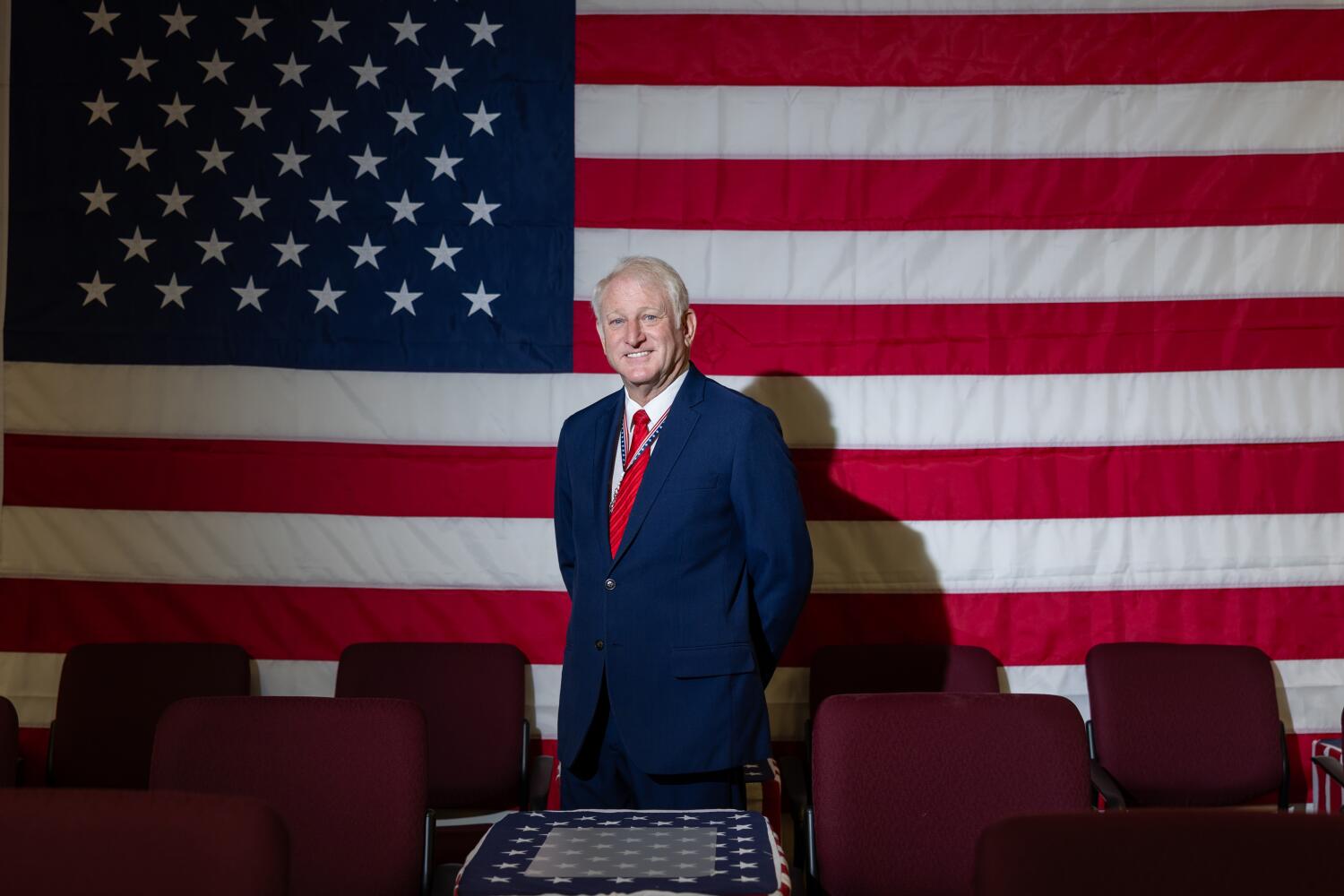
The air in Redding, California, often carries the scent of pine and the faint, lingering memory of wildfire smoke. It is a place of rugged beauty, where the landscape is as jagged as the political divides. In a quiet office within the Shasta County administration building, a man named Tom Toller sits at the center of a storm that he helped brew. He is the Registrar of Voters. He is also a man who, not long ago, stood before the Board of Supervisors to argue that the very systems he now oversees are untrustworthy.
Imagine a locksmith who tells you that every deadbolt in town can be picked with a toothpick, then asks you to hand him the keys to the vault.
Shasta County has become the national petri dish for a specific kind of American anxiety. It is a place where the digital age has collided head-on with a deep-seated, analog yearning for certainty. The core of the tension isn't just about who wins or loses an election. It is about the ghosts in the machines—the lines of code and the proprietary black boxes that turn a paper ballot into a data point. For Toller and his supporters, those machines represent a leap of faith they are no longer willing to take.
The Paper Trail to Nowhere
For decades, the act of voting was a civic ritual defined by the tactile. You felt the weight of the pen. You heard the thud of the ballot box. But as populations grew and the demand for instant results intensified, we outsourced our trust to high-speed scanners and complex software. We traded the slow, human grind of counting for the cold efficiency of the algorithm.
In Shasta, that trade felt like a betrayal.
The movement to scrap Dominion Voting Systems wasn't a sudden whim. It was a slow burn, fueled by hours of YouTube testimonials and white papers circulated in local diners. The argument was simple: if we cannot see the tally happening with our own eyes, how do we know it happened at all? This skepticism isn't a fringe hobby in the shadow of Mount Shasta. It is the prevailing wind.
When the Board of Supervisors voted to cancel their contract with Dominion, they weren't just switching vendors. They were attempting to rip the digital heart out of the democratic process. They wanted to go back. They wanted hand counts. They wanted the transparency of neighbors looking at pieces of paper and nodding in agreement.
But the reality of a hand count is a logistical nightmare that borders on the impossible. To manually tally every race—from the President down to the local mosquito abatement district—for a hundred thousand voters requires an army of flawless humans. Humans are not flawless. We get tired. We lose our place. We see a smudge on a paper and interpret it through the lens of our own biases.
The irony is thick enough to choke on. In the quest for absolute certainty, the county moved toward a method that is statistically proven to be less accurate than the machines they despise.
The Architect of the Unknown
Tom Toller didn't seek the job of Registrar in a vacuum. He was appointed after his predecessor, a long-time civil servant, was essentially driven out by a climate of intense scrutiny and personal threats. Toller was the choice of a board that wanted one of their own—someone who shared their fundamental distrust of the status quo.
Before his appointment, Toller was a vocal skeptic. He spoke of vulnerabilities and "black box" secrets. Now, he is the one who must sign the certification. He is the one who must ensure the laws of the State of California are followed, even when those laws mandate the use of the very technology he questioned.
It is a Shakespearean position to occupy.
To watch Toller work is to see a man trying to reconcile two different versions of reality. In one version, the machines are compromised tools of a shadowy elite. In the other, they are the only practical way to conduct a modern election without falling into total chaos. He is now the gatekeeper of a system he spent years trying to dismantle.
Consider the "Logic and Accuracy" tests. This is a standard procedure where a pre-determined set of ballots is run through the machines to ensure the tally matches the expectation. To an election official, it is a routine check. To a skeptic, it is a staged performance.
"How do we know the machine isn't programmed to behave during the test and cheat during the real thing?" a resident asked at a recent public meeting.
That question is the ultimate conversational dead end. Once you decide that the evidence of your eyes is a lie, there is no amount of proof that can satisfy you. You aren't arguing about facts anymore; you are arguing about the nature of truth itself.
The Cost of Disbelief
The financial price of this skepticism is easy to track. There are the costs of new equipment, the legal fees for defending against state mandates, and the massive spike in public records requests that bog down the small staff at the elections office. But the human cost is harder to quantify.
In the hallways of the county building, the tension is a physical weight. Long-time employees, people who have spent twenty years ensuring that every signature matches and every ballot is accounted for, now find themselves looked at as potential conspirators. They are the "bureaucracy." They are the "deep state" in sensible shoes.
Trust is a fragile ecosystem. It takes years to grow and a single afternoon to burn down. In Shasta, the fire has been roaring for years. The result is a community where even a landslide victory is viewed with a squint and a sneer. When a significant portion of the population believes the game is rigged, the winner doesn't have a mandate—they have a target on their back.
The state of California has stepped in, passing laws specifically designed to prevent counties from ditching machines for hand counts. This has set up a high-stakes game of chicken between Sacramento and Redding. For the local activists, every state intervention is just more proof of the conspiracy. For the state, it is a desperate attempt to keep the wheels from falling off the democratic carriage.
The Ghost in the Precinct
One night, during a particularly heated meeting, an elderly man stood up to speak. His voice was shaking, not with anger, but with a genuine, heartbreaking fear. He talked about his father fighting in World War II. He talked about the sanctity of the vote. And then he said, "I just want to know that my voice was heard. I don't think that's too much to ask."
That man is the emotional core of the Shasta story. He isn't a conspiracy theorist in a tinfoil hat. He is a citizen who feels like the world has moved too fast and left him behind. He feels like the digital systems we’ve built are a veil between him and his government.
The problem is that there is no "back" to go to. We cannot return to a 19th-century voting model in a 21st-century world any more than we can return to horse-and-buggy transportation for a transcontinental trip. The volume of data is too high. The complexity of the ballots is too great.
Toller now spends his days navigating this impossible middle ground. He must satisfy a base that wants a revolution while following a legal code that demands stability. He must be the face of a process that his own supporters view with hostility.
As the next election cycles loom, the eyes of the country are on this stretch of Northern California. People want to see if the system holds or if the cracks spread. They want to know if a skeptic can run a clean election, or if the very act of skepticism creates the failure it predicts.
In the end, the machines are just tools. They are made of plastic, silicon, and copper. They don't have agendas. They don't have politics. The only ghosts in the machines are the ones we bring with us.
The tally continues. The ballots are fed into the scanners. The lights on the machines blink green, then red, then green again. And outside, in the crisp mountain air, a community waits to be told what they are allowed to believe.
A man stands at a table, holding a single ballot up to the light, looking for a mark that may or may not be there.