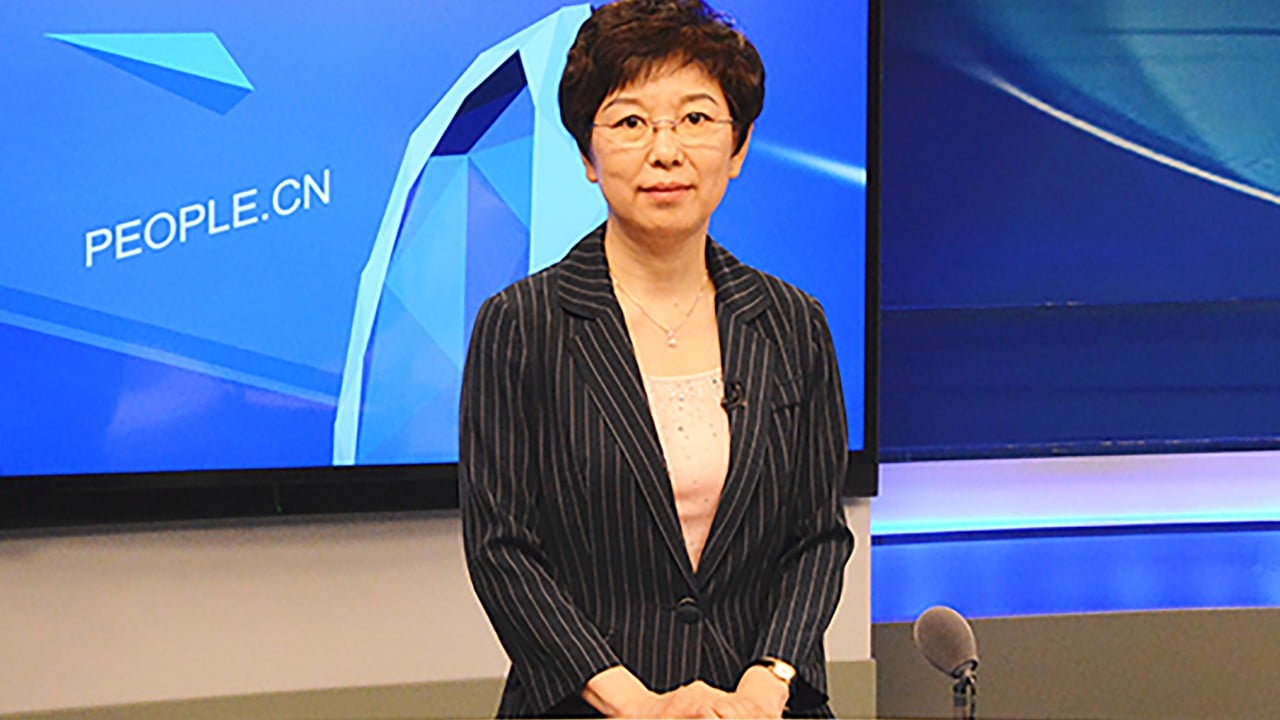
The State Council of China quietly reshaped the top tier of its Hong Kong policy apparatus this week, naming Zhang Dongmei as the new deputy director of the Hong Kong and Macao Affairs Office (HKMAO). This is not a routine administrative swap. By elevating a veteran leader from the All-China Women’s Federation (ACWF), Beijing has broken a glass ceiling in the office’s executive ranks, signaling a shift toward a "softer" yet more pervasive integration strategy.
Zhang’s appointment is the first time a woman has held a deputy director role since the HKMAO was elevated into a more powerful Communist Party organ—the Hong Kong and Macao Work Office—in 2023. She enters at a moment when the central government is pivoting from the "hard" security crackdown of the 2020–2024 era toward a phase focused on social cohesion and economic alignment.
The Soft Power Pivot
Zhang Dongmei spent years at the ACWF, an organization tasked with managing the social fabric of the mainland. Her expertise is not in riot police or high-level finance, but in social engineering and grassroots mobilization. This background suggests that Beijing’s current priority is no longer just silencing dissent, but winning hearts or, at the very least, managing the everyday lives of Hong Kong’s youth and families.
The timing aligns with a broader leadership turnover. As current HKMAO Director Xia Baolong nears the standard retirement age, his lieutenants are being replaced by a younger, diverse cohort. These are officials who view Hong Kong not as a "special" outlier to be tolerated, but as a component of the Greater Bay Area that must be socially and culturally indistinguishable from Shenzhen or Guangzhou.
A New Breed of Bureaucrat
Unlike previous appointees who often hailed from the diplomatic corps or the security services, Zhang represents a shift toward mass-organization experience.
- Social Connectivity: Her career has focused on "mass work," the Communist Party's method of building loyalty through community organizations.
- Family-Centric Policy: Observers expect her to spearhead initiatives aimed at "patriotic education" through family units, a strategy successfully deployed in mainland provinces to stabilize shifting demographics.
- Institutional Memory: At 58, Zhang is part of the "Reform and Opening" generation, which prioritizes results-oriented governance over pure ideological grandstanding.
The Greater Bay Area Chessboard
Zhang’s arrival coincides with the appointment of Yang Weiqun as deputy director of the Liaison Office in Macao. Yang, a former Ministry of Commerce official, is an expert in trade and international cooperation. Viewed together, these moves reveal a two-pronged strategy for the Pearl River Delta.
While Yang focuses on the "Business" of Macao and its role as a gateway to Portuguese-speaking markets, Zhang is the "Social" lead for Hong Kong. This is a classic "good cop, bad cop" administrative structure, but with a twist. The "bad cop" (the National Security Law) is already in the room; Zhang is here to provide the "good cop" infrastructure—community programs, youth exchanges, and social welfare integration.
The economic stakes are massive. As the 15th Five-Year Plan looms in 2027, the central government is desperate to solve Hong Kong’s housing and demographic crises, which it blames for the 2019 unrest. Zhang’s expertise in managing large-scale social organizations provides the HKMAO with a toolkit it has lacked: the ability to bypass traditional Hong Kong elites and speak directly to the "grassroots."
Institutional Reshuffle Dynamics
The 2026 reshuffle is a precursor to the 21st Party Congress. Currently, the HKMAO is a hybrid beast—it reports to both the State Council and the CPC Central Committee. This dual-hatted system ensures that policy is executed with the speed of a party directive but the legality of a government decree.
Zhang joins a team that includes Xu Qifang, the executive deputy director known for his organizational discipline, and Nong Rong, a diplomat with a focus on external affairs. Zhang’s presence rounds out this "super-cabinet" by adding a domestic social management dimension.
What This Means for the HKSAR Government
For Chief Executive John Lee’s administration, Zhang’s appointment is a signal that the "Executive-Led" governance model will be under even tighter scrutiny from Beijing. Lee has been urged to improve "governance effectiveness." In Beijing’s parlance, this means the government must deliver tangible social improvements—specifically in areas Zhang knows well: housing, youth mobility, and social services.
If the Hong Kong government fails to move the needle on these issues, Zhang Dongmei has the experience to suggest "mainland-style" interventions. We are talking about a transition from managing a territory to governing a city.
The era of the Hong Kong "specialist"—the career diplomat who treated the city like a foreign mission—is over. It has been replaced by the era of the integrated technocrat. Zhang is the face of this transition: a leader who views Hong Kong’s social issues as no different from those in Beijing or Shanghai, requiring the same "mass work" solutions that the Party has refined for decades.
Would you like me to analyze the career trajectories of the other recent HKMAO appointees to map out the office's 2027 strategy?