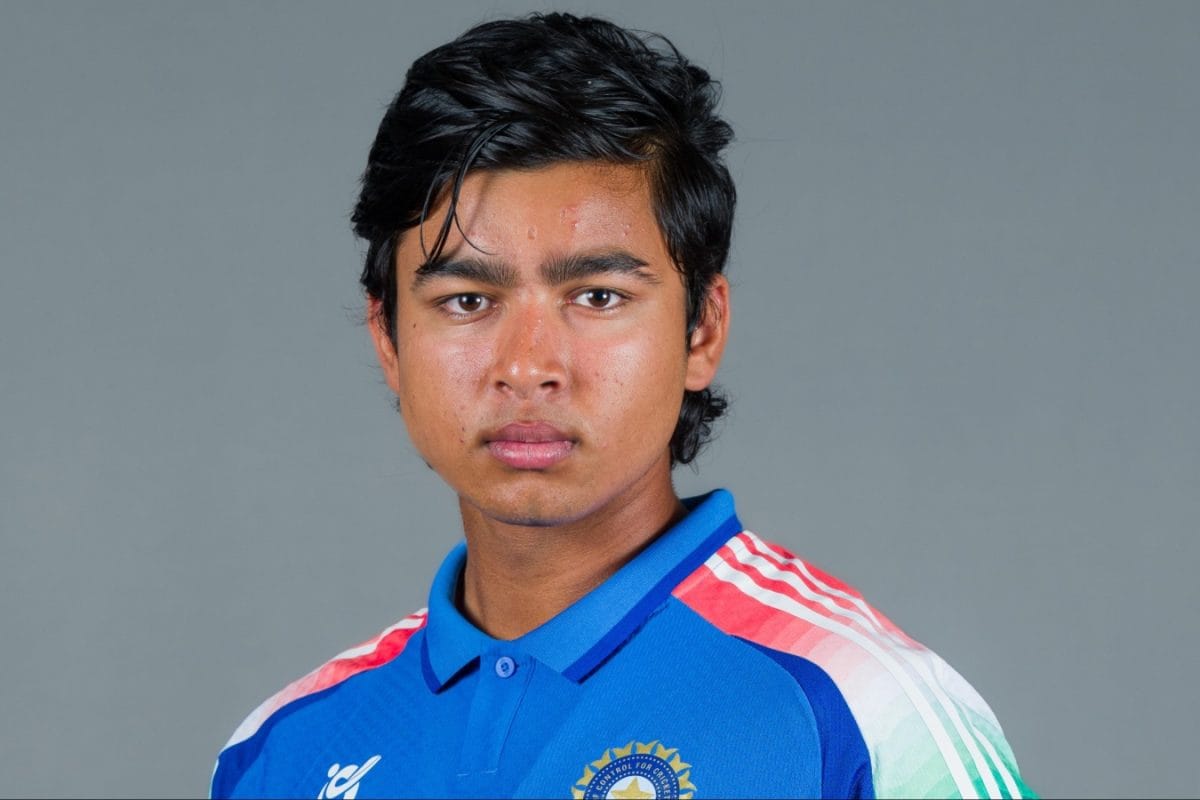
The air in a high school gym is a specific kind of heavy. It smells of floor wax, old leather, and the desperate, frantic sweat of teenagers trying to prove they exist. For Alexander Gevorkian, the point guard at Verdugo Hills High, that weight isn’t just about the scoreboard or the scout in the third row. It is about the name on the back of his jersey. It is about a lineage that stretches across oceans, through history books filled with both triumph and trauma, and into the quiet living rooms of Tujunga where dreams are often whispered rather than shouted.
Basketball is a game of space. You create it, you occupy it, or you lose it. But for many Armenian-American students, the space they occupy in the educational system feels narrow. Precarious.
Gevorkian understands the geometry of the court. He knows how to thread a needle between two defenders to find an open teammate. He realized, however, that the most important assists he could ever give were not happening during the four quarters of a Friday night game. They needed to happen in the hours between practice and sleep, in the daunting gap between a high school diploma and a future that feels attainable.
The Invisible Sidelines
Consider a student we will call Ani. She is brilliant, capable of deconstructing complex chemistry equations as easily as she navigates the social hierarchies of the cafeteria. But when she looks at the college application process, she sees a wall. Her parents worked three jobs to ensure she had a roof over her head, but they don't know what a FAFSA is. They don't know how to navigate the predatory nature of student loans or the specific cadence required for a personal statement that catches the eye of an admissions officer.
Ani isn't a statistic. She is a girl standing at a crossroads, feeling the quiet pressure of being the "first." The first to go. The first to succeed. The first to carry the family legacy into the professional world.
This is the silent crisis Gevorkian saw from the top of the key. He looked at his peers and saw a community rich in culture and resilience, yet often disconnected from the institutional "know-how" that acts as the hidden engine of American success. He didn't just see a lack of resources; he saw a lack of a roadmap.
So, he did what point guards do. He surveyed the floor. He identified the gap in the defense. And he drove toward it.
Beyond the Three-Point Line
The nonprofit Gevorkian created—Prep Talk—wasn't born in a corporate boardroom. It was forged in the reality of being a student-athlete who realizes that the game ends, but the life follows. The mission was deceptively simple: empower Armenian students by providing the tools they need to navigate the transition to higher education.
But "empowerment" is a hollow word until you put skin on it.
Gevorkian began organizing workshops that stripped away the mystery of the college process. He brought in voices that sounded like the students’ own. He realized that when a mentor says, "I've been where you are," it carries more weight than a glossy brochure from a university. It becomes a bridge.
The stakes are higher than they appear. For the Armenian diaspora, education has historically been the primary tool of survival and rebuilding. After the displacement and tragedies of the past century, the mind became the only asset that couldn't be taken away. When an Armenian student succeeds, it isn't just an individual win; it is a middle finger to the forces of history that tried to erase their people. It is an act of defiance.
The Anatomy of an Assist
Being a leader on the court means you have to be comfortable with the ball in your hands when the clock is winding down. You have to be okay with the scrutiny. Gevorkian took that same appetite for responsibility and applied it to the logistical nightmare of running an organization.
He had to learn the language of paperwork. He had to figure out how to market a message to a generation that has a five-second attention span and a deep-seated skepticism of anything that feels like "extra homework."
He leaned into the community. He used the very thing that connects so many Armenian families—the tight-knit, almost cellular bond of the culture—to spread the word. Prep Talk became a hub. It wasn't just about SAT scores or GPA requirements. It was about creating a culture of expectation.
Imagine the shift in a household when the conversation moves from "I hope you can get a job" to "Which university will best serve your ambitions?" That shift is tectonic. It changes the way a teenager carries themselves. It changes the way they view the obstacles in their path.
The Friction of Change
Doing something new always creates heat. There is a comfort in the status quo, even if the status quo is mediocre. Gevorkian faced the inevitable questions. Why you? Why now? Isn't basketball enough?
The truth is that basketball was never enough. For a player like Gevorkian, the sport is a laboratory. You learn how to handle failure. You learn that a turnover isn't the end of the world as long as you hustle back on defense. You learn that the person next to you is the only reason you have a chance to win.
He applied these lessons to Prep Talk. When a workshop didn't have the turnout he hoped for, he adjusted the strategy. When students were too shy to ask questions, he changed the format to be more conversational. He treated the nonprofit like a season-long campaign.
The real problem lies in the assumption that talent is enough. It isn't. Talent without access is just a tragedy waiting to happen. There are countless "greatest players who never were" on the street corners of every city, not because they lacked the skill, but because they lacked the directions to the arena. Gevorkian is the one drawing the map.
The Long Court
The season at Verdugo Hills will eventually end. The sneakers will be worn out, the jerseys will be framed or put in a box, and the roar of the crowd will fade into the soft hum of adulthood.
But the impact of Prep Talk doesn't have an expiration date.
A student who gets into their dream school because of a workshop Gevorkian hosted will carry that degree for fifty years. They will buy a home. They will raise children who see college as a standard, not a miracle. They will, in turn, become the mentors who reach back to the generation behind them.
This is the geometry of a life. It is a series of ripples, each one expanding, touching things we can't yet see.
When Alexander Gevorkian stands on the court, he isn't just looking for the open man. He is looking for the future. He is a point guard, after all. He knows the game is won by the people who see the play before it happens. He isn't just playing for the city. He isn't just playing for the school. He is playing for a heritage that refuses to be sidelined, one assist at a time.