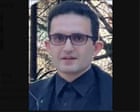
The disappearance of Kasra Vafadari in Canada is no longer just a missing persons case for the local authorities in British Columbia. It has become a flashpoint for international security analysts and human rights defenders who see the shadow of the Islamic Republic of Iran stretching across the Pacific. Vafadari, a brilliant mathematician and academic with deep roots in the Iranian Zoroastrian community, vanished under circumstances that suggest something far more clinical and coordinated than a random accident or a personal crisis.
For those who track the movement of dissidents and high-value intellectuals across borders, the silence surrounding Vafadari is deafening. The primary concern is that he has been caught in a dragnet of "transnational repression," a tactic where authoritarian regimes reach into democratic nations to silence, kidnap, or eliminate perceived threats. In the case of Iranian nationals, this often involves a sophisticated mix of digital surveillance, family coercion, and physical abduction. Vafadari's profile—a high-achieving academic from a minority background often targeted by the clerical establishment—makes him a textbook candidate for such operations.
The Silence of the North
Canada has long been a sanctuary for the Iranian diaspora, yet that sanctuary is proving increasingly porous. When an individual like Vafadari goes missing, the initial police response typically follows a rigid domestic protocol: check the hospitals, monitor the bank accounts, and wait for a lead. This approach is fundamentally flawed when dealing with state-sponsored actors. If Vafadari was targeted by Iranian intelligence, the trail would not be found in a local park or a city hospital. It would be buried in encrypted communications and the manifests of non-commercial transport.
Activists in Vancouver and Toronto are frustrated. They argue that the Royal Canadian Mounted Police (RCMP) and the Canadian Security Intelligence Service (CSIS) are consistently behind the curve regarding the IRGC’s (Islamic Revolutionary Guard Corps) capabilities on Canadian soil. While Canadian officials debate the legal nuances of terrorist designations, men and women associated with the Iranian opposition or independent intellectual circles are being watched. Vafadari’s disappearance is not an isolated mystery; it is a data point in a growing trend of insecurity for the diaspora.
Why a Mathematician Matters to a Theocracy
To the casual observer, a mathematician seems like an unlikely target for an international kidnapping plot. This view ignores the historical reality of how the Iranian state views its intellectual capital. The "Brain Drain" is a source of immense embarrassment for Tehran, but it is also a security concern. Mathematicians and physicists often hold keys to dual-use technologies, cryptography, and advanced modeling that the regime desperately needs or fears will be used against them.
More importantly, Vafadari belongs to the Zoroastrian faith. In Iran, while Zoroastrians are a recognized religious minority, they are frequently subjected to systemic pressure and land seizures. The Vafadari family specifically has a history of being targeted; Kasra’s own relatives have faced imprisonment and the confiscation of property in Iran under dubious legal pretenses. By silencing a successful, internationally recognized member of this community, Tehran sends a chilling message to the rest of the diaspora: no matter where you go, the state can still reach you.
The Mechanics of Transnational Repression
How does a person simply evaporate in a modern Western city? The process is often less cinematic than a midnight raid and more about the slow tightening of a noose. It starts with digital harassment. Many Iranians in exile report receiving threats via Telegram or WhatsApp, often accompanied by photos of their family members still living in Iran. This is the leverage.
Once a target is sufficiently isolated or coerced into a meeting, the physical operation takes over. Intelligence agencies have used "honeytraps," fake business opportunities, or urgent family "emergencies" to lure victims to locations where they can be subdued and moved. In the 2020 kidnapping of journalist Ruhollah Zam, he was lured from France to Iraq before being abducted to Iran and eventually executed. The Vafadari case lacks the public trail of Zam, which suggests a much tighter, more professional extraction if the state-actor theory holds true.
The Problem of Sovereign Blindness
Western governments often suffer from a specific type of blindness. They assume that because they respect international borders, their adversaries do the same. Canada’s intelligence community has been vocal about foreign interference from China and Russia, but the Iranian threat has often been relegated to the background of nuclear diplomacy or trade discussions. This lack of focus creates "gray zones" where foreign agents can operate with relative impunity.
The RCMP’s "Integrated National Security Enforcement Teams" are tasked with these investigations, but they are often hamstrung by a lack of linguistic expertise and a deep-seated mistrust within the Iranian-Canadian community. Many refugees are hesitant to speak to police, fearing that the long arm of the regime has even infiltrated the translator pools or local community organizations. This wall of silence is exactly what an abduction team relies on to make a clean getaway.
The Pattern of Disappearing Dissidents
If we look at the broader landscape of Iranian operations abroad, a grim pattern emerges. From the assassination of Kurdish leaders in Berlin in the 1990s to the recent foiled plots against activists in Brooklyn and London, the IRGC has shown a consistent willingness to violate the sovereignty of G7 nations.
- Masih Alinejad: The target of a sophisticated kidnapping plot in New York involving private investigators and a planned high-speed boat extraction to Venezuela.
- Jamshid Sharmahd: A German-Iranian resident kidnapped in Dubai and taken to Iran, where he was sentenced to death.
- Habib Chaab: Lured from Sweden to Turkey, drugged, and smuggled across the border to Iran.
Vafadari fits the demographic of these targets—individuals who possess either symbolic value or intellectual prestige that the regime cannot tolerate being outside its control. His disappearance occurred at a time of heightened tension within Iran, as the state continues to reel from the "Woman, Life, Freedom" protests. During such periods, the regime traditionally ramps up its external operations to project strength and eliminate potential leaders of the opposition abroad.
The Economic and Academic Fallout
The impact of Vafadari’s disappearance ripples through the academic community. If Canada cannot guarantee the safety of its researchers, it loses its status as a global hub for innovation. We are seeing a "chilling effect" where Iranian-born scholars are turning down international conferences, deleting their social media presence, and even changing their names to avoid detection.
The loss of a mathematician of Vafadari's caliber is a blow to the field, but the loss of security for an entire class of intellectuals is a catastrophe for the nation. Universities are now being forced to consider security protocols that were once reserved for high-level diplomats. When a professor goes missing, it isn't just a police matter; it is an indictment of the host country's ability to protect the very people it invited to help build its future.
The Failure of the "Wait and See" Strategy
The Canadian government’s response to Vafadari has been characteristically muted. There is a diplomatic dance at play. Canada has no formal diplomatic relations with Iran, having severed them in 2012, which means there are few direct channels to demand answers or apply pressure. However, this lack of ties should theoretically make it easier for Ottawa to take a harder line on Iranian operations within its borders.
Instead, we see a bureaucratic vacuum. The family is left to plead for information on social media, while official statements remain vague. This passivity encourages further aggression. If a state actor believes they can spirit away a citizen or a legal resident without triggering a massive diplomatic and security backlash, they will continue to do so. The "wait and see" strategy is not a policy; it is an admission of helplessness.
Hard Questions for Canadian Intelligence
Evidence suggests that foreign agents are increasingly using local criminal proxies to do their dirty work. This provides "plausible deniability." If a mathematician is found dead or simply disappears, the authorities may write it off as a gangland killing or a local crime. Investigators must look beyond the immediate physical evidence and examine the financial and digital footprints of known Iranian proxies operating within the Lower Mainland of British Columbia.
- Were there unusual financial transfers in the weeks leading up to the disappearance?
- Did Vafadari report any "random" encounters or surveillance to his colleagues?
- Has there been an uptick in Iranian "diplomatic" or non-official travel through nearby ports of entry?
These are the questions that lead to the truth, yet they require a level of inter-agency cooperation that is often bogged down by red tape.
The Human Cost of Geopolitics
Behind the analysis and the security reports is a man who was a vital part of his community. Kasra Vafadari’s absence is a void in the lives of his students and his family. The Zoroastrian community, already small and under pressure, feels this loss with particular intensity. To them, Kasra wasn't just a mathematician; he was a symbol of what an Iranian could achieve when freed from the constraints of a fundamentalist state.
His disappearance serves as a grim reminder that for many, the move to the West is not a final escape, but the beginning of a different kind of struggle. The "threat model" for a person like Vafadari is fundamentally different than that of a natural-born Canadian. Until the law enforcement and intelligence apparatus in the West acknowledges this reality, more brilliant minds will continue to vanish into the ether.
The international community must move beyond "concern" and toward a framework of active deterrence. This involves sanctioning the specific units of the IRGC responsible for transnational operations, improving the physical security of high-risk dissidents, and making it clear that a violation of sovereignty will have immediate, painful consequences for the regime’s assets abroad.
The clock is ticking. Every day that passes without a sign of Kasra Vafadari makes it more likely that he is either in a "black site" in Iran or silenced forever. The mystery of his disappearance is a loud alarm for a world that has been sleeping while its borders were being crossed.
Demand that your local representatives push for a formal inquiry into the security of the Iranian diaspora.


