The air inside Dubai International Airport doesn't feel like the air outside. Outside, it is a thick, humid weight that smells of salt and ambition. Inside, it is a sterilized, pressurized hum. It smells of expensive oud, jet fuel, and the frantic, silent energy of eighty million souls moving toward somewhere else. Most people treat DXB as a transit lounge for their lives. You arrive, you wait, you caffeinate, you leave. But for some, the departure gate is a cliff edge.
Sarah didn’t want to leave. She sat near a charging station, her grip tightening on a passport that felt heavier than it should. Ten years in the desert. Ten years of building a life in a city that often feels like a beautiful, temporary dream. Now, the dream was ending. Redundancy, a packed suitcase, and a one-way ticket back to a cold city she barely remembered. She was the invisible statistic of the expat cycle. She expected the terminal to treat her like it treats everyone else—as a barcode to be scanned.
Then came the tap on the shoulder.
It wasn't security. It wasn't a gate agent telling her the flight was delayed. It was a person holding a box. A simple, elegant package that looked like a gift but felt, in that moment, like a confession.
The Currency of a Goodbye
We are used to airports taking things from us. They take our time. They take our liquids. They take our patience in long, snaking lines under fluorescent lights. DXB has spent decades perfecting the art of the "hello," pouring billions into being the most shimmering welcome mat on the planet. But the "goodbye" has always been a sterile affair. You walk through the gate, the door closes, and the city fades into a grid of lights beneath the wing.
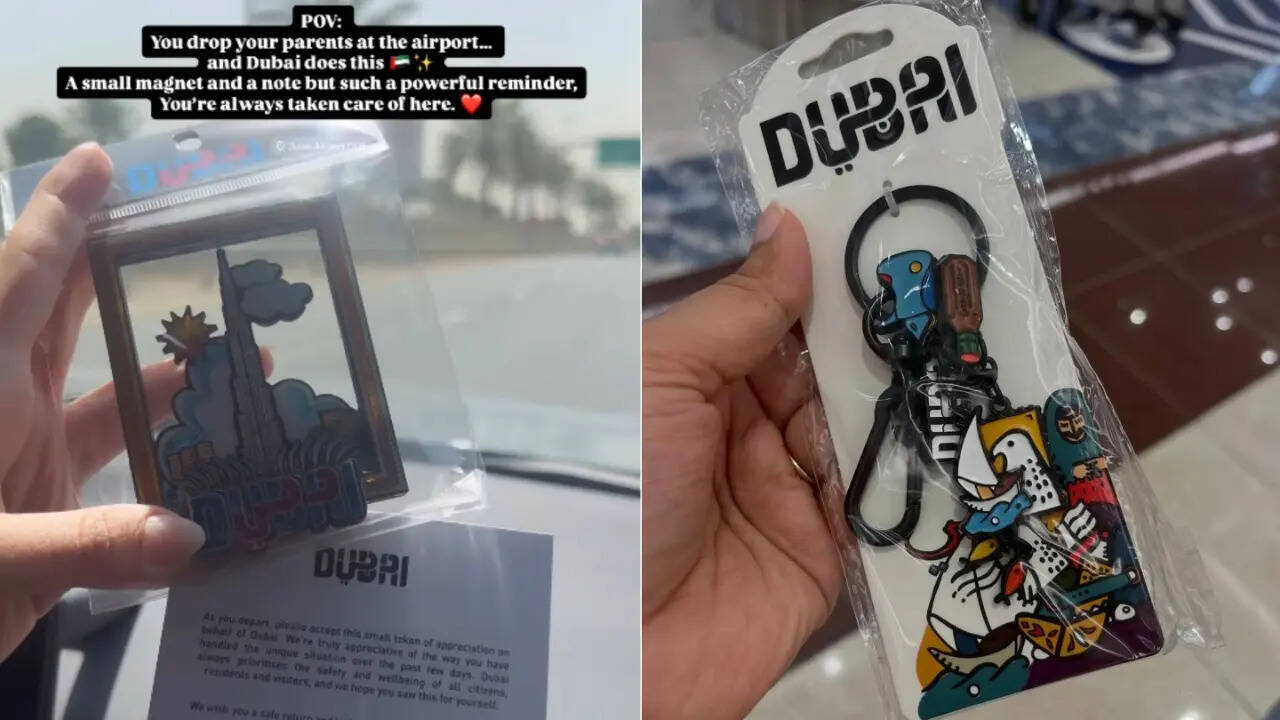
This viral shift in Dubai’s strategy isn’t about logistics. It is about the emotional residue of a journey. The gift packs appearing in the hands of stunned travelers aren't just marketing collateral. They are an acknowledgment of the human cost of travel. When Sarah opened her box, she didn't find a generic keychain or a map she’d never use.
Inside these kits, there is a curated intentionality. There is a "Taste of Home" that mirrors the flavors of the city—premium dates that taste like the sun, artisanal chocolates, and often, a small, vial of fragrance that captures the specific, smoky sweetness of a Dubai evening. But the physical items are secondary. The real contents of that box are a sense of being seen.
Consider the mechanics of the "surprise gift" phenomenon. In a world of algorithmic loyalty programs and tiered memberships, a random act of kindness is a glitch in the system. It breaks the transactional nature of travel. Travelers who had spent their final hours in the city feeling like a ghost were suddenly pulled back into the light. The gifts turned a standard exit into a ceremony.
Beyond the Ribbon and Wrap
The psychology at play here is a concept known as the Peak-End Rule. Heuristic experts argue that humans judge an experience largely based on how they felt at its peak and at its end. Most airports fail the "end" miserably. They leave you with a cramped seat and a lukewarm coffee. By injecting a moment of high-emotional resonance at the final point of contact, DXB effectively rewrites the memory of the entire trip.
It is a calculated gamble on nostalgia.
But let’s look closer at what’s actually inside. The viral packs often contain high-quality travel essentials that go beyond the disposable. We are talking about leather-bound journals, tech accessories that actually work, and vouchers that feel like a "see you later" rather than a "farewell."
The invisible stakes are high. Dubai is a city built on the movement of people. If the departure feels like an eviction, the traveler doesn't come back. If the departure feels like a breakup where the other person still cares, the traveler remains an ambassador. Sarah looked at the small note tucked into the side of her gift. It didn't have a corporate slogan. It had a simple wish for her next chapter.
She cried.
She wasn't crying because she got a free gift. She was crying because, in a city of millions, at a gate where thousands pass every hour, someone had paused to recognize that she was leaving.
The Friction of the Modern Journey
Travel has become an exercise in endurance. We deal with the friction of security, the anxiety of connections, and the strange, liminal loneliness of being in a crowd of strangers. We have optimized the speed of travel but sacrificed the soul of it.
When these gift packs started appearing, the internet reacted with a strange mix of envy and awe. Why? Because we are starved for grace in public spaces. We are so used to being "users" or "passengers" that being treated as a "guest" feels revolutionary. It highlights a massive gap in how global hubs operate. Most airports are machines designed to process bodies. DXB is attempting to be a host.
This isn't just about a box of dates. It’s about the shift from infrastructure to empathy.
Imagine the logistics. To pull this off, the staff have to be more than just employees; they have to be observers. They have to spot the family looking frazzled, the solo traveler looking somber, or the couple celebrating a milestone. They have to intervene in a stranger's day with a gesture that could easily be rejected.
The items inside the pack—the high-end lotions to combat cabin air, the gourmet snacks, the commemorative coins—serve as anchors. They are physical reminders of a place that, for a few years or a few days, was home. They turn a cold goodbye into an emotional bookmark.
The Lasting Echo of a Gesture
As Sarah boarded her flight, she didn't put the gift in the overhead bin. She kept it on her lap.
The person in the seat next to her asked where she got it. Suddenly, a conversation started. The box became a bridge. They talked about their favorite spots in the city, the heat of July, and the way the skyline looks when the dust settles after a storm. The gift hadn't just changed her mood; it had changed the environment of the cabin.
This is the hidden ROI of the viral gift pack. It isn't measured in the cost of the goods inside, but in the stories told long after the plane touches down. It’s the photo shared on social media that says, Look, I mattered to this place.
In an era of automation, where we check ourselves in and scan our own bags, the human hand reaching out with a gift is a powerful subversion. It reminds us that travel isn't just about the destination or the coordinates on a map. It’s about the transitions. It’s about the moments where we are between lives, between jobs, or between versions of ourselves.
The surprise isn't really what is in the box.
The surprise is that in the middle of a massive, metallic, high-speed world, someone took the time to make the goodbye hurt a little less. Sarah looked out the window as the plane pushed back from the gate. She saw the ground crew in their neon vests, the shimmering heat waves off the tarmac, and the towering glass of the terminal.
She reached into the box, took out a single date, and tasted the desert one last time.
The city was already shrinking below her, a sea of lights and sand, but the weight in her lap felt like a promise. It was a reminder that even in the most transient places on earth, we leave a shadow behind, and sometimes, the place reaches out to hold our hand before we go.