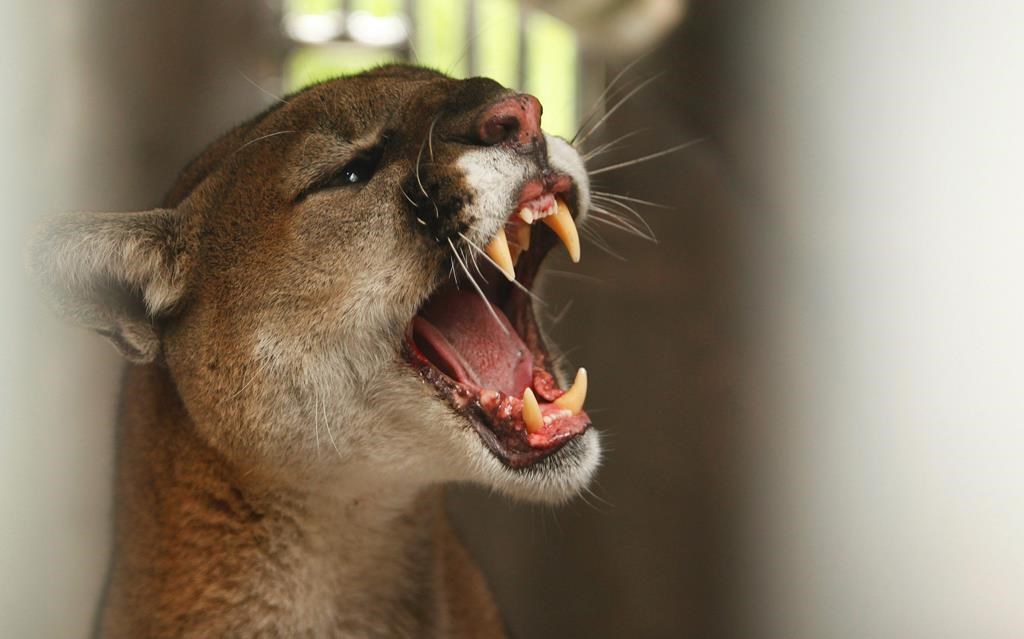
You’ve probably heard the stories around a campfire or seen the blurry Facebook photos. Someone’s cousin saw a long tail disappearing into the brush near Truro, or a farmer in the Valley found tracks that looked way too big for a bobcat. People in Nova Scotia are convinced there are cougars in our woods. Yet, the Department of Natural Resources and Renewables (DNRR) keeps saying the same thing. They don't exist here. There is no breeding population of Eastern Cougars in this province.
It feels like a classic case of gaslighting. Thousands of people claim to see a massive, tan predator, and the government just shakes its head. But if you look at the biology, the history, and the cold hard evidence, the mystery starts to make sense. It’s not that everyone is lying. It’s that our brains are incredibly good at seeing what we want to see.
Why the Province Says No
The official stance isn't based on stubbornness. It’s based on a total lack of physical proof. In the world of wildlife biology, "sightings" are the lowest form of data. To declare a species present, scientists need "hard" evidence. We’re talking about carcasses, clear high-resolution photos, DNA from hair or scat, or tracks verified by experts.
Nova Scotia hasn't had a confirmed cougar kill or carcass since the 19th century. Think about that for a second. We have thousands of kilometers of roads. We have thousands of deer hunters in the woods every fall. We have dashcams, trail cameras on every second tree, and high-def smartphones in every pocket. If there were a breeding population of 150-pound cats roaming the province, one of them would have ended up as roadkill by now. It happens with bears, bobcats, and coyotes every single week.
Wildlife biologists like Dr. Scott McBurney have pointed out that while individual cats might occasionally wander through, there's zero evidence of a "resident" population. To have a population, you need mothers and kittens. You need a genetic trail. So far, the trail is cold.
The Bobcat Identity Crisis
If people aren't seeing cougars, what are they seeing? Most of the time, it’s a bobcat. I know, you think you can tell the difference. But in the dim light of dusk or through a thicket of spruce, scale gets wonky.
Bobcats in Nova Scotia can get surprisingly large. A big male can push 35 pounds. When they’re healthy and their winter coat is sleek, they can look much larger than they actually are. The biggest giveaway is the tail. A cougar has a thick, heavy tail that’s nearly as long as its body. A bobcat has a "bobbed" tail. But here’s the kicker. When a bobcat is running away, or if you only catch a glimpse of its rear, that short tail can look like the base of a long one.
Then there are the tracks. A large dog track without visible claw marks often gets mistaken for a cat. Or a bobcat track in melting snow. When snow melts, a small print expands. A standard 2-inch bobcat paw can stretch into a 4-inch monster print that looks exactly like a mountain lion. Honestly, most "cougar" tracks reported to the DNRR turn out to be melted coyote prints or large domestic dogs.
The Ghost Cat Phenomenon
There is a small chance some of these sightings are real, but they aren't "Eastern Cougars." The Eastern Cougar was declared extinct by the U.S. Fish and Wildlife Service in 2011 and by Canadian authorities around the same time. If there’s a big cat in the woods, it’s likely one of two things.
First, it could be a transient. Young male cougars from Western Canada or the U.S. Midwest are known to travel insane distances. One cat was tracked from South Dakota all the way to Connecticut. It’s technically possible for a cougar to wander through New Brunswick and cross into Nova Scotia. But these are lone travelers. They don't make a population.
Second, and more likely, it’s a former pet. It sounds crazy, but people keep exotic animals. When an illegal cougar gets too big or too dangerous, some owners let them go. These cats are often declawed or habituated to humans, which is why they show up near backyards and don't act like wild predators. They usually don't survive the winter.
Dealing With the Rumour Mill
The internet has made the "Nova Scotia Cougar" myth immortal. Every few months, a photo goes viral on local community groups. It usually shows a cougar in a backyard with a caption like "Seen today in Antigonish!"
If you do a quick reverse image search, you'll find that same photo was taken in British Columbia in 2014 or even California. People love the thrill of a predator in the woods. It adds a bit of danger to the landscape. It makes the wilderness feel "wilder." But spreading these photos without checking them just fuels the fire.
The DNRR actually investigates many reports. They’ve sent officers to look at tracks and hair samples. Every single time, the results come back as "Canine," "Feline (Domestic)," or "Bobcat." There hasn't been a single confirmed DNA hit for a cougar in this province in the modern era.
What to Do if You See One
If you genuinely believe you’ve spotted a cougar, don't just post it on Facebook. That doesn't help anyone. You need to act like a citizen scientist.
Don't look for the cat; look for what it left behind. If you see tracks, put something down for scale—a coin, a lighter, or a glove—and take a photo directly from above. Look for hair on barbed wire fences. If you find scat, don't touch it with your bare hands, but keep track of its location.
The province isn't hiding the truth. They’d actually love to find one. Discovering a supposedly extinct or extirpated species would be a massive win for conservation. They aren't suppressing the info; they’re waiting for something they can actually prove in a lab.
Stop looking for the ghost cat and start looking at the bobcats. You'll realize we already have a pretty impressive predator in our woods. It just doesn't have the long tail everyone is looking for.
If you're out in the woods, keep your eyes open. If you see something, get the camera ready, but keep your expectations low. Until someone produces a clear photo or a body, the cougar remains a myth. Focus on securing your livestock and keeping your pets indoors at night. That’s just good practice anyway, since the coyotes and bobcats we know are here are more than capable of causing trouble. Stop worrying about the mountain lion and start paying attention to the wildlife that’s actually standing right in front of you.


