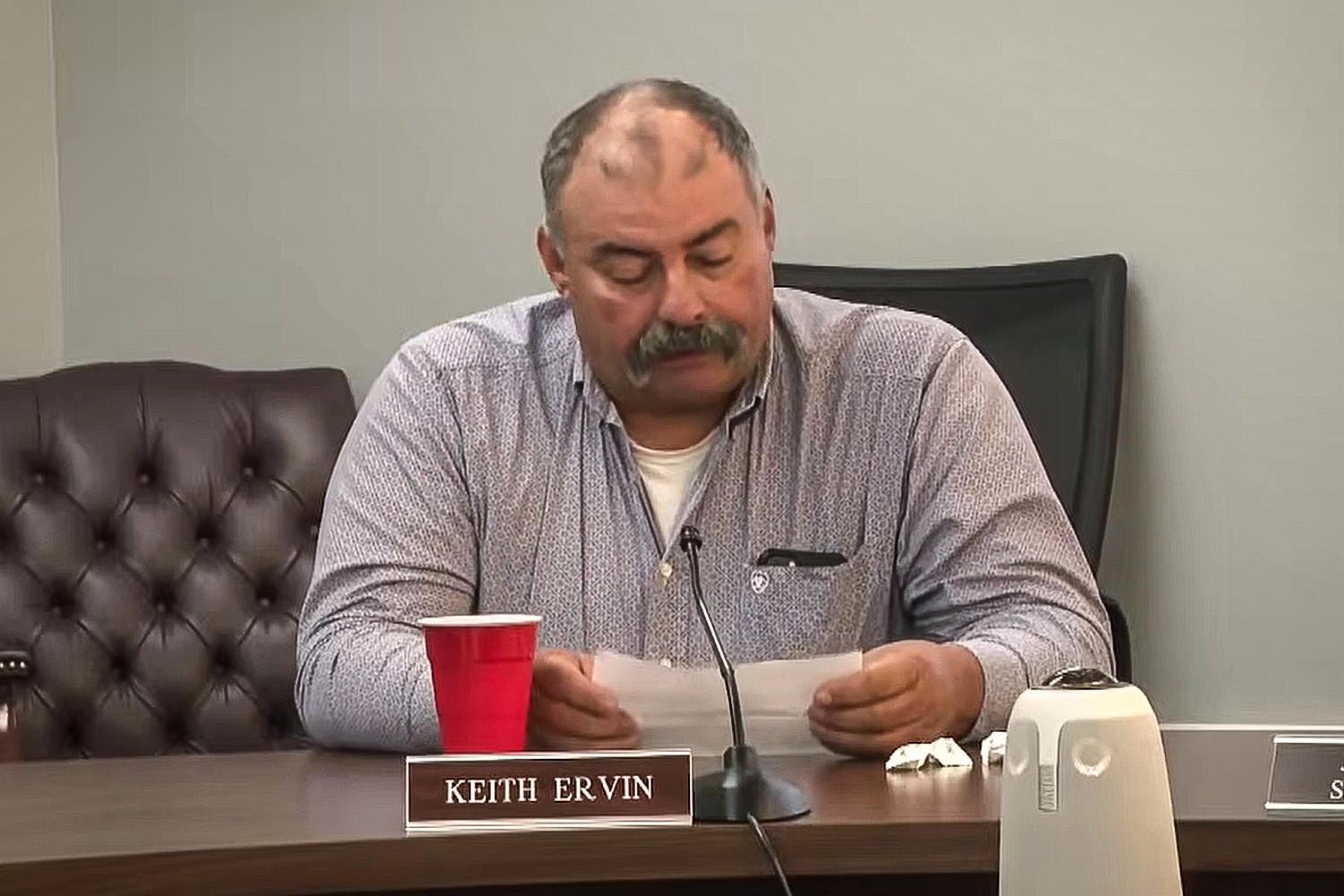
Public officials should know better than to comment on the physical appearance of students. That’s a baseline expectation. When Jay Galbreath, a member of the Williamson County School Board in Tennessee, directed the word "hot" toward a high school student during a public meeting, he didn't just cross a line. He highlighted a massive gap in how local governments handle misconduct. You might think a clear-cut case of inappropriate behavior would lead to immediate, severe consequences. It didn't.
The board eventually voted to censure Galbreath, but the process revealed a messy reality about local politics and the limits of school board authority. If you’re following this story, you aren't just looking at a single cringe-worthy moment. You’re looking at a test case for accountability in the public square.
The Comment That Sparked a Firestorm
The incident happened during a standard board meeting. A high school student was presenting, doing exactly what we encourage young people to do—engaging with her local government. Galbreath’s response was to remark on her appearance. Specifically, he called her "hot."
The backlash was instant. Parents, students, and fellow board members felt the weight of that word. It wasn't just a slip of the tongue. It felt predatory to some and deeply unprofessional to everyone else. In a school environment, where we hammer home the importance of boundaries and "Title IX" protections, seeing a leader violate those same principles is jarring. It creates a "do as I say, not as I do" atmosphere that poisons the culture of a school district.
Why Censure is Often a Paper Tiger
You’ll hear the word "censure" tossed around a lot in political news. It sounds official. It sounds heavy. But let’s be real about what it actually does.
A censure is essentially a formal scolding. It's a public "we don’t like what you did" from a governing body to one of its members. It does not remove the person from office. It does not strip them of their voting power. In Tennessee, school boards have very limited options for disciplining their own. They can’t just fire an elected official. Only the voters can do that during an election, or a court can do it through an ouster lawsuit if the conduct meets a very high legal threshold of "misconduct in office."
Galbreath stayed in his seat. The censure serves as a permanent mark on his record, sure, but he still gets to make decisions about the budget, the curriculum, and the lives of the students he offended. That’s the part that sticks in the craw of many Williamson County parents. They see a double standard where a teacher would have been escorted from the building for the same comment, yet a board member gets a written slap on the wrist.
Local Governance and the Accountability Gap
Williamson County is one of the wealthiest and most influential counties in Tennessee. Its school system is often held up as the gold standard for the state. When something like this happens there, it ripples. It forces us to ask who's watching the watchers.
Most school board members are well-meaning volunteers or community leaders. But they operate in a space where "professionalism" is self-policed. There isn't a human resources department that can fire a board member. The bylaws usually focus on procedural things—how to run a meeting or how to pass a budget. They aren't always equipped to handle behavioral outbursts or "creepy" comments.
I’ve seen this play out in other districts across the country. A board member says something racist, sexist, or just plain weird, and the board spends six months debating whether they even have the right to tell that person to stop. It’s a loophole in the democratic process. We trust the ballot box to filter out the bad actors, but the ballot box only opens every four years.
How Students are Leading the Response
One of the most impressive parts of this entire saga hasn't been the board’s response, but the students’. They didn't just sit back. They showed up to meetings. They gave public testimony. They made it clear that they don't view "hot" as a compliment coming from a grown man in a position of power.
Students today have a much firmer grasp on "consent culture" and "professional boundaries" than previous generations. They’ve been trained to recognize harassment. When they see it coming from the top, they call it out with a clarity that adults sometimes lack because adults are too busy worried about political optics or "offending a colleague."
The student who was targeted by the comment showed incredible poise. But she shouldn't have had to. The burden of maintaining a professional environment should fall on the 50-year-olds in the room, not the 17-year-olds.
What Happens Next for Williamson County
Galbreath has apologized, though many in the community found the apology "too little, too late." The censure stands as a statement of the board’s values, but the division remains.
This isn't just about one guy and one word. It’s about whether school boards can actually be "safe spaces" for the students they serve. If a student feels like they’ll be catcalled by a board member for showing up to speak, they’ll stop showing up. That’s a win for bad governance and a loss for democracy.
If you’re a parent or a concerned citizen in Tennessee, don't let the censure be the end of the conversation. Pay attention to the "Code of Ethics" your local board follows. Demand that those codes have teeth.
Check your local board’s meeting minutes. Look at who’s running in the next cycle. If you don't like the culture of your school board, you have to be the one to change it at the polls. Accountability shouldn't be a rare event; it should be the standard.
Stop waiting for boards to police themselves. They’ve shown they can't—or won't—do it effectively. The next time an election rolls around, remember that "unprofessional" is a valid reason to seek new leadership. Keep showing up to the meetings. Keep holding the mic. The students are watching, and they’re taking notes on how the adults handle this. Don’t let them down.