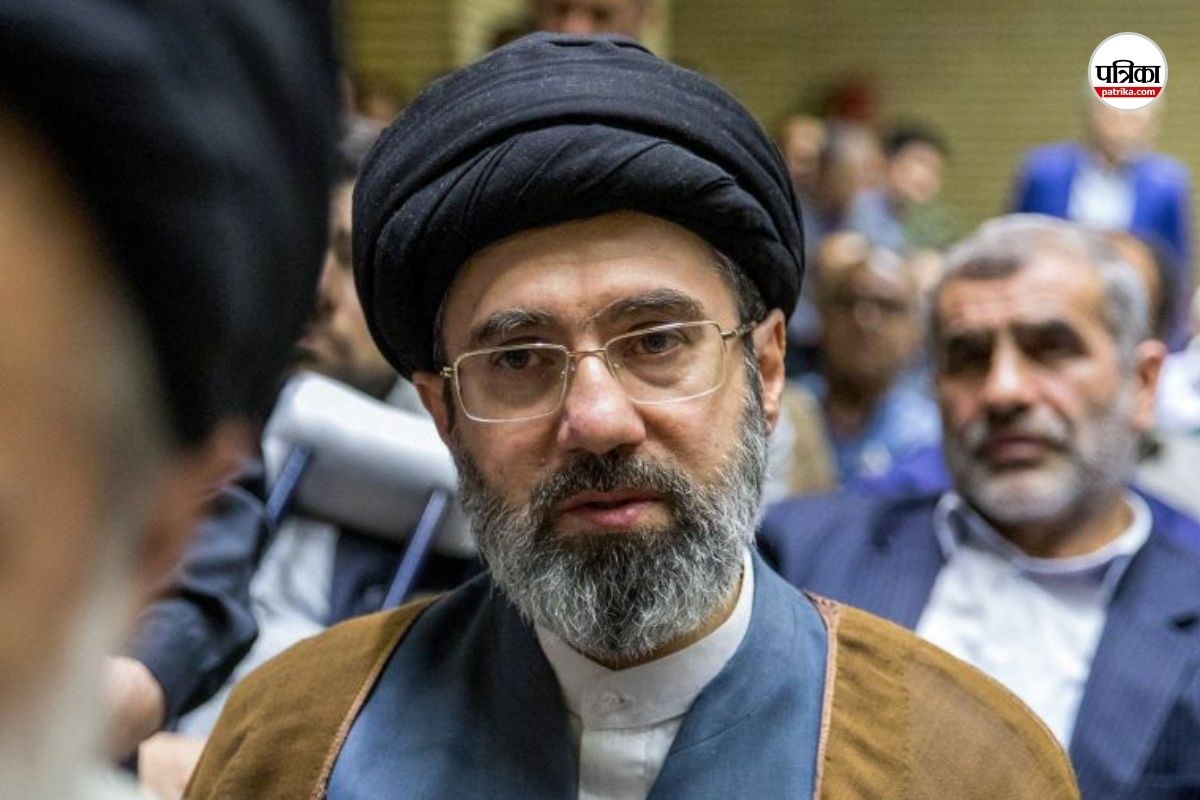
The fragile silence currently hanging over the Lebanese border is not a sign of peace but a calculated pause in a much larger, more dangerous game of regional brinkmanship. While international headlines celebrate the ceasefire between Israel and Hezbollah, Tehran has issued a blunt warning that the truce is conditional, not absolute. Iranian officials have made it clear that any resumption of Israeli military operations in Lebanon will trigger a direct response, effectively tethering the security of the Israeli home front to the continued survival of Hezbollah’s operational core. This is not mere rhetoric; it is a fundamental shift in the rules of engagement that places the United States and its allies in a tightening vice.
The central tension lies in how each side defines "defense." For Israel, the ceasefire allows for a repositioning of forces and a necessary breathing room for a weary civilian population. However, the Israeli security establishment remains adamant that it retains the right to strike if Hezbollah attempts to rearm or move south of the Litani River. For Iran, such "preventative" strikes are viewed as a breach of the ceasefire's spirit. Tehran is now signaling that the era of fighting solely through proxies is evolving into a doctrine of integrated defense. If the proxy is squeezed too hard, the patron will strike back directly. If you found value in this article, you should look at: this related article.
The Strategy of Forced Interdependence
Iran’s recent declarations serve a specific tactical purpose. By linking the fate of Lebanon to its own military posture, Tehran is attempting to create a permanent deterrent against Israeli air superiority. The Iranian leadership has watched the systematic degradation of Hezbollah’s senior command structure over the last year with growing alarm. They realize that if Hezbollah is neutralized, Iran loses its most effective "forward defense" capability against an eventual strike on its nuclear facilities.
To prevent this, Iran is moving away from the shadows. The message sent through diplomatic and state-media channels is designed to tell Jerusalem that Lebanon is no longer a localized theater. By threatening to "not leave Israel alone" if attacks continue, Iran is referencing its capability to launch massive ballistic missile salvos, a tactic we saw twice in 2024. This creates a psychological burden for Israeli decision-makers. Every time a drone is spotted over the Bekaa Valley, the cabinet must now weigh the tactical benefit of a strike against the strategic risk of a regional conflagration that draws in the United States. For another perspective on this event, refer to the recent update from Reuters.
The American Equation and the Weaponization of Diplomacy
Washington’s role in this standoff is increasingly complicated by the shifting political winds in the U.S. and the harsh realities of Middle Eastern geography. The Biden administration, and the incoming Trump team, both face a situation where diplomatic "success" is defined merely by the absence of total war. The U.S. has pushed for this ceasefire to prevent a broader collapse of the regional order, but in doing so, it has inadvertently validated Iran’s seat at the table.
The ceasefire is not a solution to the underlying animosity; it is a management tool. The U.S. provides the hardware and intelligence that allows Israel to operate, but it also provides the diplomatic pressure that prevents Israel from finishing the job. This creates a stalemate that benefits Tehran. As long as Hezbollah exists as a viable political and military force in Lebanon, Iran maintains its leverage. The "why" behind Iran's sudden vocal support for the ceasefire is simple: it preserves their most valuable asset at its lowest point, allowing for a decade of reconstruction and rearmament under the cover of a negotiated peace.
The Litani River Fallacy
Much of the ceasefire’s legitimacy rests on the enforcement of UN Resolution 1701, which mandates that Hezbollah stay north of the Litani River. History suggests this is a fantasy. For nearly two decades, the Lebanese Armed Forces (LAF) and UNIFIL have proven either unable or unwilling to challenge Hezbollah’s presence in the south.
- The Intelligence Gap: Hezbollah does not operate in traditional military formations. They are woven into the social fabric of southern Lebanese villages. Removing them requires a level of domestic political will that currently does not exist in Beirut.
- The Supply Chain: Iran’s land bridge through Iraq and Syria remains porous. Despite Israeli "war between wars" strikes, the technology for precision-guided munitions continues to flow.
- The LAF Constraint: The Lebanese army is funded largely by the West but is terrified of sparking a civil war. They will not engage in a kinetic disarmament of Hezbollah.
Without a physical mechanism to stop the flow of Iranian weapons, the ceasefire is merely a countdown. Iran knows this. Their public warnings are meant to ensure that the "enforcement" of the buffer zone remains purely theoretical. If Israel attempts to physically clear tunnels or weapon caches during the truce, Iran will label it an "unprovoked escalation," providing the pretext for the next round of long-range strikes.
Economic Warfare and the Domestic Front
The conflict is as much about domestic endurance as it is about missiles. Israel’s economy has taken a significant hit, with tens of thousands of citizens displaced from the north and the cost of mobilized reserves climbing into the billions. Iran is playing a long game, betting that the internal social pressure within Israel will eventually force a permanent concession on the Palestinian and Lebanese fronts.
Conversely, Iran is dealing with its own internal fragility. The regime is cash-strapped and facing a population that is increasingly resentful of the billions spent on foreign militias while the rial collapses. However, the hardliners in the Islamic Revolutionary Guard Corps (IRGC) view these regional conflicts as essential for the regime's survival. They believe that if they stop projecting power abroad, the "enemy" will eventually bring the fight to the streets of Tehran. This "forward defense" philosophy explains why Iran is willing to risk a direct confrontation now. They see the degradation of Hezbollah as an existential threat to the Islamic Republic itself.
The Intelligence Shadow War
Behind the public threats lies a sophisticated intelligence struggle. Israel’s Mossad and Aman have demonstrated an uncanny ability to penetrate Hezbollah’s communications, as seen in the pager and radio attacks. Iran is currently conducting a massive internal purge to find the leaks that led to these humiliations.
This internal focus makes Iran dangerous. A regime that feels exposed and embarrassed is more likely to take a "madman" approach to foreign policy to prove it still has teeth. The warning to Israel regarding Lebanon is a way for the IRGC to signal to its own proxies—and its own domestic detractors—that it is still the master of the "Axis of Resistance." It is a claim of authority at a time when that authority is being questioned from Baghdad to Sana’a.
Redefining the Threshold of War
The most overlooked factor in this crisis is the changing definition of what constitutes a "state of war." We are no longer in a world of declared conflicts and clear end dates. Instead, we are in a permanent state of "gray zone" operations. Iran’s latest statements are an attempt to codify the rules of this gray zone. They are essentially saying: "We will allow you to stop the immediate bleeding, but we will not allow you to change the strategic balance of the region."
This creates a dangerous precedent. If the international community accepts Iran's right to intervene whenever a proxy is threatened, the sovereignty of nations like Lebanon becomes a legal fiction. Lebanon is not a participant in these negotiations; it is the geography upon which two larger powers are conducting a high-stakes standoff. The Lebanese people are the primary victims of this arrangement, trapped between Israeli air power and Iranian strategic ambitions.
The Failure of International Deterrence
The current situation is a damning indictment of global diplomacy over the last decade. The assumption that trade and limited sanctions could contain Iran’s regional expansion has proven false. Tehran has successfully built a "ring of fire" around Israel, and the current ceasefire is a realization that dismantling that ring would require a level of violence that the world is not yet prepared to witness.
Israel finds itself in a strategic cul-de-sac. It can abide by the ceasefire and watch Hezbollah rebuild, or it can enforce its security requirements and risk a direct, multi-front war with Iran that could shutter the global oil markets and draw in the U.S. military. Iran’s warning is designed to make the latter option look so unpalatable that the former becomes the default.
The reality of the Middle East in 2026 is that "ceasefire" is a misnomer. It is a re-arming period. It is a tactical shift. It is a moment for both sides to look for the next vulnerability. Iran has laid its cards on the table: the survival of Hezbollah is a non-negotiable interest of the Iranian state. By making this explicit, they have turned every minor border skirmish in Lebanon into a potential trigger for a global crisis. The world is not watching the end of a war; it is watching the preparation for a much larger one.
Every shipment of aid to Beirut and every diplomatic mission to Jerusalem must now pass through the filter of Tehran’s ultimatum. The leverage has shifted. If the West continues to treat the Lebanon conflict as an isolated border dispute, they will be blindsided by the scale of the explosion when the fuse eventually hits the powder. The only way to break this cycle is to address the source of the weapons and the ideology that drives them, a task that no current world leader seems willing to undertake. The fuse is still burning. Only the sound has been muffled for a moment.