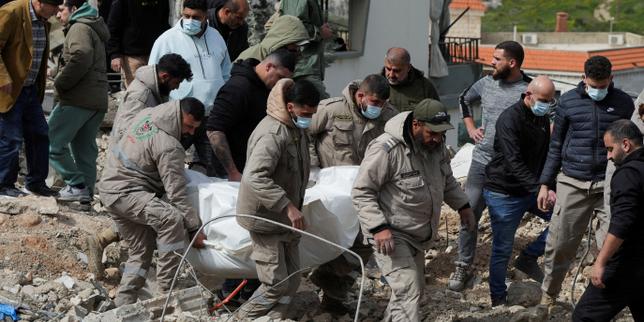
The recent kinetic strike near Saida, which resulted in the deaths of seven individuals including six members of a single family, functions as a diagnostic marker for the shifting operational parameters of the conflict between Israeli forces and Hezbollah. This engagement signifies a departure from traditional border-line friction, moving instead into a phase of Deep-Tier Interdiction. To understand the escalating lethality of these strikes, one must analyze the intersection of intelligence-driven targeting, the erosion of civilian-combatant distinctions in high-density zones, and the specific strategic utility of the Saida-Tyre axis.
The Triad of Kinetic Escalation
The transition from low-intensity border skirmishes to lethal precision strikes in secondary urban centers is governed by three primary strategic drivers:
- The Intelligence-Strike Latency Compression: As the conflict matures, the window between signal acquisition (identifying a high-value target or logistics node) and kinetic execution has shortened. This suggests an advanced integration of real-time signals intelligence (SIGINT) with airborne strike platforms.
- Logistical Chokepoint Neutralization: Saida serves as a critical maritime and terrestrial gateway. By conducting strikes in this vicinity, the operational intent is to disrupt the flow of materiel and personnel moving from the Lebanese interior toward the southern Litani sector.
- The Deterrence-Attrition Hybrid: Beyond physical destruction, these strikes aim to impose a psychological and political cost on the local demographic. The destruction of multi-generational family units creates a localized friction that challenges the social contract between the civilian population and the resident militant infrastructure.
Mechanics of the Saida Strike Zone
Saida’s geographic positioning renders it a high-stakes environment for both sides. It sits approximately 40 kilometers north of the border, placing it outside the immediate "Blue Line" buffer zone but well within the range of standard precision-guided munitions.
The strike that neutralized six members of a single family highlights the Collateral Probability Gradient. In urbanized warfare, the proximity of "safe houses" or mobile command units to civilian residential structures ensures that any strike targeting a specific individual or asset will almost certainly result in high-order civilian casualties. This is not a failure of precision, but a byproduct of the Target-to-Environment Ratio. When a military objective is housed within a civilian residence, the distinction between a tactical success and a humanitarian disaster becomes a matter of centimeters.
The Cost Function of Precision Warfare
The use of high-yield explosives in residential areas near Saida suggests a calculated acceptance of collateral damage in exchange for the guaranteed neutralization of the objective. We can deconstruct the decision-making framework behind such strikes into a "Value of Target" vs. "Political Cost of Casualty" equation.
- Primary Objective Variable: If the target is a mid-to-high-level commander or a specialized logistics coordinator, the tactical value is prioritized.
- The Proximity Penalty: The closer a target is to an urban center like Saida, the higher the risk of mass casualty events.
- The Intelligence Threshold: High-lethality strikes in residential zones usually imply "High Confidence" intelligence. The military apparatus perceives the intelligence as so certain that the risk of international condemnation for civilian deaths is viewed as a manageable secondary effect.
The death of six family members in a single event suggests a Concentration of Risk. In conflict zones, families often cluster together for perceived safety or due to displacement, unwittingly creating high-density casualty profiles when a nearby or co-located target is engaged.
Displacement as a Tactical Weapon
The strike in the south of Lebanon is a primary driver of the Internal Displacement Cycle. Each event of this nature triggers a fresh wave of northward migration. This serves a dual purpose in the broader strategic landscape:
- Zone Depopulation: Removing the civilian layer from Southern Lebanon simplifies the battlespace for Israeli ground and air forces, allowing for more aggressive engagement rules.
- Resource Strain: Forced migration places immense pressure on the Lebanese state and international NGOs, creating internal political friction within Lebanon that may eventually turn against the continued presence of militant groups in the south.
The mechanism at work here is Structural Attrition. By systematically rendering the southern third of the country uninhabitable, the kinetic strategy seeks to create a geographic "Dead Zone" where militant operations cannot be sustained due to a lack of civilian cover and logistical support.
The Information Warfare Feedback Loop
Following a strike of this magnitude, the information environment fragments into two distinct narratives, neither of which fully captures the underlying structural reality.
The first narrative focuses on the Human Cost, emphasizing the tragedy of the family lost. This serves to mobilize regional sentiment and solidify resistance. The second narrative focuses on Target Legitimacy, where the striking party asserts the presence of military infrastructure.
The analytical gap exists in the Verification Vacuum. Because independent observers cannot safely access these strike sites in real-time to verify the presence of military assets, the "Truth" of the engagement becomes a tool for whichever side possesses the more effective distribution network. This creates a feedback loop where tactical strikes feed into a broader strategy of international delegitimization.
Analyzing the Military-Civilian Interface
The "Seven People Killed" metric is a lagging indicator of a much larger problem: the total collapse of the military-civilian interface in Southern Lebanon. In a "gray zone" conflict, the following variables determine the lethality of a strike:
- Asset Masking: The degree to which military hardware or personnel are integrated into civilian homes.
- Weaponry Yield: The choice of a 250lb vs. a 1000lb bomb determines the radius of the "Total Destruction Zone."
- Timing of Engagement: Strikes during nighttime hours, when families are gathered, inevitably lead to the high civilian death counts seen in the Saida incident.
The death of a family is rarely the primary goal of the strike; rather, it is the Calculated Residual of a doctrine that values the removal of an asset over the preservation of the surrounding structure.
Strategic Projection
The Saida strike is not an isolated tragedy but a component of a Phased Escalation Map. The expansion of the strike radius to include major hubs north of the Litani River indicates that the conflict has entered a "Sustainment Denial" phase.
The immediate tactical play for Lebanese forces and affiliated groups will be a recalibration of their Signal Signature. If civilian casualties continue to mount in this fashion, the political pressure on Hezbollah to respond with deeper strikes into Israeli population centers increases, creating a symmetrical escalation trap.
For the Israeli Defense Forces, the strategy will likely maintain this high-tempo, deep-strike posture. The objective is to create a Friction Ceiling where the cost of remaining in Southern Lebanon—both in terms of lost leadership and the destruction of the supporting social fabric—becomes untenable for the opposition.
The Saida incident confirms that the "Rules of Engagement" have been recalibrated to prioritize the neutralization of mobile threats regardless of their proximity to non-combatants. Future operations will likely see an increase in the frequency of strikes in the "Saida-Zahrani" corridor as the military command seeks to sever the link between the northern command centers and the southern frontline. The tactical recommendation for any non-combatant entities in this corridor is an immediate relocation north of the Awali River, as the current targeting logic suggests that any structure with a perceived military link will be engaged with maximum force, irrespective of the civilian density within the radius.