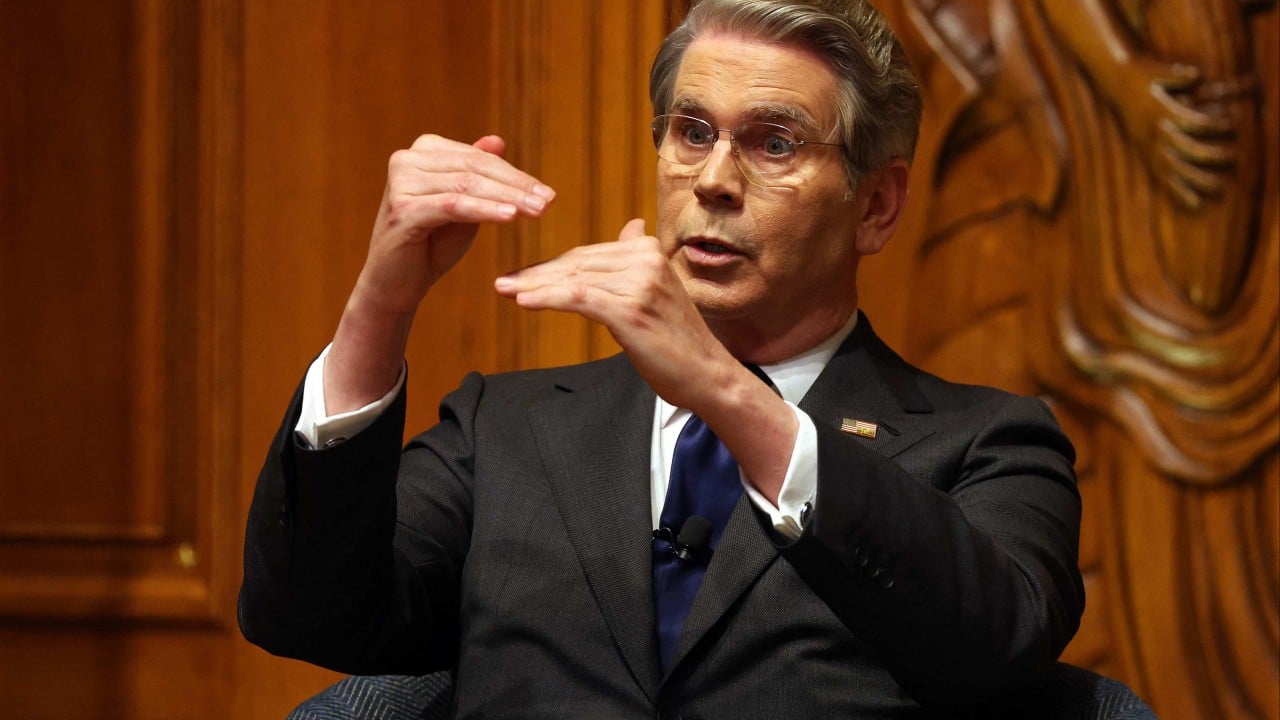
The concept of "escalate to de-escalate" sounds like a paradox designed in a windowless room at a think tank. It suggests that the only way to achieve peace is to first turn up the heat until the opponent finds the cost of conflict unbearable. Recently, Treasury Secretary Scott Bessent signaled that this strategy is firmly on the table regarding the United States' deteriorating relationship with Iran. By signaling a willingness to increase economic and military pressure, the administration hopes to force Tehran back to the negotiating table or, at the very least, curtail its regional influence.
This is not a theoretical exercise. It is a fundamental shift in how Washington intends to wield its power. For years, the approach to Iran fluctuated between the "maximum pressure" of the first Trump term and the attempted diplomacy of the Biden years. Bessent’s rhetoric indicates a return to the former, but with a sharper, more aggressive edge that views economic sanctions not just as a deterrent, but as a kinetic tool of statecraft.
The Economic Architecture of Pressure
Scott Bessent is not a traditional hawk. He is a man of the markets, and he views the Iranian problem through the lens of capital flows and global energy stability. When he speaks of escalation, he is often talking about the "financial nuclear option"—cutting off the remaining trickles of Iranian oil revenue that find their way to Chinese refineries through "ghost fleets" and third-party transfers.
The mechanics of this are grueling. Iran has become a master at evading traditional banking checks. They use a sprawling network of front companies in the UAE, Turkey, and Southeast Asia to move money. To truly escalate, the U.S. Treasury would need to go after the "secondary" actors—the small banks in Malaysia or the shipping insurers in Panama that look the other way. This carries a massive risk of diplomatic friction with allies and neutral parties.
If the U.S. successfully chokes off these revenues, the Iranian Rial faces total collapse. We have seen this movie before, but the sequel promises higher production values. The goal is to create an internal economic crisis so severe that the clerical establishment is forced to choose between its regional proxies—Hezbollah, the Houthis, and militias in Iraq—and its own survival at home.
The Military Shadow Behind the Sanctions
Sanctions without the credible threat of force are just paperwork. The "escalate" part of Bessent’s equation implies that the U.S. is prepared to match its financial tightening with a more permissive stance on military engagement. This might mean providing more advanced intelligence to regional partners or loosening the rules of engagement for U.S. assets in the Red Sea.
History shows that Iran rarely retreats when it feels ignored, but it often pauses when it perceives a direct threat to its core assets. The "de-escalation" part of the theory relies on the assumption that the Iranian leadership is a rational actor that performs a cost-benefit analysis. Critics argue this is a dangerous gamble. If you corner a regime that views its regional influence as an existential necessity, they may choose to burn the neighborhood down rather than surrender.
The risk of a "horizontal escalation" is palpable. If pressured at home and in its bank accounts, Tehran might instruct the Houthis to further disrupt the Bab el-Mandeb Strait, sending global shipping rates into a tailspin. This creates a feedback loop where the U.S. attempt to stabilize the region through pressure actually triggers the very global economic instability Bessent is tasked with preventing.
The China Factor and the Limits of Unilateralism
No analysis of Scott Bessent's strategy is complete without looking at Beijing. China is the primary customer for Iranian crude. They buy it at a discount, often settled in Yuan, which bypasses the SWIFT banking system entirely. For the "escalate to de-escalate" strategy to work, the U.S. has to convince China that its support for Iran is more trouble than it is worth.
This is where trade policy and foreign policy collide. Bessent has hinted at using tariffs and trade restrictions as leverage to gain Chinese cooperation on Iran. It is a grand bargain of sorts. The message to Beijing is simple: help us contain Iran, and we can find a smoother path on trade. Ignore us, and the friction will increase across the board.
However, China views Iran as a key node in its Belt and Road Initiative and a vital counterweight to U.S. influence in the Middle East. They are unlikely to abandon Tehran for nothing. This means the U.S. might find itself in a standoff not just with a mid-sized regional power, but with its largest economic rival.
Domestic Consequences of the Hardline
At home, Bessent must manage the inflationary impact of this strategy. If the U.S. successfully removes 1.5 million barrels of Iranian oil from the daily global supply, prices at the pump will rise. For an administration that won on promises of economic relief, this is a bitter pill.
The Treasury’s gamble is that they can offset the Iranian shortfall by encouraging increased production from domestic sources and OPEC+ partners like Saudi Arabia. It is a delicate balancing act. If the "escalation" leads to a spike in energy costs, the domestic political will to maintain the pressure could evaporate before the "de-escalation" phase ever begins.
We are entering a period of high-velocity diplomacy. The "escalate to de-escalate" strategy is essentially an attempt to win a game of chicken at 100 miles per hour. It requires perfect timing and an intimate understanding of the opponent's breaking point. If Bessent and the administration miscalculate, the result isn't a return to the status quo; it is a broader conflict that could redefine the global order for the next decade.
The success of this policy hinges on whether the Iranian leadership fears economic ruin more than it fears losing its "strategic depth" in the Arab world. In the narrow alleys of the Tehran bazaar and the high-security offices of the Revolutionary Guard, that debate is likely happening right now. They are watching to see if the U.S. is bluffing or if Scott Bessent truly has the stomach to pull the levers that would disconnect Iran from the global economy once and for all.
The coming months will reveal if this is a masterstroke of coercive diplomacy or a catastrophic misreading of a desperate regime. There is no middle ground in this strategy. You either break the opponent's will or you find yourself in a fight you didn't fully intend to start.
Ask me to analyze the specific impact of secondary sanctions on the UAE banking sector to see how this pressure manifests on the ground.