The business press is currently hyperventilating over Japanese solo dining chains in China. You’ve seen the headlines. Three-hour wait times in Shanghai. Scalpers selling queue numbers for 200 yuan. Analysts calling it a "revolution in social anxiety management."
They are wrong. Dead wrong.
What we are witnessing isn't the rise of a sustainable new dining model. It is a desperate, short-term arbitrage of loneliness, fueled by a demographic shift that most investors are misreading entirely. If you think people are waiting three hours for a bowl of ramen behind a wooden partition because they "value privacy," you’ve bought the marketing hook, line, and sinker.
The queue isn't a sign of success. It’s a symptom of a market that has forgotten how to price human connection.
The Myth of the "Introvert Economy"
The prevailing narrative suggests that Gen Z and Millennials in China are "retreating" into solo bubbles. We call it the Hikikomori-lite trend. The theory goes: young professionals are so burned out by 996 work culture that they can’t bear to look at another human being while they chew.
I’ve spent fifteen years watching retail trends fail in Tier 1 Chinese cities. I saw the "cat cafe" bubble burst when people realized they liked the idea of cats more than the smell of litter boxes. I saw the unmanned convenience store craze evaporate when consumers realized that talking to a cashier for three seconds wasn't actually the primary source of their life's stress.
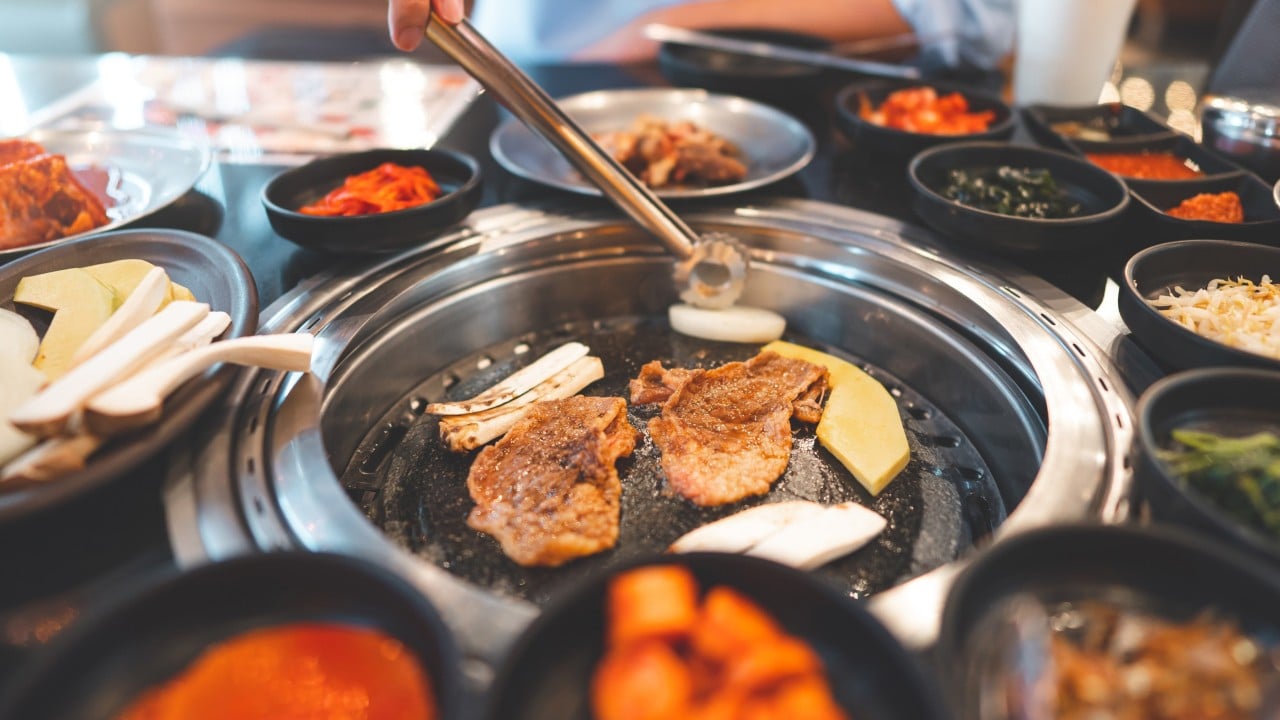
Solo dining chains like Ichiran or its mimics aren't succeeding because they solve "social exhaustion." They are succeeding because they offer performative isolation.
In a hyper-connected society like China’s, "being alone" has become a luxury brand. When you stand in line for three hours to sit in a booth that looks like a voting stall, you aren't seeking privacy. If you wanted privacy, you’d order Meituan and eat on your sofa in your underwear. You are there to document your "refined solitude" for Little Red Book (Xiaohongshu).
The scalpers aren't selling ramen. They are selling the ticket to a status symbol that screams, "I am so busy and important that I choose to exclude the world."
Why the Wait Times are a Massive Operational Failure
In any other industry, a three-hour wait time is a failure of supply chain management or pricing strategy. In the restaurant business, it’s often a manufactured scarcity tactic that eventually kills the brand.
Standard restaurant economics rely on Table Turnover Rate ($TTR$).
$$TTR = \frac{\text{Total Customers}}{\text{Total Seats} \times \text{Opening Hours}}$$
In a traditional restaurant, you want that number high. But solo dining chains face a unique paradox. The more they lean into the "relax and be alone" vibe, the lower their $TTR$ goes. If a customer feels truly comfortable in their private cubicle, they stay longer. They scroll on their phones. They linger.
The current "success" is propped up by the novelty of the booth. But once the novelty wears off—and in the China market, novelty has the shelf life of an open carton of milk—the math turns ugly. To maintain profitability with high overhead in prime Shanghai real estate, these chains will eventually have to rush customers out.
The moment you start rushing someone in a "solo sanctuary," you’ve destroyed the value proposition. You’re just a high-rent canteen with worse service.
The Scalper Paradox
Let’s talk about the guys selling queue spots. The media treats them like a nuisance. I see them as the only people in this ecosystem with a clear-eyed view of the market.
Scalpers exist where there is a massive gap between Perceived Value and Sticker Price.
The "Solo Dining" chains are underpricing their experience at the door and overpricing it on the menu. If a seat is worth a 200 yuan premium to a scalper, the restaurant is leaving money on the table. But they can’t raise prices because, at the end of the day, it’s just ramen or grilled meat. It’s a commodity.
The scalpers are essentially running a real-time stress test on the brand's hype. When the scalpers disappear—and they always do—it won't be because the restaurant increased capacity. It will be because the "cool factor" of eating alone in a box has been replaced by the next shiny object.
The Quality Gap: Privacy is a Cheap Substitute for Flavor
I have audited food service operations from Tokyo to Shenzhen. There is a recurring pattern: when a brand pivots hard toward "experience" (in this case, the experience of being ignored), the product quality almost always plateaus or declines.
The competitor article praises the "efficiency" of the service. I call it the Commoditization of Gastronomy.
When you remove the human element—the server who notices your water is low, the chef you can see over the counter—you turn food into fuel. In the short term, this saves on labor costs. In the long term, it makes your brand entirely replaceable.
If the only thing keeping a customer in your seat is a wooden partition, what happens when the shop next door installs wooden partitions and charges five yuan less? You have no "hospitality moat." You have no relationship with the diner. You are a vending machine with a floor plan.
The Demographic Trap
Investors are betting on the "Single Economy" in China, pointing to the rising median age of marriage and the surge in one-person households.
This is a dangerous oversimplification.
Being single does not mean wanting to eat in a coffin. Human beings are biologically wired for communal dining. Even the most introverted person craves the option of connection. The success of these chains isn't a permanent shift in human biology; it’s a reaction to the extreme density and noise of urban Chinese life.
But here is the counter-intuitive truth: The more solo dining options exist, the more valuable communal dining becomes. We are already seeing a "loneliness backlash" in mature markets like South Korea. After the initial explosion of honbap (solo dining), the market is swinging back toward "social dining clubs" and shared tables. Why? Because eating alone is easy. Eating together is where the friction, and thus the value, lies.
Stop Investing in Walls, Start Investing in Nuance
If you are a restaurant owner looking to "leverage" this trend, don't build booths. Build flexibility.
The "Lazy Consensus" says: People want to be alone.
The "Insider Truth" says: People want to choose when they are seen.
The chains that will survive the 2026-2027 shakeout aren't the ones with the most partitions. They are the ones that design spaces for "social optionality."
- Semi-Private Tiering: Instead of hard booths, use adjustable lighting and acoustic design to create "pockets" of quiet.
- The "Solo" Premium: If you’re going to offer a private booth, charge for it. Don’t bake the cost into a mediocre bowl of noodles. Make the privacy an add-on, like a VIP room.
- Data-Driven Pacing: Use sensors to track seat occupancy and adjust menu offerings based on dwell time. If someone is lurking in a booth for an hour, your POS should be nudging them toward a high-margin dessert or tea.
The Brutal Reality of the China Market
China is the most unforgiving F&B market on the planet. Brands that "surge" in popularity usually burn out within 24 months.
Remember the "Cheese Tea" wars? Remember the "Gourmet Slider" craze?
The solo dining trend is currently in its "Peak of Inflated Expectations." The wait times and scalpers are a bubble. They represent the curiosity of a bored middle class, not a fundamental change in how 1.4 billion people want to consume calories.
I’ve seen this movie before. The partitions will come down. The scalpers will move on to the next viral pop-up. And the restaurants that didn't bother to make their food better than a convenience store bento box will be looking at empty booths and wondering where the "loneliness" went.
You aren't selling a sanctuary. You’re selling a gimmick. And in China, gimmicks have a shorter half-life than the steam rising off your soup.
Eat with your eyes open. If you’re sitting in one of those booths right now, look at the wall in front of you. That wall isn't there to protect your privacy. It’s there to hide the fact that you’re paying a 300% markup for the privilege of being a data point in a failing experiment.