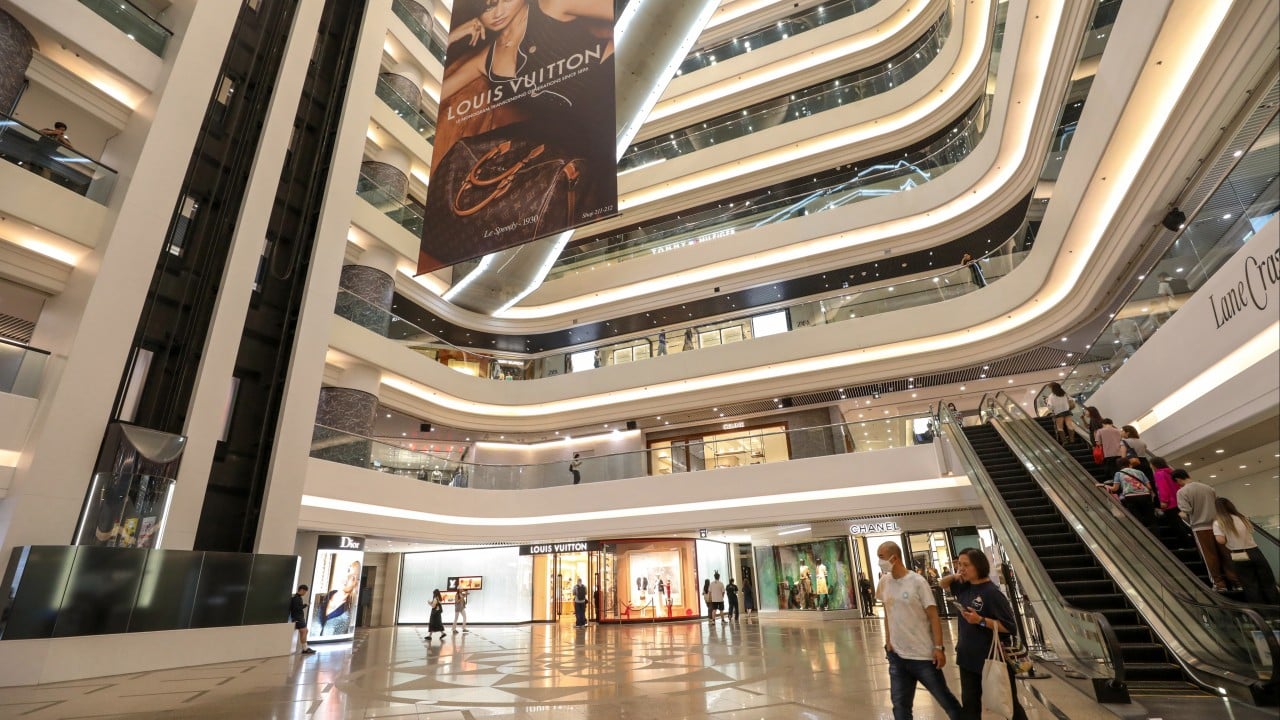
The marble of Harbour City is cold, polished, and unforgiving. It reflects the neon hum of Hong Kong’s high-end retail district back at the shoppers who pace its halls like pilgrims at a secular shrine. Here, a pair of shoes is rarely just a tool for walking. It is a social contract. It is a signal of status, a reward for a promotion, or perhaps a desperate grasp at a life that feels just out of reach.
When a 26-year-old man stepped into a public restroom within this glittering labyrinth on a Tuesday afternoon, he wasn't thinking about the fragility of luxury. He was thinking about convenience. He was carrying a bag containing a brand-new pair of Gucci shoes, valued at HK$11,000. For most, that is more than a month's rent in a subdivided flat. For others, it is a Tuesday purchase. He placed the bag on the floor, or perhaps hung it on a hook that felt secure enough for a five-minute errand of nature.
Then he walked out.
He left them behind. It was a lapse in memory so human it hurts to contemplate. We have all done it—left a phone on a cafe table, a transit card in a machine, a scarf on a bus. Usually, the world is kind enough to let us turn around and reclaim our pieces. But in the high-stakes ecosystem of Tsim Sha Tsui, the air is thinner and the predators are faster.
By the time the realization hit him—that cold, sinking stone in the gut that comes when you realize your hands are lighter than they should be—he was already too late. He rushed back to the stall. The space was there. The marble was still shining. The Gucci bag was gone.
The Anatomy of a Ten Minute Heist
Crime in Hong Kong’s shopping districts often lacks the cinematic flair of a jewelry store smash-and-grab. It is a crime of proximity and silence. The thief in this scenario didn’t need a weapon. They only needed a lack of a conscience and a keen eye for a specific green-and-red logo.
Police reports confirm the victim sought help from mall security around 4:00 PM, but the window of opportunity for a thief in a crowded mall is a yawning chasm. Within minutes, a person can blend into a sea of thousands of commuters at the Star Ferry terminal or disappear into the underground veins of the MTR. The shoes, pristine and unworn, represent a liquid asset. On the secondary market, high-end sneakers or loafers are as good as cash, easily moved through online platforms or gray-market resellers who ask few questions about a lack of a receipt.
Think about the person who picked up that bag.
Maybe it was a professional "lifter," someone who haunts the restrooms of luxury malls waiting for exactly this kind of psychological slip. Or maybe it was someone who walked in, saw a month’s salary sitting on a grimy tile floor, and made a split-second decision that will haunt their criminal record for years. The impulse to take is often fueled by the sheer disparity visible in every corner of the city. When you are surrounded by HK$100,000 watches and HK$11,000 shoes, the moral compass can begin to spin wildly.
Why We Care About a Pair of Shoes
Critics might scoff. They will say it’s just a brand. They will argue that anyone who can afford to lose HK$11,000 on a pair of shoes deserves the lesson in mindfulness. But that misses the point of the trauma.
The violation of a theft like this isn't about the leather or the stitching. It is about the shattering of the "safe space" we assume exists within the temples of commerce. We pay a premium to shop in places like Harbour City because they feel curated, guarded, and civilized. When that veneer is stripped away by a simple theft in a restroom, it reminds us that we are always, at our core, vulnerable.
The victim, a young man at the start of his professional life, didn't just lose footwear. He lost the feeling of being "okay" in his own city. He spent the rest of his afternoon talking to officers from the Yau Tsim District, filling out forms that rarely result in the recovery of goods. The CCTV footage will be reviewed. The grainy images of a hundred different men in black shirts and face masks will be scrutinized. But the shoes are likely already in a different district, perhaps being tried on by someone who didn't pay a cent for them.
The Invisible Economics of the Restroom Floor
There is a specific irony in the location. The public restroom is the only place in a luxury mall where the hierarchy collapses. The billionaire and the delivery driver use the same stalls. It is the one room where you are forced to put down your guard and, occasionally, your belongings.
The thief didn't just steal an object; they stole a moment of distraction.
In a city that moves at the speed of Hong Kong, distraction is the ultimate luxury. We are constantly pinged by notifications, dodged by crowds, and pressured by deadlines. The victim’s mistake was being human in a place that demands perfection. He forgot he was in a transition zone—a liminal space where the security of the boutique doesn't follow you through the door.
The police have classified the case as "theft," a dry word for a vibrant loss. They are searching for a man roughly 1.7 meters tall. He is a ghost in the machine of the retail economy.
As the sun sets over Victoria Harbour, the lights of the boutiques flicker on, casting long shadows across the pavement. Somewhere in this city, a man is looking at a pair of shoes he didn't buy, wondering if they are worth the risk of the cameras he passed. And somewhere else, a young man is walking home in the shoes he arrived in, feeling the weight of the HK$11,000 he no longer owns, staring at his hands and wondering how they could have let go so easily.
The city continues to pulse, indifferent to the small tragedies happening behind closed stall doors. The marble stays polished. The shoppers keep coming. The shoes are gone, but the lesson remains, echoing off the tiles: in the heart of the world's most expensive city, nothing is ever truly yours until you've walked away with it firmly in your grip.