The scrap metal doesn't smell like the earth. It smells like a scorched fuse, a sharp, metallic tang that bites at the back of the throat long after the smoke has cleared. In the salt-dusted fields near the Dead Sea and the rocky outskirts of Amman, the debris of a high-altitude chess match has found a new, unintended purpose. It has become the backdrop for the mundane.
Seven-year-old Omar doesn't see a ballistic trajectory or a geopolitical statement when he looks at the twisted cylinder of a booster stage. To him, it is a hollowed-out whale. It is a tunnel. It is a monument that fell from a sky he was told to fear, but which now looks remarkably empty and blue. He runs his hand over the charred rivets, feeling the heat that the desert sun has added back into the cold iron.
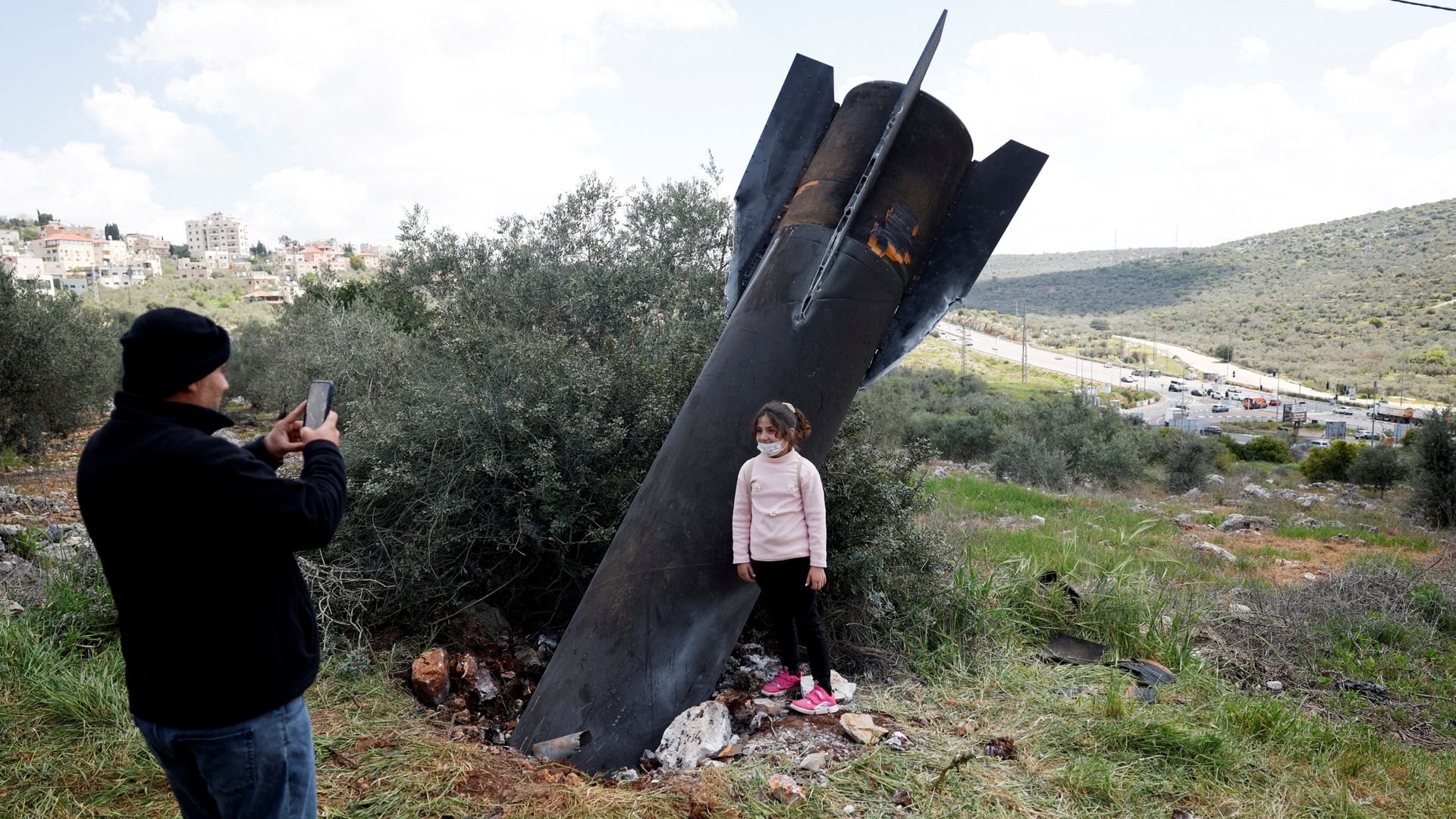
This is the surreal choreography of the modern Middle East. The sky fills with fire, the sirens wail a mechanical grief, and by the next afternoon, the wreckage is being used as a backdrop for a family selfie.
The Weight of Gravity
When an interceptor meets a missile in the upper atmosphere, the physics are absolute. What goes up must come down. We often talk about defense systems in the language of spreadsheets: interception rates, cost-per-unit, and strategic deterrence. But we rarely talk about the literal weight of the aftermath.
A spent rocket booster can weigh several tons. It is a massive, hollow bone of an industrial beast, discarded once its marrow of fuel has been spent. When these casings tumble through the clouds, they don't disappear into the "void" we imagine exists above our heads. They land in onion patches. They crater suburban streets. They rest, awkwardly and terrifyingly, in the shallow waters of the Jordan River.
Consider the sheer scale of the debris. These aren't just shards of glass or shrapnel the size of a coin. These are monolithic structures, some thirty feet long, looking like fallen pillars from a temple of a god that specializes in kinetic energy. When a father in a dusty village takes his son to see one of these remnants, there is a complex psychological alchemy at play. It is a way of domesticating the terror. If you can touch the thing that was meant to destroy, if your child can climb on it, then the thing no longer has power over you.
Living Between the Sirens
The human brain is an adaptive engine, perhaps dangerously so. We are designed to find a "new normal" even when the old one was barely sustainable. In the cities where the sky occasionally rains titanium, the residents have developed a gallows-humor resilience that would baffle anyone living in a more predictable latitude.
There is a specific kind of silence that follows a night of interceptions. It’s not a peaceful silence. It’s a holding of breath. You wait for the sun to rise so you can go outside and see what the tide of the conflict washed up on your shore.
The images circulating on social media tell a story that the news tickers miss. It’s a woman in a floral hijab standing next to a blackened turbine as if she’s waiting for a bus. It’s a group of teenagers leaning against a jagged fuselage, scrolling through their phones. The contrast is jarring because it represents the collision of the digital age with the brutal, physical reality of 20th-century ordnance.
We see the "remnants," but we forget the "remaining." The people who stay. The people who have no choice but to incorporate these violent artifacts into their geography. The debris becomes a landmark. "Turn left at the missile casing," someone might say, and for a moment, the absurdity of the sentence is lost in the necessity of the direction.
The Invisible Stakes of the Aftermath
There is a hidden danger in this normalization. Beyond the obvious risk of unexploded ordnance or toxic fuel residue, there is a spiritual erosion. When children play on missiles, the tools of extinction become toys. The boundary between a playground and a battlefield blurs until it is indistinguishable.
The logic of the sky is abstract. You hear the boom, you see the flash, and you see a dot on a radar screen disappear. But the logic of the ground is heavy. It is undeniable. A missile in a field is a reminder that the "balance of power" is a physical weight that can crush a roof or a ribcage just as easily as it can influence a treaty.
These fragments are the receipts of a massive, invisible expenditure. Each twisted piece of metal represents millions of dollars, decades of engineering, and a profound failure of human diplomacy. We look at the children climbing on the boosters and we see "resilience," but we should also see a warning. We are teaching a generation that the natural state of the horizon is to be filled with falling iron.
The Architecture of the Unexpected
If you look closely at the photos of these crash sites, you notice the textures. The way the desert sand clings to the scorched paint. The way the wind whistles through the hollowed-out electronics. It is a new kind of archaeology. We are digging up the present instead of the past.
In one village, the locals gathered around a fallen projectile not with anger, but with a quiet, analytical curiosity. They poked at the wires with sticks. They debated the country of origin based on the lettering on a small, surviving plate. It was a moment of communal processing. By deconstructing the object, they were deconstructing the threat.
But the threat doesn't truly go away when the metal cools. It lingers in the way the children look up when a plane passes by. It lingers in the way a door slamming sounds a little too much like a distant impact. The metal is moved by cranes, hauled away on the backs of flatbed trucks to be studied or melted down, but the memory of its arrival is etched into the soil.
The Finality of the Fall
There is no "clean" way to have a war in a crowded world. Even the most surgical interceptions leave a trail of debris. The Middle East has become a gallery of this unintended art. Each fallen projectile is a statue dedicated to a moment of near-miss, a testament to a catastrophe that was diverted from its target only to land in a stranger’s backyard.
The children will eventually grow tired of the "hollow whale" in the field. They will go back to their football games and their schoolbooks. The missile casing will be hauled to a junkyard, where it will sit among rusted cars and discarded refrigerators. It will lose its aura of menace and become just another piece of the world's discarded junk.
Yet, for a few days, it served as a strange mirror. It showed us the fragility of the ceiling we live under. It showed us that the things we build to protect ourselves are just as heavy as the things built to harm us.
As the sun sets over the Dead Sea, casting long, distorted shadows of the wreckage across the salt flats, the image remains: a child standing atop a weapon, looking out at a horizon that promises nothing but the next cycle of the moon. The metal is cold now. The heat is gone. But the sky is still there, wide and waiting, holding its breath for the next time the giants decide to fall.
The silence of the desert is heavy, a thick blanket of heat and history that swallows the sound of the children’s laughter. They are playing a game of tag around a jagged piece of titanium that traveled a thousand miles just to end up as a base for a game of hide-and-seek. It is the most honest monument we have. It doesn't lie about what it is, and it doesn't apologize for where it landed. It just sits there, a heavy, silent witness to the fact that we are all living in the shadow of things we cannot control, waiting for the day when the sky finally decides to stay empty.