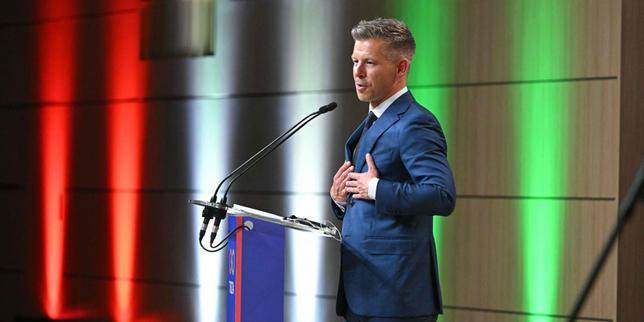
Viktor Orbán’s sixteen-year grip on Hungary didn't just slip on Sunday; it shattered. After a decade and a half of "illiberal democracy," the 2026 parliamentary elections delivered a result that few saw coming even a year ago. Péter Magyar, the former Fidesz insider turned political firebrand, didn't just win. His Tisza party secured a crushing two-thirds supermajority, essentially turning the very electoral system Orbán built for himself into a trap for the incumbent.
The headline promise that’s shaking the foundations of Hungarian politics is simple: no more career premiers. Magyar has pledged to introduce a two-term limit for the office of Prime Minister. It’s a direct strike at the heart of the "Orbán system." By making this change retrospective, Magyar isn't just planning for the future; he's effectively ensuring that Viktor Orbán can never lead the country again.
The strategy to dismantle a "Mafia State"
Magyar’s campaign wasn't just about term limits. He spent months crisscrossing the country, often giving seven speeches a day, to convince a cynical public that the "National System of Cooperation" (NER) was actually a "mafia state." He didn't use the polite language of a Brussels diplomat. He talked about "looted" coffers and "industrial-scale" corruption.
For voters, this wasn't abstract. It was about the "Bring Your Own Toilet Paper" (BYOTP) reality in public hospitals while the Prime Minister's family lived in Habsburg-era luxury. Magyar’s background as a former diplomat and the ex-husband of former Justice Minister Judit Varga gave him a unique brand of credibility. He knew where the bodies were buried because he helped dig some of the graves.
Restoring the rule of law immediately
The new government’s to-do list is massive. To unlock the €20 billion in EU funds currently frozen by Brussels, Magyar has promised to:
- Join the European Public Prosecutor’s Office (EPPO) on day one.
- Restore the independence of the judiciary and the Constitutional Court.
- Declassify Communist-era agent files to expose how modern fortunes were built during the 1990s privatization.
- Transform the presidency into a directly elected position to provide a real check on executive power.
Why term limits change everything
The proposal to limit a Prime Minister to two terms (eight years) is the ultimate safeguard. Under Orbán, power became so centralized that the state and the Fidesz party became indistinguishable. By capping the time anyone can sit in the top chair, Magyar is betting he can prevent another autocracy from taking root—even his own.
Magyar’s win is a "democratic earthquake" for Europe. For years, Hungary was the outlier in the EU and NATO, the Russian-friendly nationalist voice that stalled aid to Ukraine and vetoed collective action. That’s over. Ursula von der Leyen’s immediate congratulatory message, stating "Hungary has chosen Europe," signals a massive shift in the continental power balance.
The challenge of a deep state
Winning the election was the easy part. Orbán’s loyalists are embedded deep within the media, the central bank, and the local administrations. They aren't going to just pack up and leave because the voters said so. Magyar faces a "Mountain of Problems," as some analysts put it, including a stagnant economy and a healthcare system on life support.
The transition period will be a 30-day sprint. While Orbán has conceded defeat, calling it "painful but unambiguous," his supporters still control significant economic resources. Magyar’s supermajority gives him the power to rewrite the constitution—the same "Basic Law" Orbán used to cement his rule—but untangling sixteen years of institutional capture won't happen overnight.
What you should watch for next
The next few weeks will define Hungary for the next decade. Keep your eyes on these specific moves:
- The First Decree: Watch if Magyar immediately signs the papers to join the EPPO. This is the fastest way to prove to the EU that he’s serious about corruption.
- Constitutional Reform: The two-term limit requires a constitutional amendment. Since Tisza has 138 seats (the magic two-thirds number), they don't need to negotiate with Fidesz to pass it.
- The Euro Debate: Magyar has hinted at adopting the Euro for stability. If he starts the ERM II process, it’s a sign he’s fully pivoting away from the East.
If you’re following Hungarian politics, don't expect a quiet transition. The "Orbán Era" is technically over, but the work of building a functional democracy is just starting.