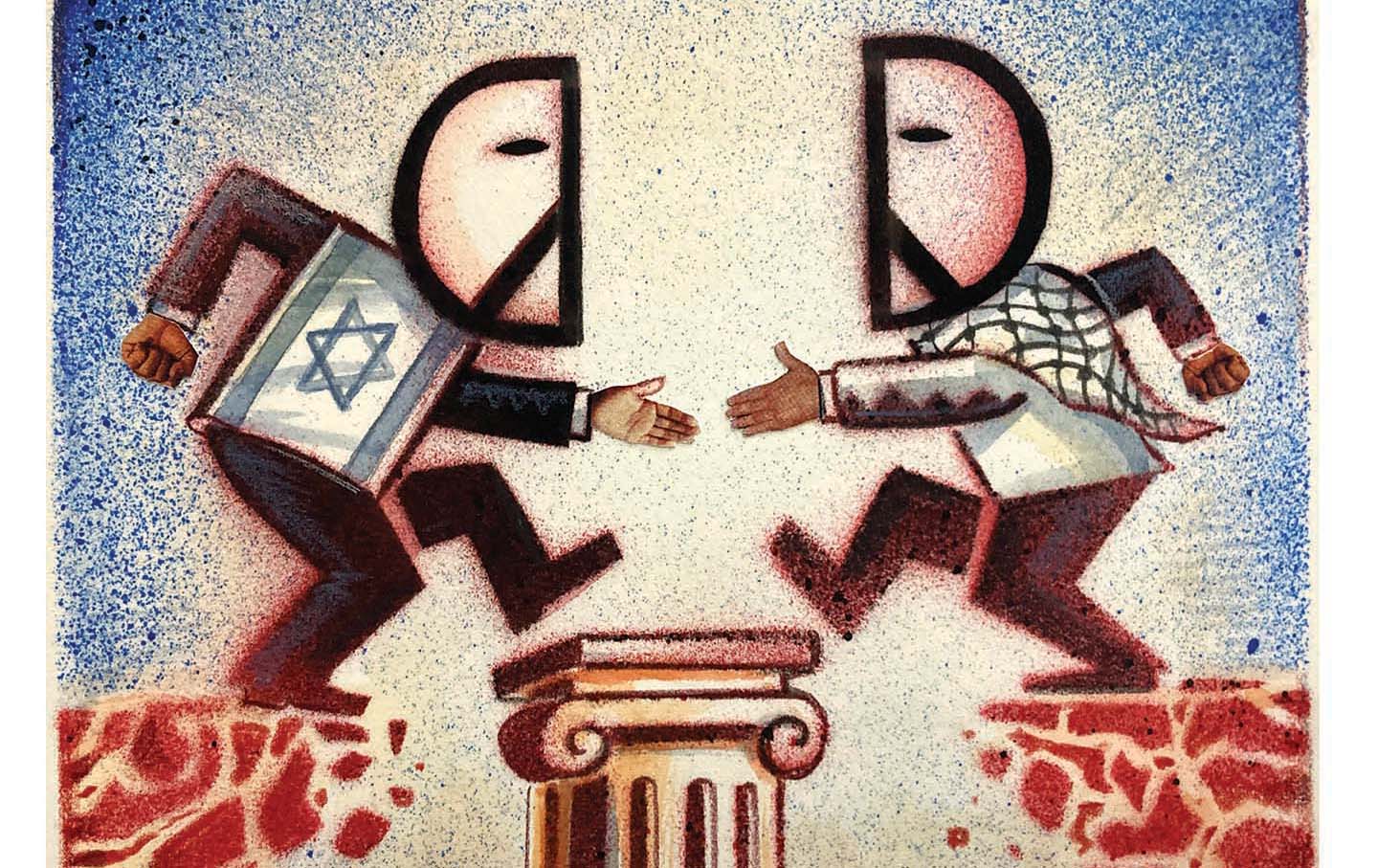
Diplomacy is often just a polite word for stalling. While mainstream outlets scramble to paint Pakistan’s hosting of a "four-nation bid" as a heroic attempt to bridge the chasm between Washington and Tehran, they are missing the cold, hard mechanics of survival. This isn't a peace mission. It is a desperate rebranding exercise by a middle power trying to avoid being crushed between shifting tectonic plates.
The narrative you’re being fed is simple: Pakistan, along with three other regional players, is acting as the "adult in the room" to de-escalate tensions. It sounds noble. It makes for great press releases. It is also fundamentally wrong.
To understand why this diplomatic theater will fail to move the needle on US-Iran relations, we have to stop looking at the handshake and start looking at the ledger.
The Myth of the Neutral Arbiter
Neutrality is a luxury for the rich. Pakistan is currently navigating a debt crisis that would make a seasoned CFO weep. When a country is beholden to IMF bailouts and relies on the goodwill of both Western creditors and Chinese infrastructure loans, "neutrality" becomes a performance, not a policy.
I have watched these regional summits for decades. They follow a predictable script. There is a "joint statement" that uses every synonym for cooperation found in a thesaurus. There are staged photos of ministers smiling while their respective intelligence agencies continue to fund proxies across the same borders they just pledged to protect.
The idea that Islamabad can pull Washington and Tehran toward a table is a misunderstanding of how power functions. The US-Iran standoff isn’t a misunderstanding that requires a mediator; it is a structural competition for hegemony in the Middle East. You don't "encourage" an empire and a revolutionary theocracy to play nice by holding a meeting in a Marriott ballroom.
Why the US and Iran Aren't Actually Listening
Let’s dismantle the premise of the "bid" itself.
The US foreign policy apparatus is currently obsessed with the "Pivot to Asia"—a strategic shift meant to contain Chinese influence. For Washington, Iran is a distraction they want to contain with minimal effort. They aren't looking for a "bridge" provided by a four-nation bloc; they are looking for total compliance or a frozen conflict.
On the other side, Tehran views these regional initiatives as a way to dilute US-led sanctions, not as a pathway to genuine rapprochement. Iran uses these meetings to signal to the world that it isn't isolated. They aren't looking for a peace deal; they are looking for a breathing room.
- Scenario A: The four-nation bloc proposes a roadmap for sanctions relief. Washington ignores it because it lacks "maximum pressure" leverage.
- Scenario B: The bloc asks Iran to scale back its nuclear program. Tehran ignores it because the bloc offers no security guarantees that actually matter.
In both scenarios, the mediator is irrelevant.
The Real Winner is Regional PR
If this initiative isn't about peace, what is it about? Optics and Hedging.
For Pakistan, this is about proving its relevance. In a world where India is increasingly seen as the West's primary partner in South Asia, Islamabad needs to show it still has the keys to the neighborhood. By positioning itself as a mediator between the US and Iran, it attempts to regain the "pivotal" status it lost after the withdrawal from Afghanistan.
The other nations involved—often a mix of Turkey, Qatar, or China—have their own side-hustles. Qatar wants to maintain its status as the world’s most useful post office. Turkey wants to exert influence over its eastern borders. China wants to ensure that energy corridors remain stable enough to keep the oil flowing.
None of these goals require a "breakthrough" between the US and Iran. They only require the appearance of trying.
Follow the Money, Not the Manifestos
When you see headlines about diplomacy, look at the trade data. While these four nations talk about peace, they are actively competing for the same energy markets and infrastructure projects.
The "peace bid" is a smokescreen for a much more cynical reality: the regionalization of conflict. Instead of a grand bargain, we are seeing the emergence of mini-blocs. These blocs aren't designed to solve the US-Iran problem; they are designed to survive it.
I’ve seen investors get burned by this before. They see a "peace summit" and think it’s time to move capital into regional markets. Three months later, a drone strike or a new round of sanctions wipes out the gains. The smart money knows that these summits are lagging indicators of stability, not leading ones.
The Flaw in the "People Also Ask" Consensus
Common queries often ask: "Can Pakistan mediate between the US and Iran?"
The honest answer is: No.
A mediator must have two things: leverage over both parties and the ability to guarantee the deal. Pakistan has neither. It cannot force the US to lift sanctions, and it cannot force Iran to stop its regional proxy strategy. To suggest otherwise is to ignore the reality of hard power.
Another common question: "Will this lead to a new nuclear deal?"
Again, the answer is a resounding no. Nuclear negotiations are a bilateral affair between the P5+1 and Tehran. A four-nation regional bloc is a spectator at a high-stakes poker game, trying to suggest what cards should be played from the cheap seats.
The Danger of Empty Diplomacy
There is a cost to these failed initiatives. They create a "diplomacy fatigue" that makes real breakthroughs harder. When every few months a new "peace bid" is announced and then fizzles out, the international community stops paying attention.
This isn't just harmless posturing. It's a distraction from the real issues:
- Economic Interdependence: Real peace comes from trade ties that are too expensive to break. None of the nations in this "bid" have the economic weight to create that interdependence between the US and Iran.
- Security Dilemmas: The Middle East is a zero-sum game. One side's security is perceived as the other's threat. A meeting in Islamabad doesn't change the geography of the Persian Gulf.
Stop Buying the "Bridge Builder" Narrative
We need to stop treating these diplomatic efforts as if they are altruistic. Every actor at that table has a price. Every statement is vetted for its ability to secure a loan or a trade concession.
If you want to know what's actually happening between the US and Iran, stop reading the communiqués from four-nation bids. Look at the Strait of Hormuz. Look at the enrichment levels in Natanz. Look at the defense budget in Washington.
The "four-nation bid" is a press release masquerading as a policy. It’s a way for regional leaders to look busy while the world burns. It is the political equivalent of "thoughts and prayers"—performative, safe, and utterly devoid of the power to change the outcome.
The status quo isn't being challenged by this meeting. It is being reinforced. By pretending that a few mid-tier powers can settle a decades-old grudge between a superpower and a regional heavyweight, we are avoiding the uncomfortable truth: nobody is coming to save the day.
The next time you see a headline about a "regional bid for peace," remember that in the world of high-stakes geopolitics, if you aren't at the table, you're on the menu. And right now, the mediators are just trying to make sure they aren't the first course.
Don't bet on the "bridge." The bridge is made of paper, and the river is on fire.


