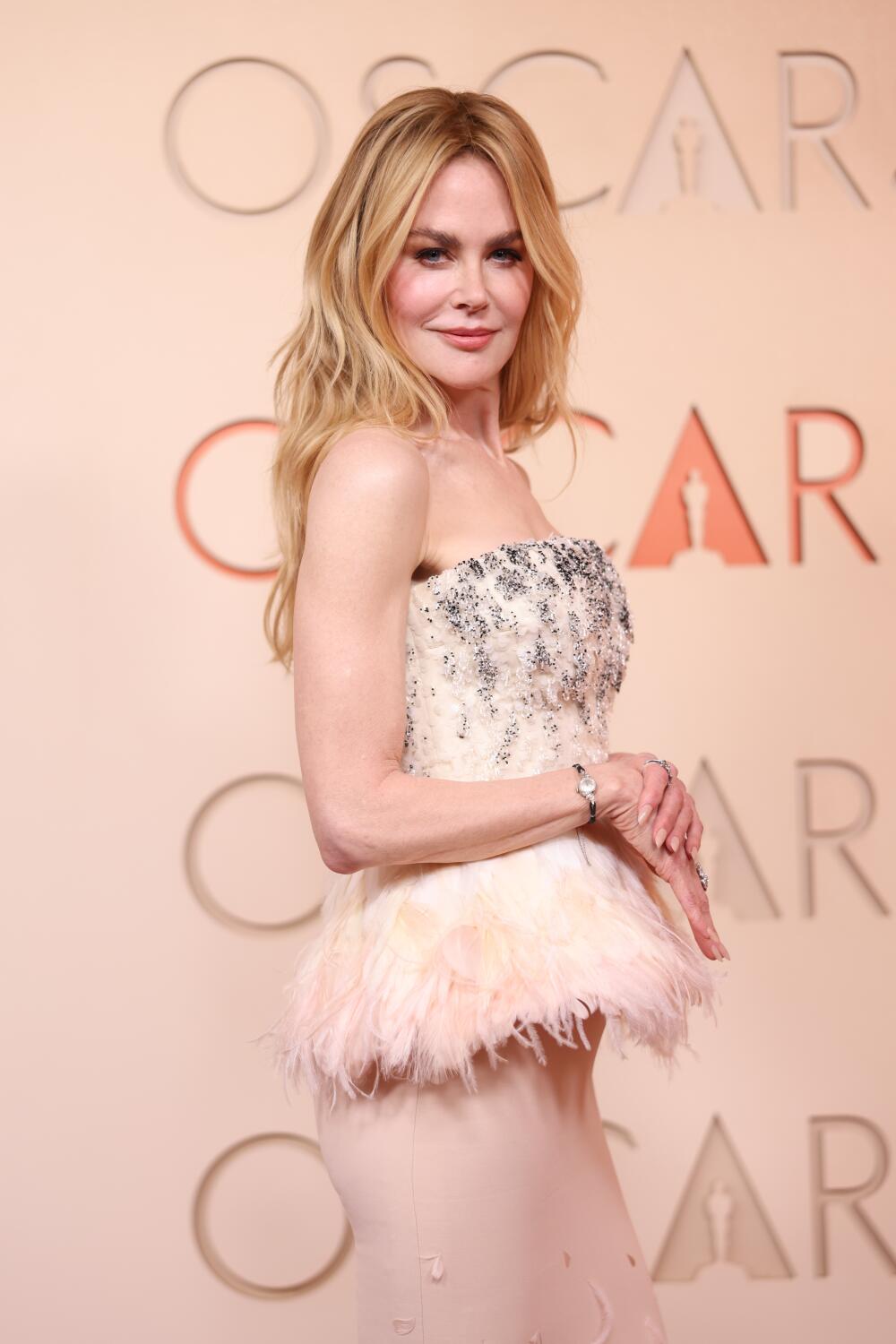
The 2026 Academy Awards opened with the kind of desperate, high-fructose energy usually reserved for a failing tech IPO. We saw Conan O’Brien pacing the stage, deploying his trademark self-deprecation to mask a terrifying reality: nobody under the age of forty knows why they are supposed to care about a gold-plated statuette. Then came the "shocker" of the night. Amy Madigan took home a Best Supporting Actress trophy for Weapons.
The industry trades are calling it a "triumph for veteran craft." I’m calling it a symptom of a terminal illness.
When the "biggest night in Hollywood" relies on a legacy win and a host whose peak cultural relevance predates the iPhone, we aren't watching a celebration of cinema. We are watching a museum curator polish the brass on a sinking ship. The consensus is that the Oscars are "back" because the ratings ticked up by a marginal percentage. The truth is that the Oscars have become a closed-loop system that serves only the people inside the room.
The Amy Madigan Fallacy
Let’s be clear about Madigan. She is a powerhouse. Her performance in Weapons was precise, gritty, and undeniably skilled. But her win isn't the "upset" the live chats are claiming it to be. It is a classic Academy pivot.
Whenever the Oscars feel they are losing their grip on "prestige," they retreat into the arms of the old guard. It’s a defensive crouch. By awarding Madigan, the Academy isn't Rewarding Excellence; they are signaling to their aging voting bloc that they still "matter." They ignored the raw, disruptive performances in the indie circuit—performances that actually reflect how people consume and relate to media in 2026—in favor of a narrative that feels safe.
If you want to know why the Oscars are failing to capture the zeitgeist, look at the delta between what wins an Oscar and what people actually watch twice. Weapons is a fine film, but it is a "vegetable" movie. You watch it because you feel you should. The Academy has mistaken "importance" for "impact."
Conan O'Brien and the Ghost of Late Night
Watching Conan open the show felt like a glitch in the simulation. He is a master of his craft, but his presence highlights the Academy’s greatest fear: the future.
The live-chat pundits praised the "return to a classic hosting format." This is code for "we are terrified of TikTok." By hiring a veteran of the 11:30 PM slot, the producers are attempting to lure back the linear television audience that has already migrated to nursing homes. It is a strategy based on nostalgia, not growth.
I’ve spent fifteen years in the guts of distribution and talent management. I have seen studios burn $20 million on an "Oscar campaign" for a film that didn't even recoup its marketing budget. This is the "Prestige Tax." Studios pay it to keep their egos inflated, while the actual innovators are building audiences on platforms the Academy doesn't even recognize as "art."
The Myth of the "Oscar Bump"
The industry loves to talk about the "Oscar Bump"—the idea that a win or nomination translates to a massive surge in revenue. In 2026, this is a lie.
Data from the last three cycles shows that the "bump" has flattened. For a film like Weapons, the cost of the awards campaign often exceeds the additional VOD revenue generated by the win. We are living in an era of fragmented attention. A thirty-second clip of a creator breaking down a film on a social feed has more conversion power than a four-hour broadcast on ABC.
The Academy is still operating on a 1995 playbook. They think the statue creates the value. In reality, the value is created by the community, and the Academy has spent the last decade insulting that community by dismissing "popular" cinema as beneath them.
Why the "Live Chat" Culture is Fake
The "live chat" surrounding the Oscars is an echo chamber. If you look at the participants, it’s mostly journalists, publicists, and film students. It’s a digital circle-jerk. The general public isn't "chatting" about the Oscars; they are finding out who won through a push notification three hours later and forgetting the name by breakfast.
The competitor articles focus on the "snubs" and the "fashion." They are missing the structural collapse. They treat the Oscars like a healthy organism with a few minor symptoms. It’s not. It’s a corpse being weekend-at-Bernie’d by a coalition of publicists and jewelry sponsors.
The Brutal Truth About "Weapons"
Weapons worked because it was a traditional narrative packaged in modern cinematography. It didn't break new ground. It didn't challenge the medium. It was a well-executed version of things we have seen a thousand times before. Madigan’s win is the ultimate participation trophy for a genre of filmmaking that refuses to evolve.
If the Oscars wanted to be relevant, they would stop categories based on gender or "supporting" roles and start categories based on "Cultural Displacement" or "Technological Innovation in Storytelling." But they won't. Because that would require the voters to actually understand the technology they are so afraid of.
Stop Asking if the Oscars Can Be "Saved"
The question is flawed. You don't "save" a horse and buggy once the internal combustion engine is in mass production. You acknowledge its historical significance and move on.
The "lazy consensus" is that we need a better host or a shorter runtime. Wrong. We need a complete dissolution of the gatekeeper model. The idea that a group of several thousand insiders can objectively determine the "best" art in a world of eight billion people is a relic of a monoculture that no longer exists.
The 2026 Oscars proved one thing: the industry is more interested in its own history than its own survival. Amy Madigan got her trophy. Conan got his laughs. The Academy got its temporary sense of self-worth.
And the rest of the world just kept scrolling.
Stop waiting for the Oscars to reflect the world you live in. They are designed to reflect the world the voters wish they still lived in. The real "weapons" in this industry aren't the ones on screen; they’re the algorithms and decentralized creators who are making the Academy’s entire existence a footnote in the history of 21st-century media.
Go watch the movie. Ignore the statue.