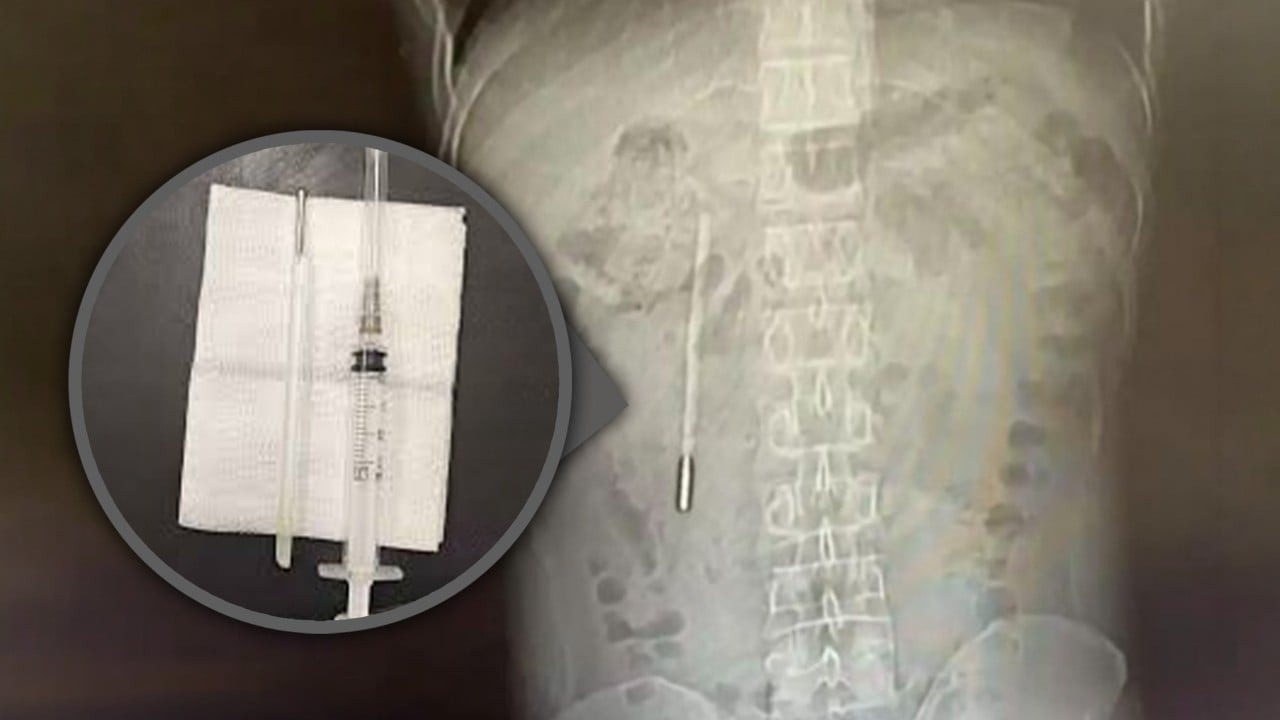
The internet loves a freak show. A 32-year-old man in China walks into a hospital complaining of abdominal pain, and surgeons find a glass thermometer he swallowed twenty years ago. It is the perfect viral cocktail: nostalgia, a hint of "how did he survive?", and the sheer absurdity of a fragile glass tube remaining intact in a churning vat of stomach acid for two decades.
The media treats this like a miracle or a cautionary tale. It is neither. It is a distraction.
We are obsessed with the biological fluke because it allows us to ignore the mundane reality of medical negligence and the systemic failure of health literacy. While you gawk at the man with the silver-lined gut, you are missing the far more dangerous truth about how the human body—and the medical industry—actually functions.
The Myth of the Fragile Gut
The "lazy consensus" surrounding this story is that the man was a ticking time bomb. The narrative suggests that he was lucky the mercury didn't leak and kill him instantly.
Let’s get real about chemistry.
If that thermometer had broken in 2004, the primary danger wouldn't have been immediate death. Elemental mercury (the silver liquid inside) is actually poorly absorbed by the gastrointestinal tract. If you swallow it, it mostly passes right through you. The real killers are mercury vapors inhaled into the lungs or organic mercury compounds found in tainted fish.
The medical community often plays up the "instant poison" angle because it’s easier than explaining nuance. But the real miracle here isn't that he survived the mercury; it’s that the thermometer didn't cause a perforation or a bowel obstruction.
The human stomach is a muscular bag designed to pulverize. It uses rhythmic contractions called peristalsis to move contents toward the pyloric sphincter. For a 12-centimeter glass rod to evade the exit for twenty years implies a specific anatomical positioning—likely tucked into a mucosal fold or a diverticulum—where it remained shielded from the stomach’s natural grinding motion.
This isn't a story about a "strong" body. It’s a story about a lucky physical alignment. Stop praising the man’s constitution and start questioning the diagnostic failure.
Why 20 Years of Diagnostics Failed
The most damning part of this saga isn't the thermometer. It’s the two decades of missed opportunities.
Imagine a scenario where a patient presents with intermittent gastric distress. In a functioning healthcare system, you don't just hand out antacids for twenty years. You scan. You scope. You investigate.
The fact that this object stayed hidden suggests one of two things:
- The patient lived in a state of self-neglect, fueled by a lack of basic medical access.
- Every doctor he saw performed a cursory physical exam and moved on to the next "billing unit."
We see this constantly in the industry. I’ve seen patients treated for "chronic IBS" for a decade, only to find out they had a swallowed dental bridge or a massive gallstone during a routine X-ray for a completely unrelated rib injury. We are over-reliant on symptom management and under-invested in root-cause visualization.
The "China Thermometer" story is being sold as a quirky human interest piece. It should be a white paper on the total collapse of preventative screening in rural and developing regions.
The Hidden Cost of Medical Voyeurism
Why does this story rank higher in your newsfeed than the latest data on antibiotic resistance or metabolic syndrome? Because the "outlier" is comfortable.
When we read about a man with a thermometer in his stomach, we think, Well, I haven't swallowed any glass recently, so I’m fine. It creates a false sense of security. It turns health into a game of "Avoiding the Absurd" rather than "Managing the Essential."
The industry feeds this beast. News outlets know that medical oddities drive clicks. Hospitals know that "miracle surgery" press releases boost their prestige. But this voyeurism comes with a price: it erodes the public's understanding of risk.
You are 10,000 times more likely to die from the processed oils in your pantry than from an undiagnosed foreign object in your gut. But which one are you reading about today?
Dissecting the "People Also Ask" Nonsense
When stories like this break, the search queries are predictable. People ask: "Can mercury stay in your body for 20 years?" or "What happens if you swallow a thermometer?"
The answers provided by "experts" are usually sanitized garbage.
- The Brutal Truth on Mercury: If that glass breaks, the mercury isn't your biggest problem. The shards of glass are. A lacerated esophagus or a perforated bowel leads to sepsis, and sepsis kills you in hours, not decades.
- The Reality of "Silent" Foreign Objects: Many people walk around with foreign bodies. Surgical sponges, forgotten stents, even shrapnel. The body is remarkably good at walling these things off in fibrous tissue—a process called encapsulation.
We need to stop asking "How did he survive?" and start asking "Why are we so bad at basic physical checkups?"
The Contrarian Guide to Not Dying of Stupidity
If you want to actually use this news story for something productive, stop looking at the X-ray and start looking at your own medical history.
- Demand Visuals: If you have chronic, localized pain and your doctor hasn't ordered an ultrasound or an X-ray, they are guessing. Stop letting them guess with your co-pay.
- Understand Material Science: Stop being afraid of elemental mercury and start being afraid of inflammation. Chronic inflammation from a "minor" irritation is what leads to the cellular mutations that cause cancer. The thermometer didn't kill him, but the 20 years of localized irritation could have easily seeded a tumor.
- Ignore the Outlier: Every time you see a headline about a "Man with [X] inside him," remind yourself that it is a statistical zero. It has no bearing on your health. It is entertainment, not education.
The medical industry loves the "Miracle Save." It’s great for the brand. It’s much harder to market "We caught a minor issue early because we actually listened to the patient and did our jobs."
This man isn't a medical marvel. He is a walking testament to the fact that we would rather be entertained by a freak accident than fix a broken diagnostic culture.
The thermometer is out. The systemic incompetence remains.
Go get your blood work done and stop reading about the guy in China. He’s fine. You might not be.