The air inside a cabin just before takeoff is a specific kind of purgatory. It smells of recycled dust, expensive perfume, and the faint, metallic tang of jet fuel. On that Thursday evening at LaGuardia, the cabin of Delta Flight 1086 was filled with the mundane sounds of a life in transit—the rhythmic thud of overhead bins closing, the rustle of safety pamphlets no one reads, and the low hum of a hundred different private anxieties.
Snow was falling. Not the picturesque, cinematic kind that dusts the postcards of Central Park, but a thick, wet slush that turned the runway into a sheet of grey glass.
Then came the roar.
When a plane lands, you expect the jolt. You wait for the moment the rubber meets the asphalt and the engines scream in reverse to pull the beast to a halt. But for the passengers strapped into those seats, the rhythm was wrong. The friction didn't take. Instead of the controlled deceleration of a multi-ton machine, there was a sickening, weightless slide.
The physics of a crash are surprisingly quiet until they aren't.
The Physics of a Near Miss
Imagine holding a marble on a mirror coated in dish soap. That was the runway. As the MD-88 touched down, the pilot's struggle wasn't with the sky anymore; it was with the ground. The aircraft began to fishtail, a graceful, terrifying pirouette that no one on board could influence.
One passenger, clutching the armrests so hard his knuckles turned the color of the snow outside, described the sensation not as a crash, but as a disappearance. The world simply stopped behaving according to the laws of aviation. The plane veered off the tarmac, heading straight for the icy waters of Flushing Bay.
The sound that followed was a tectonic groan.
Metal shredded. The nose of the aircraft punched through the perimeter fence, the chain-link screeching against the fuselage like a thousand fingernails on a chalkboard. It didn't feel like a mechanical failure. It felt like an assault.
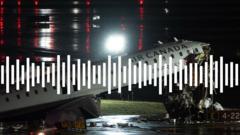
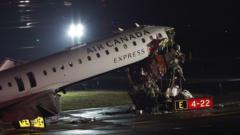
When the motion finally stopped, the silence was worse than the noise. For a heartbeat, 127 people forgot how to breathe. They looked out the windows and didn't see a terminal or a gate. They saw the grey, churning water of the bay, inches away. The nose of the plane was perched precariously over the embankment.
The bird was broken.
The Invisible Stakes of a Seconds-Long Slide
We talk about airline safety in terms of statistics. We cite the $10^{-7}$ probability of a hull loss. We look at the "black box" and analyze the telemetry of the flaps and the brake pressure.
But statistics don't account for the woman in 12C who was trying to remember if she’d told her daughter she loved her before boarding. They don't measure the surge of cortisol that turns blood into battery acid.
The real story of LaGuardia isn't about the landing gear. It’s about the smell of leaking fuel.
Fuel is the great unspoken terror of a crash. As the passengers scrambled to evacuate, the scent hit them—sharp, volatile, and omnipresent. The left wing had been torn open. Thousands of pounds of combustibles were weeping onto the snow. In that moment, the plane wasn't a vehicle anymore. It was a giant, silver tinderbox.
"Get out! Get out! Get out!"
The flight attendants didn't use the practiced, melodic tones of the pre-flight briefing. They screamed. They pushed. They channeled a primal urgency because they knew what the passengers didn't: the clock was ticking against a spark.
The Humanity in the Churn
Consider the perspective of someone standing on the perimeter road. To them, the plane looked like it had been sliced by a giant blade. The nose was mangled, the underbelly exposed. It looked like a carcass.
But inside that carcass, something remarkable was happening.
In the face of total chaos, the human instinct usually bifurcates. Some freeze. Others move. On Flight 1086, the movement was a frantic, coordinated dance of survival. People didn't stop for their laptops. They didn't look for their shoes. They climbed over seats, helped strangers find their footing, and tumbled out onto the wing.
The wing was slick with a cocktail of de-icing fluid and jet fuel. It was a precarious stage for a miracle.
One man later recalled the sensation of the cold hitting his face. It was 28 degrees. The wind-chill off the water felt like a physical blow. But it was the best thing he’d ever felt because it meant he was outside. He was alive. He stood on that vibrating metal wing, surrounded by the smell of chemicals and the sound of sirens, and watched the snow fall on the ruins of his afternoon.
The Cost of the "Routine"
We have been conditioned to treat flight as a chore. We complain about the legroom. We moan about the price of a ham sandwich in Terminal B. We treat the miracle of hurtling through the stratosphere at five hundred miles per hour as a boring necessity of modern life.
Events like the LaGuardia slide strip away that arrogance.
They remind us that every takeoff is a defiance of gravity and every landing is a negotiation with the elements. The pilots that day were dealing with a "crosswind component" and "braking action" that was reported as "good," then "poor," then "nil" in the span of minutes.
They were flying into a blind spot of meteorology.
When the investigation began, the focus shifted to the technicalities. Did the pilots use too much reverse thrust? Was the rudder blanked out by the spoilers? These are important questions for the engineers in white coats. They help build better planes.
But they don't explain the look in the eyes of the first responders who waded through waist-deep snow to reach the wreckage. They don't explain the collective sob that broke out on the transit bus taking survivors away from the site.
The Echoes of the Impact
The runway was closed for days. The plane was eventually hauled away, a crumpled ghost of its former self. Life at LaGuardia returned to its frantic, coffee-fueled rhythm.
But for those 127 people, the world changed its shape.
The "crash" didn't end when the plane stopped moving. It lived on in the way they flinch when a car brakes too hard on a rainy street. It lived on in the sudden, inexplicable tears that come when they hear the sound of a jet engine overhead.
We want to believe we are in control. We buy tickets, we choose our seats, we plan our itineraries. We act as if the future is a solid thing we can grasp.
The truth is much more fragile.
We are all just passengers on a sliding bird, hoping the fence holds, hoping the fuel doesn't ignite, and waiting for the moment we can finally step out into the cold, beautiful air and realize we are still here.
The snow continued to fall long after the last passenger was accounted for. It covered the skid marks. It filled the gashes in the earth. By morning, the runway looked perfect again—a long, white ribbon stretching toward the water, waiting for the next soul to trust it.
The jagged metal was gone, but the air still held the faint, lingering scent of what almost was.
Would you like me to look into the NTSB's final ruling on the mechanical factors of the MD-88’s braking system?