The air in Tehran during the small hours of a late October night has a specific, biting chill. It is the kind of cold that seeps through the concrete of apartment blocks, forcing the city’s millions into a restless, thin sleep. But on this particular night, the silence wasn't broken by the usual rumble of a distant truck or the call of a stray dog. It was shattered by the rhythmic, mechanical pulse of air defense batteries.
For the person standing on a balcony in the capital—let’s call him Reza, a father of two who remembers the sirens of the 1980s—the sound wasn't just noise. It was a vibration in the marrow. He watched the streaks of light arc into the blackness, intercepting shadows that moved faster than the human mind could process. This wasn't just a military engagement; it was the moment a decade of whispered threats became a kinetic, terrifying reality.
The Invisible Architecture of Defiance
When Supreme Leader Ayatollah Ali Khamenei recently addressed a crowd of military officials, he didn't speak in the dry, bureaucratic tongue of a standard press release. He spoke of "astonishment." He claimed that Iran had stunned the world during its direct confrontation with the combined military might of the United States and Israel.
To understand why this word matters, you have to look past the charred metal and the satellite imagery of damaged hangars. You have to look at the psychological shift. For decades, the global narrative was one of absolute Western air oribital dominance. The assumption was simple: if the "great powers" decided to strike, the target would simply cease to exist.
Iran’s narrative focuses on the fact that they are still standing.
Consider the sheer complexity of the math involved. When dozens of drones and missiles are launched across borders, and an equal number of interceptors rise to meet them, you are witnessing a trillion-dollar chess match played at Mach 5. Khamenei’s argument is that the "Zionist regime" and its American backers expected a collapse. They expected the "Iron Dome" and the "Arrow" systems to be a one-way street of dominance. Instead, they met a wall.
The Human Cost of High-Stakes Geopolitics
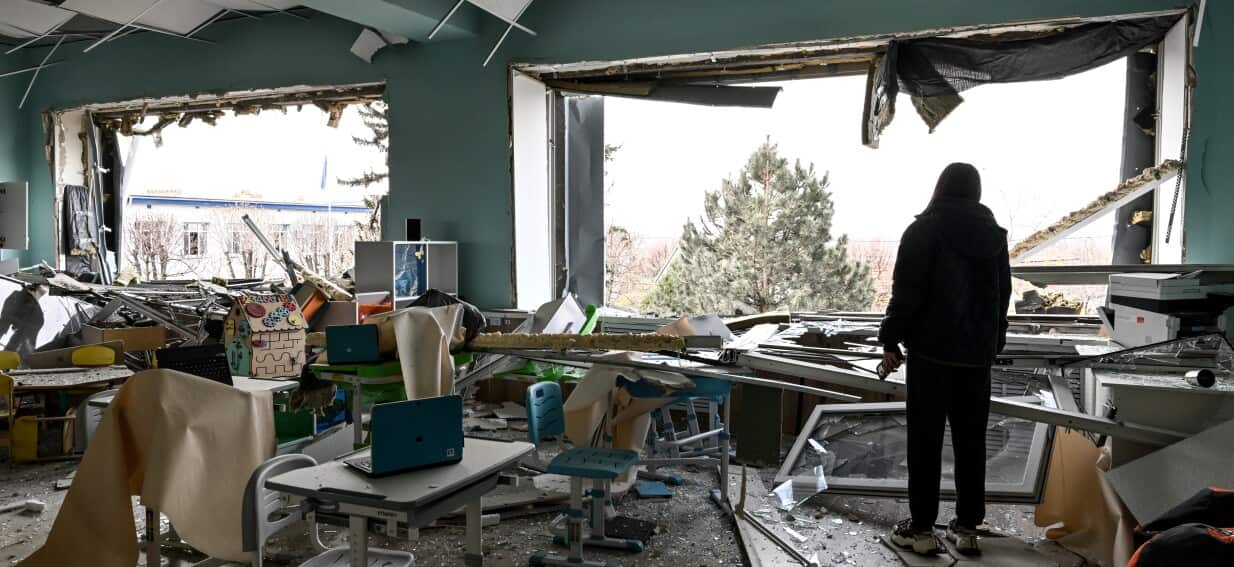
While the headlines focus on "strategic assets" and "military infrastructure," the reality is lived in the dark. Imagine being a technician in a mountain silo, knowing that the blip on your screen represents a decision that could ignite a regional conflagration. Or imagine being a civilian in Isfahan, listening to the thunder and wondering if the roof will hold.
The "astonishment" Khamenei refers to is centered on the survival of the Iranian state apparatus under a barrage that would have leveled smaller, less prepared nations. From Tehran’s perspective, the war wasn't just about territory; it was about the validity of their domestic technology. For years, Western analysts mocked Iranian drones and missiles as "photoshop" or "lawnmower engines."
That mockery ended the moment those systems forced the most sophisticated radar arrays on earth to stay awake for seventy-two hours straight.
It is a brutal, cold logic. In the world of high-stakes defense, you don't have to win a total victory to "astonish" your opponent. You only have to prove that their sword is not as sharp as they promised, and your shield is not as brittle as they hoped. This shift in perception is the true casualty of the conflict.
The Logic of the Long Game
We often think of war as a series of explosions, but Khamenei is framing it as a classroom. He suggested that the "US-Israeli war" served as a proving ground. Every missile intercepted provided data. Every radar lock-on revealed a frequency.
Think of it like a high-stakes poker game where one player has a seemingly infinite bankroll—the United States—and the other has a smaller pile of chips but knows every inch of the table. Iran’s strategy hasn't been to match the U.S. plane for plane. That would be impossible. Instead, they built an asymmetrical net. They turned their geography into a fortress and their engineering into a riddle.
The "astonishment" isn't just about the military hardware; it’s about the failure of the "maximum pressure" doctrine to achieve its ultimate goal. The sanctions were supposed to hollow out the Iranian military-industrial complex. Yet, the Supreme Leader stood before his generals and touted a military that not only functioned but, in his view, dictated the terms of the engagement.
The Cracks in the Monolith
However, every story of defiance has a shadow. While Khamenei celebrates the "shattering" of the enemy’s prestige, the internal reality for Iranians remains one of immense tension. The economy is a bruised and battered thing. The "astonishment" the government feels is not always shared by the shopkeeper in the bazaar who watches the rial fluctuate every time a drone is launched.
There is a profound disconnect between the geopolitical triumph described in the halls of power and the lived experience of the populace. To the leadership, the war was a validation of sovereignty. To the citizen, it was another night of praying that the "strategic patience" of their leaders wouldn't eventually run out of luck.
The world watched the exchange with held breath because we all understand, instinctively, that the old rules are dissolving. The era of the "uncontested sky" is over. Whether it is a small drone costing five thousand dollars or a hypersonic missile costing five million, the barrier to entry for causing global chaos has plummeted.
Beyond the Rhetoric
When the Supreme Leader says the world was "astonished," he is speaking to the Global South. He is sending a message to every nation that has ever felt the weight of Western sanctions or the threat of a carrier strike group. He is saying: The giant can be bled. The technology is not infallible.
This is the most dangerous part of the narrative. It’s not the missiles themselves; it’s the erosion of the "mystique" of Western military invincibility. Once that spell is broken, the geopolitical landscape shifts permanently.
Reza, back on his balcony in Tehran, doesn't care about the Global South. He doesn't care about the "Zionist entity" or the "Great Satan" in that moment. He cares about the silence that finally returns after the batteries stop firing. He cares about the fact that his children are still breathing.
But as the sun rises over the Alborz mountains, he knows the world is different now. The sky above him is no longer just air and clouds; it is a contested space, a theater of invisible signals and kinetic death where the "astonishment" of one man is the terror of another.
The story being told in Tehran is one of victory against the odds. The story being told in Washington and Tel Aviv is one of successful defense and containment. But the real story is found in the cracks of the pavement and the tired eyes of people who realize that the "war" never truly ended—it just changed its shape.
The missiles may have stopped falling for now, but the friction of two tectonic plates of power rubbing together continues to groan beneath the surface. We are all living on the fault line. We are all waiting to see if the next "astonishment" will be the one that finally brings the house down.