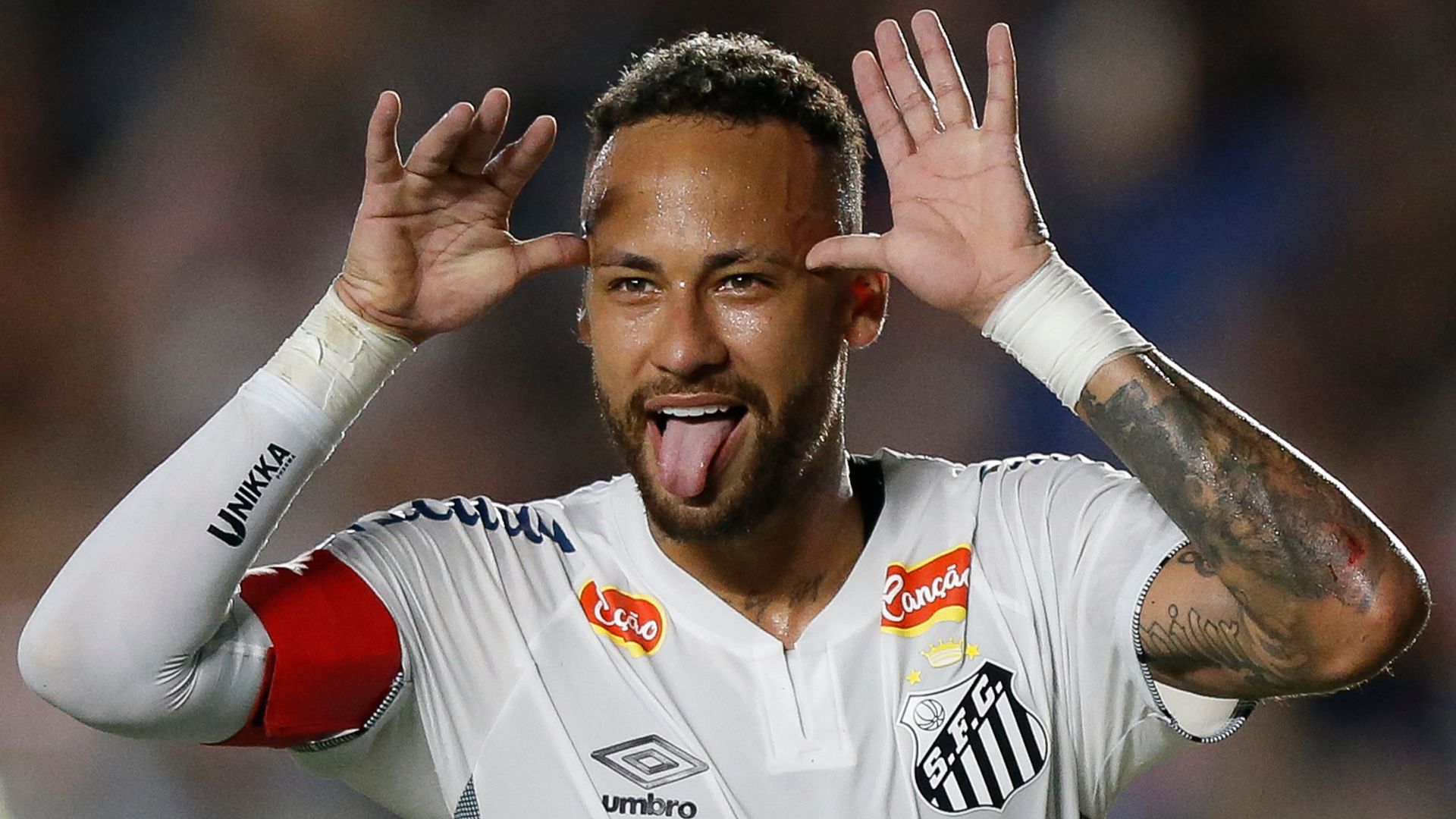
The shadow of the 2026 World Cup looms over Brazilian football, and inside that shadow stands a man whose name once defined the nation’s hopes but now represents its deepest uncertainty. Carlo Ancelotti has delivered a verdict that is as cold as it is professional. He is not judging Neymar on his highlights or his reputation as the country's leading goalscorer. He is judging him on a metric that has eluded the playmaker for years: sustained physical availability.
With the final squad selection for the tournament in North America just weeks away, the reality facing the thirty-four-year-old is harsh. Ancelotti has stated with absolute clarity that he will only draft players who are physically ready to endure the rigors of modern tournament football. This is not a personal slight. It is a calculated refusal to build a team around a figure who has spent more time in rehabilitation clinics than on the pitch since the 2022 tournament.
The Physicality Gap
Modern international football has shifted away from the luxury of the singular, stationary creator. Ancelotti, a tactician who demands high-intensity output from every position, views the game through a lens of collective movement. During their private discussions, the message was direct. The manager believes Neymar no longer possesses the acceleration to operate on the flanks, where defensive tracking and explosive runs are mandatory.
If he is to be included, he must adapt to a central role, operating as a ten or a secondary striker. Yet, even in that restricted space, the physical demands remain unforgiving. The expectation is not merely that he survives ninety minutes, but that he contributes to the pressing structures without breaking down. For a player who has undergone significant knee surgery as recently as December 2025, this is a monumental ask.
The skepticism surrounding this potential comeback is rooted in recent history. Since his departure from European football and subsequent return to Santos, the narrative has been a cycle of brief bursts of brilliance followed by prolonged absences. Fans see the three goals and two assists he has managed in his limited appearances during the 2026 domestic season and see a return to form. Analysts see a player who is still struggling to maintain consistency across back-to-back fixtures.
The Cost of Sentimentality
Brazilian football has historically struggled to detach from its icons. The emotional attachment to a player who has 79 goals in 128 caps creates a distortion field that makes objective decision-making difficult. Supporters chant his name in stadiums when results turn sour, creating a pressure cooker for any manager. Ancelotti is choosing to ignore that noise.
By framing this as a fitness ultimatum, the management is attempting to shift the burden of responsibility onto the player himself. It is a brilliant bit of professional insulation. If Neymar is left off the roster, it is not because the manager lacks faith in his genius; it is because the player failed to meet the objective criteria of the squad. This prevents the selection from becoming a political crisis within the Brazilian Football Confederation.
Consider a hypothetical scenario where the staff ignores these physical metrics. If a player is selected purely on name recognition despite carrying recurring muscle fatigue or a lack of match sharpness, the tactical integrity of the entire side suffers. Ancelotti knows that in a tournament format, carrying a passenger is a death sentence. The group relies on a fluid, relentless pace. One player failing to track back or lacking the engine to transition into a defensive block forces the entire team to overcompensate.
The Final Window
The clock is ticking toward the May 18 announcement of the final roster. Every training session and every match for Santos is now an audition. The scrutiny is absolute. The staff of the national team is monitoring his data, looking for signs of fatigue, recovery times, and the ability to handle consecutive high-intensity efforts.
Neymar faces a choice that goes beyond football. He has spoken openly about the possibility of retirement at the end of this year. His body is sending signals that the game is becoming increasingly difficult to play at the highest level. Should he push himself to the brink for a final shot at a trophy that has historically avoided him, he risks his long-term health. Should he accept that his role in the national team has evolved into something he can no longer inhabit, he preserves his legacy.
The tragedy of this situation is that the talent remains evident. The touch, the vision, and the instinct for goal are all still there. But the environment around him has changed. The game has become faster, more demanding, and less forgiving of individuals who cannot match the collective energy of the side.
The final decision will rest with the coaching staff, but it is the player who is setting the terms of his exclusion or inclusion with every step he takes. It is not just about scoring goals. It is about proving that his frame can withstand the unrelenting pressure of tournament competition, a challenge he has failed to meet for far too long.
He has two months to silence the questions about his physical readiness. If he cannot, the reality is that the national team will move on, and he will be left on the outside, forced to accept that the game has finally outrun him.


