Imagine standing on the deck of a VLCC—a Very Large Crude Carrier—as it slides through the turquoise waters of the Strait of Hormuz. You are on a vessel longer than the Eiffel Tower is tall, carrying two million barrels of oil. To your left, the jagged, sun-bleached cliffs of the Musandam Peninsula rise like teeth. To your right, the hazy coastline of Iran flickers in the heat. Between them, the navigable channel is barely two miles wide.
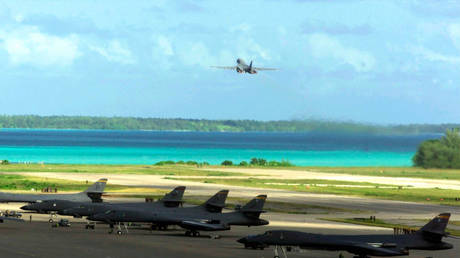
It is the world’s most dangerous bottleneck. You might also find this related coverage interesting: Why the Chagos Islands deal just hit a massive wall.
When this throat constricts, the world chokes. A single flare-up here doesn't just mean a diplomatic spat in a far-off desert; it means the price of a gallon of milk rises in Manchester, a factory in Lyon shuts its doors early, and a family in London wonders why their heating bill just doubled. For decades, the United States acted as the world’s self-appointed security guard at this gate. But the guard is looking elsewhere now. The Atlantic alliance is fraying, and in the quiet rooms of London and Paris, the realization has dawned: if the lights are going to stay on, Europe must learn to walk alone.
The Ghost of the Seventh Fleet
The American security umbrella was always less of an umbrella and more of a massive, nuclear-powered shield. For fifty years, the logic was simple. The U.S. Navy patrolled the Persian Gulf, the oil flowed, and the global economy hummed. It was a bargain that suited everyone until it didn’t. As extensively documented in recent coverage by The Washington Post, the results are significant.
Washington’s pivot toward the Pacific and its internal exhaustion with "forever wars" has left a vacuum. This isn't a sudden departure, but a slow receding of the tide. As American interests shift toward containing rivals in the South China Sea, the Strait of Hormuz has become a secondary concern for the Pentagon. But for Europe, it remains an existential one.
France and the United Kingdom find themselves in an agonizing position. They are historical powers with deep ties to the region, yet they lack the sheer, overwhelming tonnage of the U.S. Seventh Fleet. They are watching the maritime insurance rates for tankers skyrocket. They are watching Iranian fast boats shadow merchant ships. They are watching the status quo dissolve in real-time.
Consider a hypothetical captain, let’s call him Elias. He has spent thirty years at sea. He knows the currents of the Hormuz better than the streets of his hometown. Ten years ago, seeing a grey hull on the horizon meant safety. Today, seeing a grey hull requires a frantic check of the flag. Is it an ally? Is it a provocateur? Is it a sign that a boarding party is twenty minutes away? Elias doesn't care about the high-level geometry of "strategic autonomy." He cares about whether his crew will be detained in Bandar Abbas because of a political chess move made three thousand miles away.
The Quiet Meeting in the Dark
The decision by London and Paris to hold talks regarding the Strait without the United States is a seismic shift masquerading as a diplomatic technicality. It is a "Plan B" that has suddenly become "Plan A."
The tension in these rooms is thick. On one side, you have the British, still navigating the choppy waters of post-Brexit identity, realizing that "Global Britain" requires actual naval presence. On the other, the French, long-time advocates for European strategic independence, finally seeing their neighbors nod in agreement. They aren't meeting because they want to snub Washington. They are meeting because they are terrified.
The numbers explain the fear better than any speech could. Roughly 21 million barrels of oil pass through that twenty-one-mile-wide gap every single day. That is about 20% of the world's total liquid petroleum consumption. More importantly for the modern era, it is the primary exit point for the liquefied natural gas (LNG) that Europe now desperately relies on to replace Russian pipelines.
If the Strait closes, the global economy doesn't just slow down. It breaks.
But the real problem lies elsewhere. It’s not just about the ships. It’s about the message. By excluding the U.S. from these specific talks, France and the UK are signaling to Tehran and the rest of the Gulf that they are willing to negotiate on their own terms. They are trying to de-escalate the "maximum pressure" tactics that have defined American policy for years. They are searching for a middle path—a way to secure the water without starting a fire.
The Geometry of a Chokepoint
Geopolitics is often treated as an abstract game of Risk, played with plastic pieces on a cardboard map. In reality, it is a matter of physics and geography.
The Strait of Hormuz is shaped like a giant "V." Ships entering the Gulf must hug the Omani coast; ships leaving must pass through Iranian territorial waters. There is no alternative route. There is no "detour" for a supertanker. You go through the eye of the needle, or you don't go at all.
When the UK and France discuss "restoring traffic," they are talking about a delicate dance of maritime diplomacy. It involves setting up protected corridors, sharing intelligence that doesn't go through a Pentagon filter, and perhaps most importantly, convincing the regional powers that Europe is a "rational actor" capable of its own decisions.
The skepticism is high. Critics argue that without American carriers, the European mission is a paper tiger. A few frigates and a handful of surveillance drones can't stop a determined regional power from mining the waters or seizing a vessel. Yet, the Europeans are betting on a different kind of power: the power of the stakeholder.
By separating their security interests from the broader U.S. agenda, they hope to lower the temperature. They want to turn the Strait from a battlefield of superpowers back into a boring, predictable highway for commerce.
The Invisible Stakes of the Grocery Aisle
We often think of international security as something that happens "over there." We see grainy footage of speedboats on the news and change the channel. But the Strait of Hormuz is connected by an invisible thread to your kitchen table.
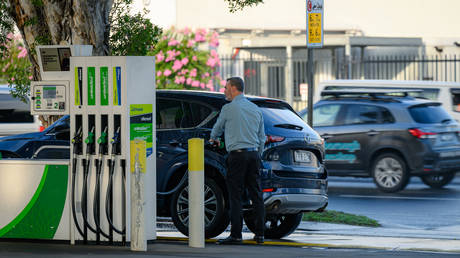
Every time a tanker is delayed, the cost of shipping insurance ticks upward. That cost is passed to the refinery, then to the distributor, then to the plastic manufacturer, and finally to you. The "Hormuz Tax" is real. It is a hidden surcharge on everything from the smartphone in your pocket to the fertilizer used to grow your morning strawberries.
The Anglo-French talks are an attempt to stop that tax from becoming a total embargo. They are trying to insulate the European consumer from the volatility of a Middle East that feels increasingly abandoned by its traditional guarantor.
But consider what happens next: if this partnership succeeds, it creates a blueprint. It proves that the "Old World" can still manage its own interests without waiting for a signal from the White House. It marks the end of the post-Cold War era where every major global security issue had to be solved in English with an American accent.
This isn't just about ships. It’s about the birth of a multipolar reality where the lines of communication are messy, overlapping, and occasionally contradictory.
The Weight of the Crown and the Republic
The history between London and Paris is one of centuries of rivalry, punctuated by moments of desperate cooperation. Seeing them huddled together, excluding their most powerful ally, is a testament to the gravity of the situation.
The British bring their deep-seated maritime tradition and their remaining outposts in the region, like the base in Bahrain. The French bring their sophisticated diplomatic network and their permanent presence in the United Arab Emirates. Together, they represent a formidable, if stretched, force.
But they are haunted by the memory of the Suez Crisis—the last time they tried to act in the region without American blessing. That ended in a humiliating retreat that signaled the end of their empires. This time, however, the roles are reversed. They aren't trying to reclaim an empire; they are trying to prevent a collapse. They aren't defying Washington as much as they are acknowledging Washington’s preoccupation.
The danger is that this "talk without the U.S." could be interpreted as a crack in the armor. If Tehran perceives the West as divided, they might be tempted to push harder. If Washington feels sidelined, they might pull back even faster. It is a high-wire act performed over a sea of oil and a floor of jagged rocks.
The sun sets over the Strait, casting long, bruised shadows across the water. On the bridge of a tanker, a lookout watches the radar screen, a rhythmic sweep of green light. To him, the talks in European capitals are distant whispers. He only cares about the next twenty miles. He cares about the silence of the radio and the stillness of the horizon. He is the human heart of a global machine, waiting to see if the diplomats can keep the throat of the world open long enough for him to get home.
Darkness falls over the Musandam cliffs. The water remains restless. The world waits to see if the old powers can still hold the line, or if the narrowest throat in the world is about to close for good.