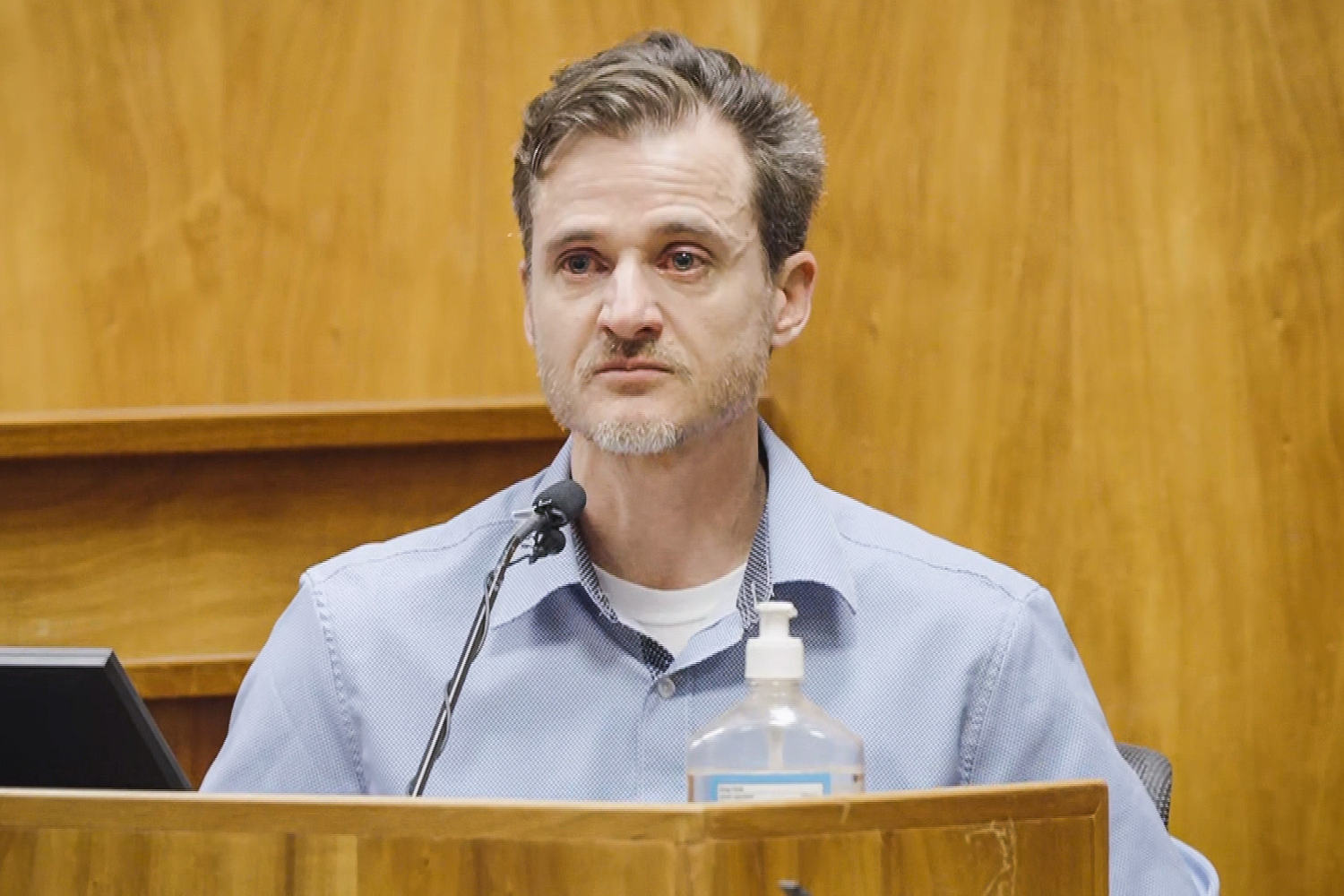
The headlines are easy. A Maui doctor, a scenic hike, a steep cliff, and a jury verdict that split the difference. By finding Dr. Eric Brown guilty of attempted manslaughter rather than attempted murder, the legal system patted itself on the back for finding "middle ground." It bought into the narrative of "extreme mental or emotional disturbance."
They got it wrong. Not because Brown is innocent, but because the "lazy consensus" of the courtroom fails to grasp how the high-stakes medical mind actually breaks. We treat these cases like soap operas when we should be treating them like structural engineering failures.
The Fallacy of the Sudden Snap
The media loves the "Dr. Jekyll and Mr. Hyde" trope. One minute he’s saving lives in the ER; the next, he’s allegedly trying to shove his wife off a trail. The prosecution pushes cold-blooded intent; the defense pushes a temporary break from reality.
Both sides miss the point. In my years observing how high-pressure professionals operate under extreme duress, I’ve seen that "snapping" is rarely a sudden event. It is a slow, grinding erosion of the prefrontal cortex caused by chronic sleep deprivation, vicarious trauma, and the God complex required to cut into human flesh for a living.
When a physician stands on a cliffside, they aren't just a husband and wife having a spat. They are a person whose entire professional identity is built on controlled outcomes. When a personal life becomes an "uncontrolled outcome," the reaction isn't a simple "crime of passion." It is a catastrophic system override. By labeling this "manslaughter," the court suggests a lack of calculation. I argue the calculation was there—it was just calibrated by a brain that has been conditioned to see human bodies as problems to be solved or removed.
Why Manslaughter is a Legal Cop-Out
Attempted manslaughter implies the defendant acted in the heat of the moment, blinded by emotion. This is a fundamental misunderstanding of the surgical ego.
Doctors don't do "blind emotion." They do "targeted intervention."
If you look at the mechanics of the Maui incident—the location, the timing, the physical struggle—it doesn’t look like a man who lost his mind. It looks like a man who applied the same clinical detachment he used in the operating room to a domestic crisis. The jury’s decision to downgrade the charge to manslaughter is a testament to how easily we are swayed by a white coat and a clean record. We want to believe that "good people" just have "bad moments."
The truth is more uncomfortable: the traits that make a doctor elite—the ability to compartmentalize horror, the distance from empathy required to perform under pressure, the obsession with total control—are the exact same traits that make them terrifyingly efficient when they turn toward malice.
The "Good Doctor" Bias in the Jury Box
Let’s talk about the E-E-A-T the legal system ignores. I have seen juries melt the moment a defendant’s professional accolades are read into the record. "He saved a child last year," says the character witness. "He worked 80 hours a week for the community."
This is a logical trap. Professional competence is not a hedge against moral bankruptcy. In fact, the "Expertise" we prize in medicine often acts as a mask for "Experience" with violence. A trauma surgeon sees more gore in a month than a career criminal sees in a lifetime. They are desensitized by design.
When the court looks at Eric Brown, they see a doctor who "lost his way." They should see a technician who understood exactly how much force it takes to break a human spirit and a human body. The manslaughter verdict isn't a win for justice; it's a victory for professional prestige over factual reality.
Dismantling the "People Also Ask" Nonsense
People often ask: Can a "good person" really try to kill someone?
The question is flawed. "Good" and "Bad" are binary terms for children. The real question is: Can a highly disciplined mind justify extreme violence as a rational solution?
The answer is a resounding yes. When we look at the Maui case, we shouldn't be asking if he loved his wife or if he was a good doctor. We should be asking how the medical institution creates individuals who feel entitled to play God both inside and outside the hospital walls.
Another common query: Is "Extreme Mental or Emotional Disturbance" a valid defense for professionals?
It’s a loophole. It allows the elite to pathologize their anger. A man from a lower socioeconomic background does this in a parking lot, and it’s "attempted murder." A doctor does it on a hike in Hawaii, and it’s "emotional disturbance." We are subsidizing the violent outbursts of the upper class by giving their rage a clinical name.
The Unconventional Truth About Medical Burnout and Violence
We are told that burnout leads to depression. We are rarely told that burnout leads to predatory aggression.
The industry likes to keep things tidy. They offer "wellness retreats" and "mindfulness apps." They don't want to admit that the pressure cooker of modern medicine can create a personality type that views obstacles—including spouses—as complications to be debrided.
Brown’s defense relied on the idea that he wasn't "himself." I suggest he was exactly himself—the version of himself that the medical system helped forge. A version that values efficiency over empathy and result over process.
The High Cost of the "Middle Ground"
By settling on attempted manslaughter, the Maui court sent a message: if you have a high-status job and a complicated internal life, your attempts at lethal violence will be viewed through a sympathetic lens.
This isn't about one man on a hike. It’s about a culture that refuses to hold its "heroes" to the same standard as its "villains." We are so afraid of the idea that a healer can be a killer that we invent "emotional disturbances" to bridge the gap.
The downside of my perspective? It’s cynical. It suggests that the people we trust with our lives are capable of the calculated destruction of others. It suggests that the "healer" is a role, not a soul. But ignoring this doesn't make us safer. It just makes us easier to manipulate in a courtroom.
Stop looking for the "snap." Start looking at the blueprint. The Maui hike wasn't a tragedy of a broken mind; it was the logical endpoint of a mind that thought it could prescribe its own reality.
The jury didn't find the truth. They found a way to sleep at night.