The Silence of the Re-entry
The radio crackles with a static that feels heavier than usual. For a few minutes, the world stops. It is a peculiar, agonizing quiet known to only a handful of people in human history—the ionization blackout. Four human beings are currently encased in a capsule of titanium and carbon fiber, screaming through the upper atmosphere at 25,000 miles per hour. Outside their windows, the air has turned into a literal wall of plasma, burning at 5,000 degrees Fahrenheit. Inside, they are waiting for the parachutes to bite.
This isn't just a technical milestone. It is the end of Artemis II.
When the Orion spacecraft finally bobbed in the gentle swells of the Pacific Ocean off the coast of Baja California, the splashdown was described by NASA officials as "perfect." But perfection in spaceflight is a blood-soaked standard. It is the culmination of ten days where four lives were suspended by the thin threads of orbital mechanics and the reliability of heat shields. To look at the scorched, salt-crusted capsule floating in the water is to see more than a successful mission. You are looking at the moment the moon became a neighborhood again.
The Weight of Four Names
We often talk about missions in terms of thrust, delta-v, and fuel consumption. We forget that the center of the machine is made of bone and heartbeat. Reid Wiseman, Victor Glover, Christina Koch, and Jeremy Hansen didn't just break records; they carried the collective anxiety of a planet that hasn't seen its own reflection from the lunar far side since 1972.
Consider Victor Glover. As the pilot, his hands were the ones synced to the heartbeat of a ship traversing 600,000 miles of void. For ten days, his reality was reduced to the hum of life support systems and the vast, terrifying blackness of the lunar silhouette. When the sun disappears behind the moon, the cold isn't just a temperature. It's a presence. It’s a physical weight that reminds you exactly how far you are from a cup of coffee or the smell of rain.
The mission profile was a daring figure-eight, a free-return trajectory that used the moon’s own gravity to whip the crew back toward Earth. If the engine had failed at the wrong second during the lunar flyby, they wouldn't have come home. They would have drifted into the eternal dark. This is the invisible stake we rarely discuss in press releases. We celebrate the "perfect splashdown" because the alternative is a silence that never ends.
The Shield and the Sea
The heat shield is the most stressed component of the entire architecture. Think of it as a sacrificial layer. As Orion slammed into the atmosphere, the Avcoat material was designed to erode, carrying the heat away from the crew. It is a controlled burn, a high-stakes gamble against the laws of thermodynamics.
As the capsule slowed from Mach 30 to a terminal velocity manageable for parachutes, the structural integrity of that shield was the only thing standing between the crew and incineration. When the three main chutes finally bloomed against the blue sky, they looked like orange-and-white flowers of salvation.
Thump.
The impact with the water is never gentle. It is a jarring, bone-rattling collision with the Pacific. For the crew, the transition from weightlessness to the crushing pull of Earth’s gravity is immediate and punishing. Their inner ears are screaming. Their bodies, accustomed to the ease of microgravity, suddenly feel as though they are made of lead.
But then comes the smell.
The recovery teams talk about it often—the scent of the ocean leaking through the vents once the pressure equalizes. It’s the smell of salt, kelp, and life. After ten days of breathing recycled, filtered, sterile air, that first whiff of the Pacific is the true moment of homecoming.
Beyond the Record Books
The headlines tell you that Artemis II set a record for the furthest a human-rated spacecraft has traveled. They mention the first woman and the first person of color to leave low Earth orbit. These are vital facts, but they are the skeleton of the story, not its soul.
The soul of this mission lies in the data points that will allow Artemis III to actually land. By surviving the radiation belts and proving the life support could handle the lunar distance, this crew paved a road. They were the scouts. They went into the high country to make sure the path was safe for the settlers.
We are currently living through a transition in human history that mirrors the great voyages of the 15th century. We are moving from "visiting" space to "occupying" it. The splashdown in the Pacific marks the closing of the door on the testing phase. Now, the porch light is on.
The technical success of the recovery ship, the USS San Diego, in hauling the charred Orion into its well deck was a choreographed ballet of maritime engineering. Divers jumped into the swells, attaching lines to a craft that had, only hours prior, been closer to the moon than to any human being on Earth.
The Quiet After the Storm
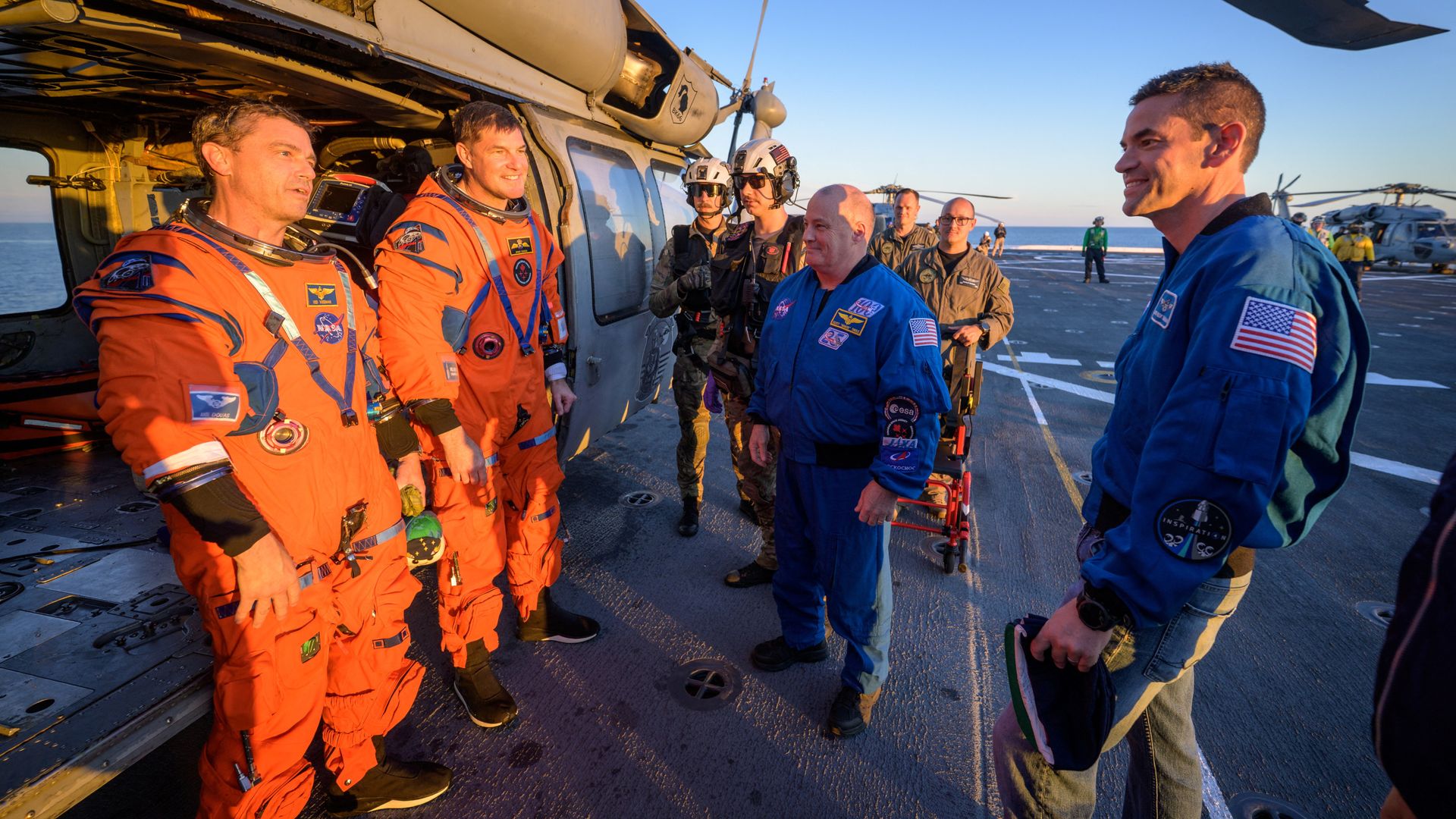
As the crew stepped onto the deck of the recovery ship, their legs were shaky. They looked up at the sky—the same sky they had just pierced at hypersonic speeds—and saw a different world.
There is a specific kind of vertigo that comes from seeing the Earth as a whole marble and then returning to stand on a single, rocking ship in the middle of an ocean. You realize that the "perfect splashdown" isn't just about a capsule hitting the water at the right angle. It’s about the fact that against the infinite, freezing vacuum of the cosmos, we have found a way to bring our people back to the warmth.
The mission ended not with a bang, but with the gentle lapping of waves against a scorched hull. The moon is no longer a distant, silver ghost; it is a destination with a return address.
In the hangar of the recovery ship, the Orion capsule sits under harsh fluorescent lights. It is charred, smelling of burnt resin and sea salt. It looks tired. But it is home. And because it is home, the next crew knows exactly where they are going, and more importantly, that the Pacific is waiting to catch them when they fall back to Earth.
The salt on the windows will eventually be washed away, but the path carved through the stars remains open. We are no longer a species that just looks at the moon. We are a species that goes there and comes back to tell the story.