The media is currently tripping over itself to explain why energy prices are climbing despite the Trump administration’s suspension of the Jones Act. They call it a "mystery" or a "market failure." It is neither. It is the predictable result of a fundamental misunderstanding of how global energy logistics actually function.
If you think a 104-year-old shipping law is the primary lever for your local gas station's pricing, you’ve been sold a narrative designed to distract you from the structural decay of American energy independence. Suspending the Jones Act—the Merchant Marine Act of 1920—is a tactical PR move, not a strategic economic solution. It’s like putting a racing stripe on a car with a blown engine and wondering why you aren't winning the Grand Prix.
The Ghost of 1920 cannot save 2026
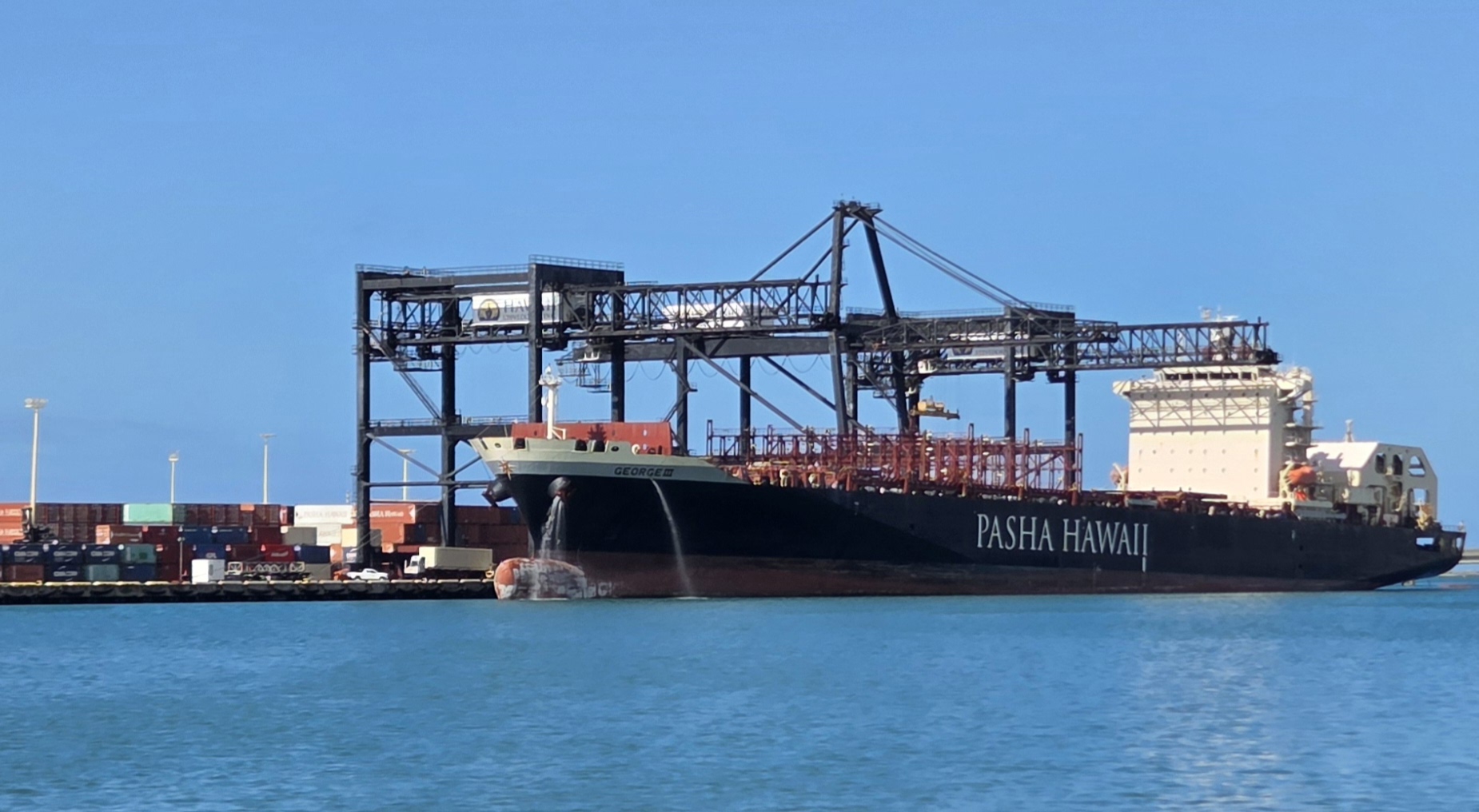
The "lazy consensus" suggests that the Jones Act is the bottleneck. For those uninitiated in the gritty details of maritime law, the Jones Act requires that goods shipped between U.S. ports be carried on ships that are U.S.-built, U.S.-owned, and U.S.-crewed. Critics argue this creates a "maritime tax" by preventing cheaper foreign vessels from moving Gulf Coast oil to Northeastern refineries.
The logic follows that if you kill the Jones Act, transport costs plummet and the consumer wins. This is a beautiful theory murdered by a gang of ugly facts.
Suspensions of the act have happened before—during Katrina, Sandy, and the 2022 fuel shortages. The impact on the pump? Negligible. The reason is simple: shipping costs are a rounding error in the final price of refined gasoline. When you pay $4.00 for a gallon of gas, the cost of moving that fuel by sea accounts for pennies. You are fighting over loose change while the house burns down.
The Refinery Chokepoint is the Real Enemy
The current administration suspended the act to "unclog the system." But you can’t unclog a pipe that leads to a wall.
America hasn't built a major, high-capacity refinery since the 1970s. We have been closing them instead. We are currently operating at near-maximum utilization. You can hire every Greek-flagged supertanker on the planet to sit off the coast of New Jersey, but if the refineries in the Delaware River Basin are already running at 98% capacity, that oil is just expensive driftwood.
The bottleneck isn't the boat. It’s the beaker.
We have successfully regulated our domestic refining capacity into a corner. When a refinery goes offline for "planned maintenance" or a weather event, there is zero slack in the system. No amount of Jones Act tinkering changes the $S = D$ (Supply and Demand) reality of refining spreads. If the "crack spread"—the profit margin for turning crude into gas—is high because of limited capacity, the price stays high. Period.
The Liquidity Trap of Global Arbitrage
Here is the counter-intuitive truth: Suspending the Jones Act can actually drive prices up in certain scenarios.
Global energy markets are a game of high-stakes musical chairs. When the U.S. signals a Jones Act waiver, it alerts global traders that we are desperate. Foreign tankers, sensing an opportunity, don't just charge "market rates." They charge "desperation rates."
Furthermore, the U.S. energy market is not an island. We export massive amounts of refined product. If it’s more profitable for a Gulf Coast refinery to send its diesel to Europe or South America than to send it to Boston—even with a Jones Act waiver—that fuel is going to Rotterdam, not Rhode Island.
Money has no patriotism. It follows the highest yield. If the Jones Act was the only thing stopping fuel from moving North, we would see a massive fleet of U.S. vessels constantly in motion. We don't. We see a system optimized for export because that's where the margins are.
The Labor Myth and the Cost of Competence
The most common attack on the Jones Act is the cost of U.S. labor. "U.S. crews are too expensive," the pundits scream.
I’ve spent years looking at the operational overhead of maritime logistics. Yes, a U.S. crew costs more than a crew sourced from developing nations with minimal safety oversight. But labor is roughly 10% of the daily operating cost of a tanker. The real costs are fuel, insurance, and port fees.
When you replace a U.S. crew with a foreign crew during a temporary waiver, you aren't "saving" the consumer. You are merely shifting the profit margin from a U.S. shipping company to a foreign entity. The savings never reach your gas tank. They get swallowed by the middleman—the commodity traders who buy low and sell high, using the waiver as a way to pad their own "desk P&L."
Energy Logistics as a National Security Failure
We are treating energy prices as a retail problem when they are a national security failure. By focusing on the Jones Act, the administration is focusing on the last mile of a ten-thousand-mile problem.
Consider the "Jones Act Fleet." It is aging and shrinking. By suspending the act repeatedly, we ensure that no American company will ever invest in a new, high-efficiency tanker again. Why would you spend $150 million on a U.S.-built ship when the government might waive your only competitive advantage the moment prices tick up?
We are cannibalizing our own maritime infrastructure for a 48-hour news cycle win.
Imagine a scenario where a major geopolitical conflict shuts down the Atlantic sea lanes. If we have dismantled our domestic shipping capacity in the name of "cheap gas," we won't have the ships to move fuel to our own bases or our own cities. We are trading long-term structural integrity for the illusion of short-term relief.
The Infrastructure Delusion
The "People Also Ask" sections of the internet are currently flooded with questions like: "Will the Jones Act waiver lower my heating bill?"
The honest, brutal answer: No.
Your heating bill is high because of a lack of pipeline capacity into the Northeast. New York and New England have effectively banned the construction of new natural gas pipelines. As a result, they have to import Liquefied Natural Gas (LNG) from abroad.
Here is the kicker: Because there are no U.S.-built LNG tankers (zero, none, nada), the Jones Act prevents Gulf Coast LNG from being shipped to Boston. You might think, "Aha! So the Jones Act is the problem!"
Wrong.
If we waived the Jones Act for LNG tomorrow, we still couldn't move the gas. We don't have the loading docks (liquefaction terminals) on the Gulf Coast designed to fill small, domestic-scale tankers, and we don't have the offloading infrastructure in the North designed to receive them efficiently. We have built an export-only infrastructure. We can send gas to China, but we literally cannot send it to Massachusetts.
The Silicon Valley Approach to Crude
We see a similar disconnect in how we talk about "Energy Technology." The tech sector loves to talk about "disrupting" energy with AI-optimized grids and smart meters.
But you can’t "code" your way out of a physical logistics deficit. You can't "disrupt" the fact that a tanker takes 10 days to get from Houston to New York. The obsession with digital solutions has blinded us to the reality of physical atoms.
We have the most sophisticated energy-trading algorithms in the world, yet we are still reliant on a 1920 law and 1970 refineries. The "innovation" has all been in the financialization of energy, not the delivery of it. We are better at betting on the price of oil than we are at moving it.
The Hard Truth of the "Trump Bump"
The Trump administration's move to suspend the act is classic theater. It looks decisive. It sounds "pro-business." It targets a "regulation" (which the base loves).
But it ignores the reality that the global oil market is a $2 trillion behemoth that does not care about a temporary waiver on a few dozen coastal routes. Oil is priced globally ($WTI$ and $Brent$). If $Brent$ crude jumps because of a refinery fire in South Korea or a drone strike in the Middle East, the price at a pump in Ohio goes up.
A Jones Act waiver is a squirt gun in a forest fire.
Stop Asking the Wrong Questions
If you want to know why energy prices are rising, stop looking at the Jones Act. Stop looking at "greed." Start looking at the following:
- Refinery Underinvestment: We are losing the war of attrition against our own aging infrastructure.
- Environmental Litigation: It is currently impossible to build the pipelines that would make coastal shipping unnecessary.
- Global Demand Inelasticity: The world wants more energy than we can currently process, regardless of how many "waivers" we sign.
- The Export Trap: We have optimized our entire system to feed the global market, leaving the domestic market to fend for its own scraps.
The Jones Act is a convenient scapegoat. It allows politicians on both sides to pretend they are doing something. The Left can hate it because it’s "protectionist"; the Right can waive it to show they are "cutting red tape."
Meanwhile, the fundamental reality remains unchanged: We are a nation that has forgotten how to build physical things. We would rather argue about the nationality of a ship's crew than build the refinery that would actually lower the cost of the fuel.
The suspension is a distraction. The price hike is the reality. The system is working exactly as it was designed—for the traders, not for you.
Go tell the guy at the gas station that a Jones Act waiver is coming. See if he lowers the price on the sign. He won't. He can’t. The math doesn't work, and the physics don't care about the politics.