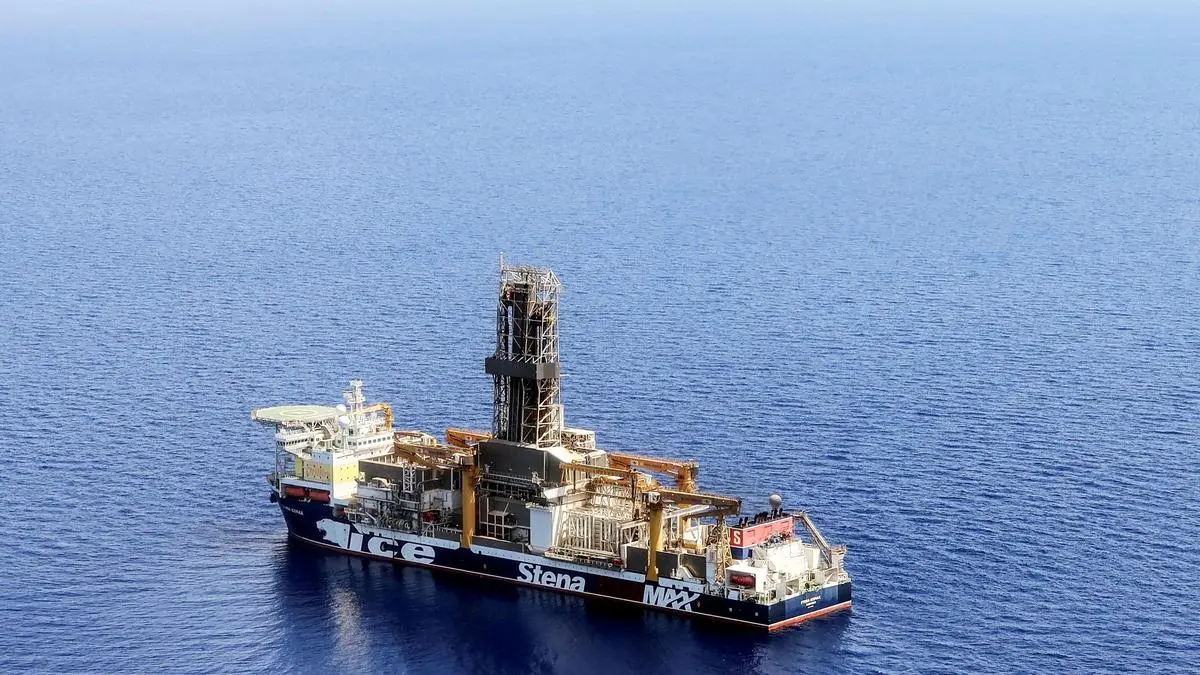
The myth of the Eastern Mediterranean as a safe harbor for global energy collapsed on February 28, 2026. When the Israeli Ministry of Energy ordered the immediate suspension of the Energean Power FPSO, it wasn't just flipping a switch on a floating production vessel. It was signaling that the region’s massive subsea gas reserves—once touted as a strategic alternative to Russian or Gulf supply—have become a liability in a hot war.
Energean, the London-listed producer that has spent a decade betting its balance sheet on the Karish and Tanin fields, has now officially pulled the plug on its 2026 outlook. The company’s move to suspend guidance for its Israeli operations is a rare admission of powerlessness. In the clinical language of financial filings, "ongoing uncertainty" usually masks a deeper panic. For Energean, that panic is rooted in the reality that its primary revenue engine is now subject to the whims of regional missile exchanges rather than market demand.
The Physical Vulnerability of the Karish Asset
The Karish field is not like the sprawling onshore fields of Texas or the deep-desert wells of Saudi Arabia. It is a concentrated, high-value target sitting in the Mediterranean. The Energean Power, a Floating Production Storage and Offloading (FPSO) unit, is essentially a massive, stationary steel island packed with volatile hydrocarbons.
During the June 2025 escalation, the Ministry of Energy ordered a similar 12-day shutdown. That was a warning shot. The current suspension, however, comes amid a much wider conflict involving direct strikes on Iranian energy infrastructure at Asaluyeh. When the stakes include the deliberate targeting of the world’s largest gas reservoirs, a floating vessel in the Levant Basin is no longer just a piece of infrastructure; it is a geopolitical hostage.
Military analysts have long pointed out that while Israel’s Iron Dome and David’s Sling offer robust protection for cities, defending offshore assets against a saturation attack of low-cost drones or cruise missiles is a different calculus. The government’s decision to shut down Karish—and the massive Leviathan field operated by Chevron—is a preemptive move to prevent an environmental and economic catastrophe that would result from a direct hit on an active, pressurized production line.
A Financial Engine Stalling at the Worst Moment
Energean’s 2025 financials, released just hours ago, show a company already bruised before this latest shutdown. The firm reported a $258 million net loss for 2025, a staggering swing from the $127 million profit it posted in 2024. While the company points to non-cash impairments and "one-off" events, the underlying truth is that its cost of doing business is rising as its reliability falls.
The company’s 2026 guidance, issued just weeks ago in January, projected production between 108,000 and 114,000 barrels of oil equivalent per day (boed) from Israel alone. That math is now dead. Management has suggested a "sensitivity measure" for investors: for every month the Karish field stays dark, the company loses roughly 10,000 boed from its annual average.
If this suspension mirrors the protracted tensions of previous regional conflicts, Energean isn't just looking at a missed quarter. It is looking at a fundamental breach of its growth narrative. The company has $3.25 billion in net debt. While it maintains that it has no major maturities until 2028, a prolonged shutdown erodes the cash flow needed to service the interest on that debt, which currently sits at a roughly 7% cost.
The Domino Effect on Regional Energy Security
The shutdown of Karish and Leviathan creates a vacuum that the domestic Israeli market cannot easily fill. While the Tamar field has occasionally been allowed to continue producing during past flare-ups, it cannot carry the weight of the entire nation’s power grid alone.
The bigger story is the export market. Israel had positioned itself as the energy backbone of the Eastern Mediterranean, pumping gas into Egypt and Jordan.
- Egypt’s Industrial Crisis: Last summer, a temporary halt in Israeli gas forced Cairo to shut down fertilizer plants and implement rolling blackouts.
- The 2026-2040 Contract: Leviathan is scheduled to send 130 billion cubic meters of gas to Egypt over the next 14 years. These contracts are the bedrock of the regional "peace through energy" strategy.
- Supply Chain Contagion: If Israeli gas remains offline, Egypt must compete for expensive LNG cargoes on the spot market, further draining its foreign currency reserves and destabilizing its own fragile economy.
Energean’s CEO, Mathios Rigas, remains publicly optimistic, stating the team is "ready to restart within 24 to 48 hours" once the green light is given. This is a bold claim that ignores the physical reality of restarting complex subsea infrastructure after an emergency shut-in. Wells are not light switches. Each day of dormancy increases the risk of technical complications, and each day of war increases the likelihood that the "green light" is months, not weeks, away.
The Angola Pivot and Diversification Desperation
Perhaps the most telling sign of Energean’s internal assessment is its aggressive push into Angola. The company is targeting a $260 million deal for assets in Block 14, seeking to balance its portfolio away from the volatile Levant.
This is a classic diversification play, but it comes with its own set of risks. Shifting from the Mediterranean to West Africa is not a move toward stability; it is a move toward a different kind of instability. It suggests that Energean’s leadership has realized that being the "Israel gas play" is no longer a viable long-term identity for a London-listed entity seeking to appease ESG-conscious and risk-averse institutional investors.
The market has responded with predictable gravity. Energean’s stock has remained under pressure, reflecting a "war discount" that no amount of investor relations polish can remove. The company is currently trapped between its massive capital commitments in the Katlan project—targeted for first gas in 2027—and a revenue stream that is currently at zero.
The Hard Reality for Investors
We are witnessing the end of the "peace dividend" for Mediterranean gas. For years, companies like Energean operated under the assumption that the economic benefits of gas production would act as a shield against conflict. The theory was that no one would blow up the very infrastructure that keeps the lights on in Cairo, Amman, and Tel Aviv.
That theory is now rubble. The deliberate targeting of energy hubs across the Middle East in 2026 proves that energy infrastructure is now a primary, not secondary, target of modern warfare. For Energean, the suspension of its 2026 outlook is more than a fiscal update; it is a white flag.
Would you like me to analyze the specific debt covenants Energean faces if the Karish shutdown extends past the second quarter?