The map of the Middle East is being redrawn, but not with ink. It’s being etched with the precision of Hellfire missiles and the rubble of "diplomatic" annexes. If you’ve been following the headlines, you know the Islamic Revolutionary Guard Corps (IRGC) is having its worst few years since the Iran-Iraq war. It’s not just foot soldiers falling; it’s the architects, the logisticians, and the legendary shadows who ran the "Axis of Resistance."
Honestly, it’s a bloodbath at the top. We aren't talking about accidental casualties. These are surgical removals of the men who made Tehran’s regional reach possible. From Damascus to Beirut, the high-ranking officers who spent decades building a ring of fire around Israel are being picked off one by one.
The Damascus Strike That Changed Everything
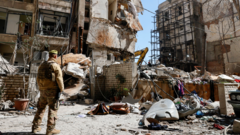
On April 1, 2024, the rules of the game didn't just change—they were lit on fire. An Israeli airstrike leveled a building right next to the Iranian embassy in Damascus. This wasn't a random warehouse. It was the consulate, and inside was Mohammad Reza Zahedi.
Zahedi wasn't some mid-level bureaucrat. He was a Major General in the Quds Force and the primary liaison between Tehran, the Syrian government, and Hezbollah. Basically, if a missile moved from Iran to Lebanon, Zahedi likely signed off on it. He was the only Iranian to sit on Hezbollah’s Shura Council, the group’s highest decision-making body.
His death was the biggest blow to the IRGC since the US took out Qasem Soleimani in 2020. Alongside him fell his deputy, Mohammad Hadi Hajriahimi, and five other officers. By hitting a diplomatic site, Israel signaled that nowhere—absolutely nowhere—was off-limits anymore.
The Logistics Kingpin Razi Mousavi
Before Zahedi, there was Seyed Razi Mousavi. If you want to understand how Iran maintains its grip on the Levant, you have to look at the logistics. Mousavi was the man who made the "land bridge" work.
He’d been in Syria since the 1980s. Think about that. While most commanders rotate in and out, Mousavi was a fixture. He survived dozens of assassination attempts over three decades. He managed Unit 2250, the shadowy division responsible for moving weapons, money, and personnel across the border. When he was killed by three missiles in a Damascus suburb on Christmas Day 2023, the IRGC lost its most experienced fixer. You can’t just replace forty years of local knowledge and deep-rooted Syrian contacts overnight.
The Fall of the Beirut Operations Chief
The escalation didn't stop in Syria. As the conflict widened into Lebanon in late 2024, the IRGC’s top brass stayed on the front lines. On September 27, 2024, a massive Israeli strike targeted Hezbollah’s underground headquarters in Beirut. The goal was Hassan Nasrallah, but the collateral (from Tehran’s perspective) included Abbas Nilforoushan.
Nilforoushan was the IRGC’s deputy commander for operations. He was a veteran of the Iran-Iraq war and had a reputation for being an "incendiary" strategist. He wasn't just a visitor; he was the head of the Quds Force’s Lebanon branch at the time of his death.
- His role: Overseeing the tactical coordination between IRGC advisors and Hezbollah fighters.
- The impact: His death, alongside Nasrallah, decapitated the joint command structure that had been decades in the making.
The 2026 Leadership Decimation
The pressure didn't let up. By early 2026, the targeted campaign expanded into a full-scale air offensive. Reports from late February and March 2026 indicate a staggering loss of life within the Iranian military hierarchy.
Abdolrahim Mousavi, the Chief of the General Staff, and Aziz Nasirzadeh, the Minister of Defense, were reportedly among those targeted in massive strikes on command centers in Tehran and Isfahan. The list of the fallen reads like a "Who's Who" of the Iranian security state:
- Mohammad Pakpour: The veteran commander of the IRGC Ground Forces.
- Gholamreza Soleimani: The head of the Basij paramilitary force.
- Ali Larijani: The influential Secretary of the Supreme National Security Council.
This isn't just "attrition." It’s a systemic dismantling of a regime’s military brain trust. When you lose the heads of your Navy, your Ground Forces, and your Intelligence units in a matter of weeks, your ability to project power collapses.
Why This Matters for the Rest of Us
You might think these are just names on a screen, but the removal of these men has real-world consequences for global stability.
First, there’s the institutional memory loss. The IRGC relies heavily on personal relationships. When a guy like Razi Mousavi dies, the personal "handshake" deals he had with Syrian warlords and Lebanese bankers die with him. New guys can be promoted, but they don't have the same trust or history.
Second, it creates a paranoia loop. If top generals are being hit in "secure" consulate buildings or underground bunkers, it means there are leaks. High-level penetrations of Iranian security are the only way to get the real-time intel needed for these strikes. This leads to internal purges, which further weakens the military.
Lastly, it forces Iran's hand. Every time a general dies, the regime has to decide: retaliate and risk a bigger war, or stay quiet and look weak to their proxies.
What Happens Next
The "shadow war" isn't in the shadows anymore. We’re seeing a clear strategy of "leadership stripping." The goal isn't just to stop the next shipment of drones; it's to make the cost of leading the IRGC so high that the system eventually fractures.
If you're watching this space, keep an eye on the Quds Force Unit 18000 and Unit 2250. These are the logistical backbones. As long as the heads of these units keep disappearing, Iran’s ability to sustain its regional proxies will remain in a state of chaos. Don't expect the strikes to stop—the tempo is only increasing.
Stay informed by following updates from the Syrian Observatory for Human Rights and independent OSINT (Open Source Intelligence) analysts who track IRGC flight paths and personnel movements. The next few months will likely determine if the IRGC can survive this unprecedented loss of its founding generation.