The steel under a sailor’s boots on the USS Thomas Hudner doesn’t just feel like metal. In the humid, salt-thick air of the Persian Gulf, it feels like a coiled spring. There is a specific kind of silence that exists in the Strait of Hormuz—a narrow ribbon of water where the heartbeat of the global economy pulses through the hulls of massive tankers. It is a silence weighted by the knowledge that at any moment, the world could stop.
Twenty-one miles. That is the width of the gap at its narrowest point. To a commuter in a car, twenty-one miles is a twenty-minute drive. To a global strategist, it is a throat. And right now, that throat is being guarded by a wall of American iron.
The strategy currently unfolding isn't just about presence; it is a calculated blockade in all but name. Under the direction of the Trump administration, the United States has moved a staggering chess set of hardware into these waters. We aren't just talking about a few ships. We are talking about a multi-layered cage designed to ensure that the oil flows and the threats don't.
The Predators Beneath the Glass
Imagine you are the captain of a commercial tanker, carrying millions of barrels of crude. You are essentially a floating skyscraper of flammable liquid. Your biggest fear isn't a missile you can see coming; it’s the thing you can’t see.
Iran has spent decades perfecting the art of "asymmetric" naval warfare. They don't try to build a bigger destroyer than the U.S. Navy. Instead, they build thousands of small, fast, lethal things. They use "suicide" minesweepers—remote-controlled boats packed with high explosives designed to ram into the side of a ship and disappear in a fireball.
To counter this, the U.S. has deployed sonar ships that act as the "ears" of the fleet. These vessels don't look like much from a distance, but beneath the waterline, they are projecting a digital net. They listen for the high-pitched whine of a small outboard motor or the mechanical click of a mine being released. They turn the murky green water into a transparent grid where nothing can hide.
Five Thousand Pairs of Boots
Beyond the sonar and the steel, there is the human element. Five thousand Marines are currently stationed in the region, many of them aboard the amphibious ready groups circling the outskirts of the Strait.
These aren't just soldiers; they are a psychological deterrent. When a Marine unit is "ready to go," it means they are prepared for vertical envelopment—dropping from Ospreys and Sea Stallions onto the deck of a hijacked tanker before the hijackers even realize the sound they hear isn't the wind.
Consider a hypothetical scenario: A rogue fast-attack craft approaches a British-flagged vessel. In years past, there might have been a frantic radio call and a slow response. Now, with the current density of destroyers and the constant overhead presence of drones, that fast-attack craft is painted by dozens of targeting lasers before it even crosses the wake of its target. The message is clear: we are watching your every move.
The Mechanics of the Blockade
The term "blockade" usually implies stopping things from coming in. In this case, the U.S. is performing a reverse blockade. They are forcing the passage open.
The destroyers, like the USS McFaul, are equipped with the Aegis Combat System. This is a terrifyingly efficient piece of technology that can track over a hundred targets simultaneously, from shore-based cruise missiles to swarming speedboats. It creates a "bubble" of safety.
- Destroyers: The heavy hitters, providing air defense and surface-to-surface lethality.
- Sonar Ships: The detectives, scanning for underwater threats and mines.
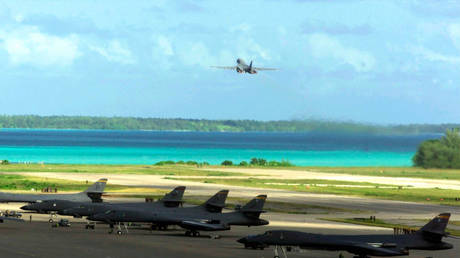
- Aviation Assets: Harrier jets and attack helicopters that can reach a flashpoint in minutes.
But the sheer amount of hardware creates its own tension. When you put that much firepower in a space that small, the margin for error vanishes. A single nervous sailor, a misinterpreted radio transmission, or a mechanical failure on a drone could trigger a cascade that the global markets would feel within seconds.
Why Your Gas Tank Cares About a Narrow Strip of Water
It is easy to look at these maneuvers as a distant game of Risk played by powerful men in windowless rooms. But the stakes are seated right next to you.
Roughly one-fifth of the world’s petroleum passes through this strait. If the "blockade" fails—or if it is provoked into a shooting war—the price of oil doesn't just go up. It teleports. We saw a glimpse of this during the "Tanker War" of the 1980s, but the modern world is far more interconnected. A week-long closure of Hormuz would send shockwaves through every supply chain on the planet. The cost of the bread in your pantry and the electricity in your walls is tied to the stability of that twenty-one-mile gap.
The Trump administration’s move is a gamble on strength. By flooding the zone with destroyers and Marines, they are betting that the threat of overwhelming force will keep the peace. It is the paradox of the Strait: the more weapons you bring to the party, the less likely anyone is to start a fight—provided everyone keeps their cool.
The Silent Watcher
The real story isn't the explosion; it’s the absence of one. Every day that a tanker passes through the Strait of Hormuz without incident is a victory for this massive, expensive, and incredibly dangerous operation.
Late at night, when the sun dips below the jagged mountains of the Musandam Peninsula, the sailors on watch look out over the water. They see the lights of the tankers moving like a slow-motion parade of stars. They know that beneath them, the sonar is pinging. Above them, the jets are circling. Around them, the world sleeps, blissfully unaware of how much effort it takes to keep the silence.
The steel is hot. The air is heavy. The world is waiting. And in the center of it all, five thousand Marines wait for a signal that they hope never comes.