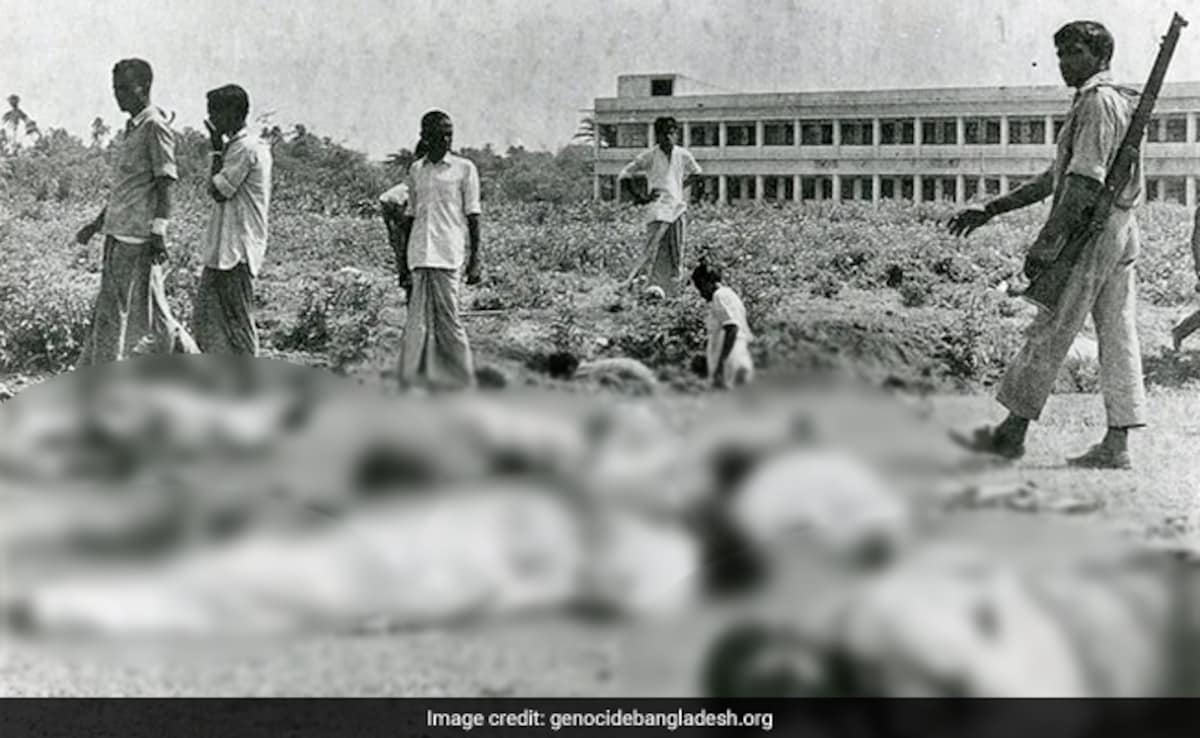
The ghosts of 1971 aren't going anywhere. For over five decades, the soil of Bangladesh has held the stories of three million lives lost and hundreds of thousands of women violated in one of the most brutal systematic purges of the 20th century. While the world often looks away, the bond between New Delhi and Dhaka remains anchored in this shared, painful history. India’s recent reaffirmation of support for Bangladesh’s quest for international recognition of the 1971 genocide isn't just about diplomacy. It’s about a refusal to let a massive crime against humanity be scrubbed from the global ledger.
Pakistan remains in a state of total, convenient amnesia. Despite the mountains of evidence, the Hamoodur Rahman Commission Report, and the haunting testimony of survivors, Islamabad continues to treat the events of 1971 as a "civilian disturbance" or a "political mishap." It's a slap in the face to every family that lost a loved one to the marauding militias and the West Pakistani military machine.
The Unfinished Business of Justice
Why does this matter so much right now? Because you can't build a stable South Asia on a foundation of lies. Bangladesh has been pushing for March 25th to be recognized globally as Genocide Remembrance Day. India isn't just a bystander in this. Indian soldiers fought and died alongside the Mukti Bahini. We saw the ten million refugees streaming across the border, starving and terrified. We know what happened because we were there.
When the Indian government backs Dhaka on this stage, it sends a clear message to the United Nations. The "Operation Searchlight" launched by the Pakistani military wasn't a counter-insurgency. It was a pre-planned attempt to wipe out the Bengali intelligentsia and the Hindu minority. If the world can recognize the horrors in Rwanda or Srebrenica, ignoring the 1971 Bengali genocide is a gross double standard.
What Pakistan Still Won't Admit
If you look at the history books in Pakistan, 1971 is often reduced to a story of "Indian interference." They focus on the military defeat and the surrender of 93,000 troops at Suhrawardy Udyan, but they skip the part where those troops spent nine months terrorizing their own citizens.
- The Intellectual Purge: Just days before the surrender, teachers, doctors, and writers were dragged from their homes and executed.
- The Rape as a Weapon: Conservative estimates suggest 200,000 to 400,000 women were victims of systematic sexual violence.
- The Refugee Crisis: 10 million people didn't flee to India because of "interference." They fled to stay alive.
Islamabad’s refusal to offer a formal, unconditional apology is the primary roadblock. They’ve offered "regret" in the past, but regret is what you feel when you miss a flight. It’s not what you offer for the slaughter of three million people.
Why Global Recognition Is Stalled
You'd think a genocide of this scale would be an open-and-shut case for the UN. It’s not. International politics is messy, and the Cold War alliances of 1971 still cast long shadows. Back then, the US and China were pivoting toward each other, using Pakistan as the middleman. They looked the other way while the blood flowed.
Today, some nations fear that recognizing 1971 will set a precedent they aren't ready for. But India’s stance is that the truth isn't a bargaining chip. By standing firmly with Bangladesh, India is forcing the international community to confront the gap between its "never again" rhetoric and its actual record.
The Role of the International Crimes Tribunal
Bangladesh hasn't just waited for the world to help. Through its own International Crimes Tribunal (ICT), it has spent years prosecuting the "Razakars"—the local collaborators who assisted the Pakistani army. These trials have been controversial in some Western circles due to procedural critiques, but for the average person in Dhaka or Sylhet, they represent a desperate, necessary closure.
India's support for these processes, despite external pressure, shows a deep understanding of the regional psyche. You can't tell a victim to "just move on" when the perpetrators are still being celebrated as heroes across the border.
Moving Toward a Truth Commission
The path forward isn't just about UN resolutions. It’s about a sustained pressure campaign to make the cost of denial higher than the cost of confession. Pakistan’s current economic and political instability might make its leadership think they have bigger problems, but the 1971 baggage is exactly why they struggle with internal cohesion and regional trust today.
If you want to support this cause, the steps are clear. Support the documentation projects like the Liberation War Museum in Dhaka. Push for academic curriculum changes that reflect the documented testimonies of survivors rather than sanitized state narratives. The goal isn't to live in the past, but to ensure the past doesn't repeat itself. 1971 was a failure of the world's moral compass. It's time to fix that.
Go read the primary accounts. Look at the photographs by Raghu Rai. Watch the footage of the surrender. The evidence is undeniable, and the support from India ensures that Bangladesh no longer has to scream into the void alone. Denial doesn't change the facts; it only delays the inevitable reckoning.