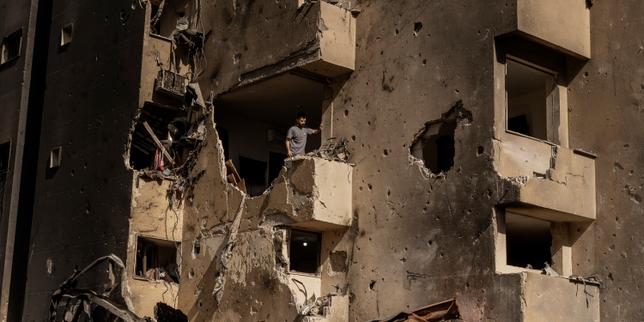
The bombs don't care about your political affiliations. When Israeli airstrikes hit Lebanon, they aren't just hitting military targets or tactical coordinates. They’re hitting living rooms, bakeries, and crowded highways. If you’ve been following the news, you’ve probably seen the headlines focusing on precision strikes and "surgical" operations. The reality on the ground tells a much messier, more tragic story. People are dying in places where no rockets were hidden. Families are being erased in neighborhoods that have nothing to do with the front lines.
Lebanese civilians are caught in a terrifying vice. On one side, they face the constant threat of Israeli bombardment. On the other, they live in a country where the presence of armed groups is a complex, often unwanted reality. But the narrative that every casualty is a combatant or a "human shield" is a dangerous oversimplification. It’s a convenient lie that makes the mounting death toll easier to stomach for an international audience.
Displacement and the Chaos of Flight
Thousands of families packed their lives into cars and fled north. They didn't have a plan. They just knew the ground was shaking and the sky was turning black. The scenes on the coastal highway from Tyre to Beirut look like something out of a post-apocalyptic film. Traffic stands still for hours. Engines overheat. Kids cry in the back seats of cars stuffed with mattresses and bags of bread.
I’ve seen reports of people spending twenty hours to cover a distance that usually takes ninety minutes. They aren't "strategic evacuees." They're terrified parents trying to keep their children from becoming another statistic. When they arrive in Beirut or Tripoli, they find schools turned into makeshift shelters. Classrooms that should be full of students are now packed with multiple families sharing a single thin rug on the floor.
The Lebanese government is basically broke. It can't provide the level of support needed for hundreds of thousands of displaced people. Local NGOs and community groups are picking up the slack, but they're stretched to the breaking point. This isn't a temporary hiccup. This is a massive humanitarian crisis unfolding in real-time, and the infrastructure to handle it doesn't exist.
The Myth of the Surgical Strike
We hear the phrase "precision guided" a lot. It sounds clean. It sounds professional. But a 2,000-pound bomb dropped on a residential building in a densely populated area isn't precise in the way most people think. Even if there's a specific target in the basement, the entire building collapses. Everyone inside—the elderly woman on the third floor, the kids playing in the hallway—becomes "collateral damage."
The sheer scale of the strikes in recent days is unprecedented. We're talking about hundreds of deaths in a single twenty-four-hour period. You can't kill that many people that quickly and claim you're only hitting militants. The numbers don't add up. Survivors often emerge from the rubble screaming the same thing: "There was nothing here but us."
Human Rights Watch and other international observers have raised serious questions about the legality of these strikes. Under international law, you have to distinguish between civilians and combatants. If you're not sure, you shouldn't pull the trigger. But in the current climate, that caution seems to have vanished. The priority is destruction, and the human cost is treated as an afterthought.
Why Lebanese Identity is Not a Monolith
Western media loves a simple story. They want to paint Lebanon as a country entirely controlled by one group. It's easier for the nightly news. But Lebanon is a mosaic of different religions, political views, and social classes. Not everyone in the south supports the groups fighting Israel. In fact, many are vocal critics.
Yet, when the bombs fall, they don't check your ID card. A Christian family in a southern village is just as likely to lose their home as a Shia family. This collective punishment creates a sense of shared trauma that transcends sectarian lines. It also fuels a deep-seated resentment against the international community for standing by while a sovereign nation is dismantled.
The internal politics are a mess. The country has been without a president for ages. The economy collapsed years ago. The banking system is a joke. Lebanese people were already struggling to buy milk and medicine before this latest escalation. Now, they're facing total annihilation. They feel abandoned by their own leaders and the world at large.
Misinformation as a Weapon
The war isn't just happening on the ground; it’s happening on social media. We see "evacuation warnings" posted on platforms like X (formerly Twitter) in Hebrew or Arabic just minutes before a strike happens. How is a family in a village with no electricity and spotty cell service supposed to see that? These warnings aren't about saving lives. They're about providing legal cover for the military operations that follow.
Then there are the fake videos and doctored images. Both sides use them. But the most damaging misinformation is the one that devalues Lebanese lives. The idea that a life in Beirut is worth less than a life in a Western capital is baked into the way this conflict is reported. We see the body counts as mere digits, forgetting that every "1" was a person with a job, a favorite song, and people who loved them.
The Mental Health Toll Nobody Mentions
If you survive the blast, the war doesn't end for you. It stays in your head. Lebanon is a country of multi-generational trauma. The elders remember the civil war. The middle-aged remember the 2006 war. The kids are now experiencing their own nightmare.
Psychologists in Beirut are seeing an explosion of PTSD cases. Children are wetting the bed, stopped speaking, or scream at the sound of a slamming door. There's no "safe space" left. Even in areas that haven't been hit, the sound of sonic booms from low-flying jets keeps everyone in a state of constant, high-alert anxiety. It’s an invisible wound that will take decades to heal, long after the rubble is cleared.
What Happens When the Dust Settles
Wars don't just end with a ceasefire. They leave behind a landscape of ruin. Thousands of homes are gone. Thousands of businesses are destroyed. The agricultural heartland of the south is being scorched. This isn't just about security; it's about the long-term viability of the Lebanese state.
If the goal is to create a more stable region, destroying the lives of ordinary civilians is the worst possible way to go about it. Poverty and desperation are the greatest recruiters for extremist groups. By pulverizing Lebanese society, the current military strategy is likely sowing the seeds for the next fifty years of conflict.
People need to look past the official press releases. We need to demand actual accountability for civilian deaths. If you want to help, support organizations like the Lebanese Red Cross or local grass-roots initiatives that are actually on the ground providing food and medicine. Don't let the narrative of "surgical strikes" blind you to the very human tragedy happening right now.
Stop watching the maps and start looking at the faces of the people being pulled from the debris. That’s where the truth of this war lives. It's not in a military briefing room; it's in the hospital hallways of Sidon and the crowded shelters of Beirut. Look at the data provided by organizations like Amnesty International regarding civilian casualties and international law violations. Demand that your representatives push for an immediate de-escalation before there's nothing left of Lebanon to save.