The concept of an Easter truce in the current theater of Eastern Europe is a ghost. It is a recurring diplomatic fiction that resurfaces every spring, primarily because the international community finds the optics of religious holidays more palatable than the grinding reality of a war of attrition. While Moscow and Kyiv traded familiar accusations of ceasefire violations this weekend, the truth on the ground is far more cynical. There was never a truce to begin with.
The battlefield does not recognize the Julian or Gregorian calendars. For the soldiers in the trenches of the Donbas, the liturgical calendar is a secondary concern to the logistics of shell hunger and drone sorties. When both sides claim the other has "desecrated" the holiday with artillery fire, they aren't reporting a breakdown in negotiations; they are executing a communication strategy. These accusations serve to paint the adversary as morally bankrupt and godless, a powerful narrative tool in a region where Orthodoxy is deeply intertwined with national identity.
The Mechanics of the Propaganda Loop
To understand why these truces fail, we have to look at the mechanics of how they are proposed. Typically, a third party—the Vatican, the UN, or a neutral intermediary—floats the idea of a temporary cessation of hostilities. One side may signals a theoretical willingness to comply, provided the other side meets impossible prerequisites. This is the first step in a calculated dance.
By proposing a truce, a state captures the moral high ground. By rejecting it, the opponent is framed as the aggressor. If both "agree," they do so with the full knowledge that decentralized command structures and the sheer density of the front line make a total blackout of fire impossible. A single sniper shot or a stray mortar round becomes the catalyst for a barrage of "I told you so" press releases.
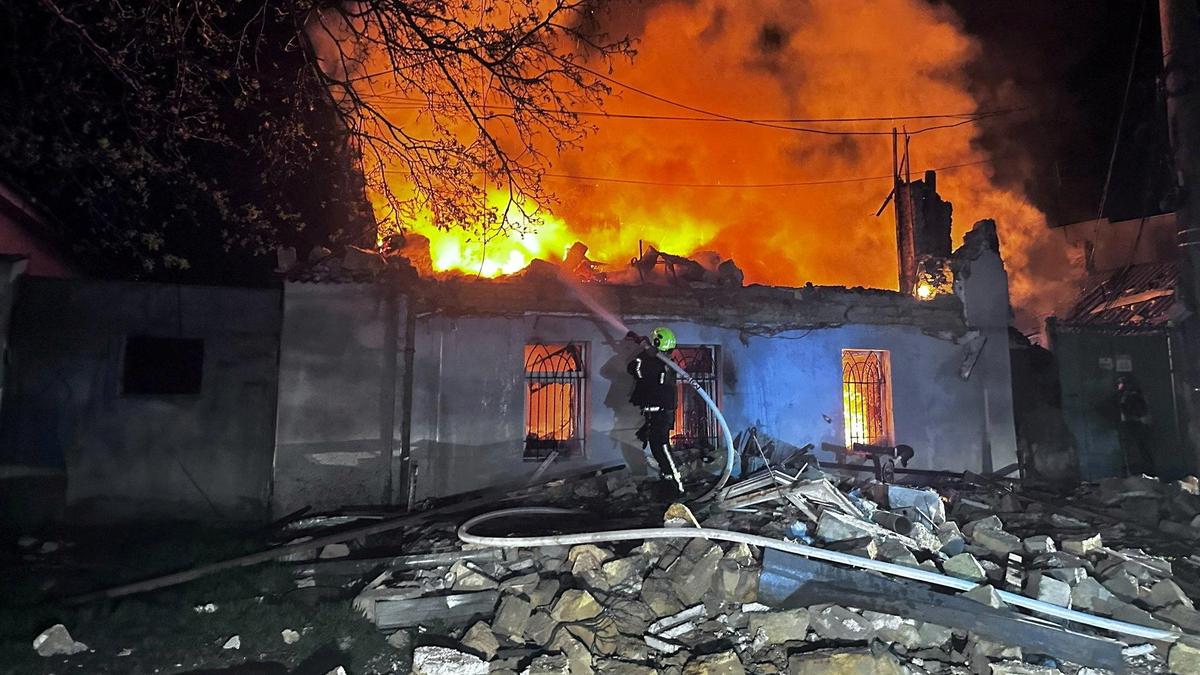
We saw this play out with clinical predictability. Russian state media emphasized the shelling of Donetsk cathedrals, while Ukrainian officials highlighted missile strikes on residential blocks in Sloviansk and Zaporizhzhia. The specific coordinates change, but the script remains static. The goal isn't peace; it's the documentation of the enemy's perceived barbarism.
Logistics vs Liturgy
War is a momentum-based enterprise. For a military commander, a 24-hour pause is not a moment of reflection. It is a dangerous vulnerability. Stopping a localized offensive or pausing the rotation of troops allows the enemy to regroup, fortify positions, and move supplies that would otherwise be intercepted.
Military reality dictating that "Easter pauses" are functionally impossible is a hard truth most analysts shy away from. If a supply convoy is spotted moving toward a critical sector on Easter Sunday, no officer is going to let it pass out of religious deference. The tactical cost is too high.
The Infrastructure of Attrition
The war has reached a stage where the "front" is a massive, automated sensory web. Electronic warfare units and thermal imaging drones operate 24/7. This infrastructure does not have a "holiday mode."
- Continuous Surveillance: Drones do not stop flying because it is a holy day. Their presence alone is seen as a provocation, leading to anti-air responses.
- Artillery Pre-sets: Many batteries are dialed into specific coordinates. If movement is detected, the response is often automated or reactionary, bypassing high-level "truce" orders.
- The Sniper Factor: Individual units often operate with significant autonomy. A single soldier with a grudge and a long-range rifle can shatter a diplomatic agreement in a second.
This bottom-up reality makes top-down declarations from the Kremlin or the Bankova almost entirely ornamental.
The Role of the Clergy in the Conflict
The religious dimension of this war is often misunderstood as a simple clash of values. In reality, it is a jurisdictional battle. The split between the Orthodox Church of Ukraine (OCU) and the Ukrainian Orthodox Church (UOC), the latter historically tied to the Moscow Patriarchate, has turned every church building into a potential flashpoint.
When Patriarch Kirill in Moscow speaks of "holy war" and "metaphysical struggle," he isn't just providing spiritual guidance. He is providing a theological mandate for the Russian state. Conversely, the Ukrainian government sees the Moscow-aligned church as a fifth column, a nest of intelligence gathering and subversion. This environment makes the idea of a shared "Easter" peace a paradox. How can there be a truce between two parties who believe the other has hijacked the very faith they claim to share?
Why the World Keeps Falling for the Truce Narrative
International observers and media outlets continue to report on these "failed truces" because they provide a clear, digestible narrative arc. It’s easier to report on a "broken promise" than it is to explain the complex, stagnant reality of a war that has settled into a brutal routine.
The "Easter violation" story is a reliable filler for a slow news cycle, but it obscures the deeper investigative reality: the war has moved beyond the point where symbolic gestures carry weight. In 2014 or 2015, during the earlier stages of the Donbas conflict, "bread truces" or "school truces" occasionally saw a genuine, if brief, dip in violence. The scale of the current invasion has obliterated that possibility. The sheer volume of ordinance being exchanged means that a "quiet" day in 2026 still involves more explosions than a "heavy" day in 2016.
The Human Cost of Symbolic Diplomacy
For the civilians living in the "gray zones"—those towns and villages within range of tube artillery—the talk of an Easter truce is more than just annoying. it is actively dangerous. It can create a false sense of security.
A family might decide to attend a morning service, believing the diplomatic chatter, only to find themselves caught in a "retaliatory" strike. The cynicism of the leadership on both sides in using these holidays as PR maneuvers has a direct correlation to civilian casualty rates. When you signal a truce you cannot or will not enforce, you are setting a trap for your own population.
We must also look at the psychological warfare aspect. Announcing a truce and then immediately accusing the other side of breaking it is a way to maintain domestic fervor. It reminds the weary population why they are fighting. "Look," the state says, "even on our most sacred day, they kill us." It is an effective, if ghoulish, way to maintain mobilization.
Intelligence Gaps and False Flags
A major factor in these holiday violations is the "false flag" or the unconfirmed report. In an environment where independent journalism on the front line is restricted or non-existent, we are forced to rely on combatant-provided footage.
During this Easter weekend, several videos emerged claiming to show the aftermath of "truce-breaking" strikes. Analyzing the metadata and the crater geometry often reveals that these strikes occurred days prior, or were the result of intercepted missiles falling off-course rather than targeted attacks. But in the fast-paced world of digital warfare, the truth doesn't matter as much as the first tweet. By the time a strike is debunked, the narrative of the "Easter massacre" has already done its work.
The Stalemate of Ethics
If you talk to veterans of the Balkan wars or the conflicts in the Middle East, they will tell you that religious holidays are often the most violent. There is a desire to "send a message" on a day that matters to the enemy.
The current situation in Ukraine has reached that level of terminal bitterness. There is no longer a shared set of rules. The international conventions that governed "civilized" warfare in the 20th century have been replaced by a raw, existential struggle where every day is just another square on the map to be defended or taken.
The Futility of the Red Line
The international community keeps looking for a "red line"—a violation so egregious that it forces a change in the conflict's trajectory. A strike on a church during Easter is often cited as such a line. However, when every day involves the destruction of schools, hospitals, and power grids, the "holiness" of the day loses its protective power.
The shock value has evaporated. We are now in a period of "atrocity fatigue," where even a bombed cathedral on the holiest day of the year is just another headline in a scroll of horrors. This is the most dangerous phase of the war, where the combatants realize that the moral cost of their actions has already been paid in full. There is no longer any reason to hold back, even for a day.
The reports of Easter truce violations aren't news. They are the sound of a system working exactly as intended. The diplomatic offers are made to be rejected. The ceasefires are announced to be broken. The accusations are drafted before the first shell is even fired.
In this environment, the only real truce is the one forced by a lack of ammunition or the exhaustion of the men in the dirt. Anything else is just paper and ink, meant for consumption by a world that still wants to believe war has a pause button. It doesn't. The guns will keep firing until there is nothing left to hit, regardless of what the calendar says.
The war has its own seasons, and they have nothing to do with spring or resurrection. They are defined by mud, frozen earth, and the periodic delivery of new long-range missiles. To expect a day of peace because of a religious tradition is to fundamentally misunderstand the nature of the machine that has been set in motion. The silence of Easter was never going to happen, and everyone involved knew it.