The fragile architecture of the Middle East is currently vibrating under the weight of a singular, recurring threat from Tehran. Mohammad Baqer Qalibaf, the Speaker of the Iranian Parliament and a man whose history is inextricably linked to the Islamic Revolutionary Guard Corps (IRGC), has issued a blunt warning. He asserts that any breach of the ceasefire in Lebanon, particularly strikes targeting sovereign territory or Hezbollah infrastructure, will be met with "explicit costs" and "strong responses." This isn't just standard diplomatic bluster. It is a calculated signal that Iran views the current cessation of hostilities not as a surrender, but as a strategic pause they are willing to defend through proxy escalation or direct intervention if the pressure becomes unbearable.
The immediate concern for global markets and regional security is the definition of a "violation." To Israel, a violation might be a single truck moving short-range missiles into a restricted zone. To Iran, a violation is any kinetic action that degrades their primary deterrent on the Mediterranean. When Qalibaf speaks of costs, he is referring to a multifaceted doctrine of retaliation that extends far beyond the borders of Lebanon, touching on maritime security in the Red Sea and the stability of global energy prices.
The Mechanics of the Iranian Deterrent
Iran’s strategy in Lebanon has never been about the internal politics of Beirut. It is about strategic depth. For decades, the Iranian leadership has viewed Hezbollah as its forward-deployed insurance policy against a direct strike on its nuclear facilities or domestic infrastructure. If that insurance policy is dismantled through a series of "small" ceasefire violations that go unanswered, the entire Iranian defense posture collapses.
Qalibaf’s rhetoric serves to raise the stakes for every tactical decision made in Tel Aviv. By promising a strong response, he is attempting to create a "balance of terror" where the cost of a single airstrike in the Bekaa Valley is weighed against the possibility of a drone swarm hitting a desalination plant or a port. This is the "how" of Iranian influence—using the threat of disproportionate chaos to maintain a status quo that favors their long-term regional integration.
The reality on the ground is far more complex than a simple "stop-and-start" of military operations. The Lebanese Armed Forces (LAF) are theoretically tasked with monitoring the border, but they lack the equipment and the political mandate to actually confront entrenched militias. This power vacuum is exactly where Iranian influence thrives. By positioning themselves as the ultimate guarantors of Lebanese sovereignty—ironic as that may be to many in Beirut—the Iranian leadership maintains its grip on the narrative of "resistance."
Underestimating the Domestic Pressure on Qalibaf
To understand why this warning is being issued now, one must look at the internal fractures within the Iranian establishment. Qalibaf is a pragmatist by IRGC standards, but he is under immense pressure from the "Paydari" front and other hardline factions who view the recent losses in Lebanon as a humiliation. These factions argue that Iran has been too passive, allowing its allies to be picked off one by one.
Qalibaf’s statement is as much for a domestic audience as it is for the international community. He needs to prove that the Parliament and the security apparatus are still capable of projecting power. If he appears weak, his political future is at risk. If he appears too aggressive, he risks a full-scale war that Iran’s struggling economy cannot sustain.
The Iranian economy is the silent variable in this entire equation. With inflation remains stubbornly high and the rial's value in a state of constant flux, Tehran cannot afford a prolonged, high-intensity conflict. However, they also cannot afford to lose their primary export: influence. This creates a dangerous paradox. They must threaten war to avoid it, hoping that the "explicit costs" they mention are high enough to keep their adversaries at bay without actually having to pay them.
The Intelligence Gap and the Risk of Miscalculation
The greatest danger in the current environment is not a planned invasion, but a misunderstanding of red lines. History is littered with "limited" engagements that spiraled into total war because one side didn't believe the other's warnings.
Israel’s intelligence services have proven they can penetrate the highest levels of the "Axis of Resistance." From the pager explosions to the targeted hits on senior commanders, the myth of Hezbollah’s invincibility has been shattered. This creates a shift in the psychology of the conflict. If the Israeli leadership believes that Iran is "all bark and no bite" due to its economic woes, they may be tempted to test Qalibaf’s warnings.
Conversely, if the Iranian leadership feels they have nothing left to lose, they may trigger a response that exceeds their actual tactical goals. We are seeing a move toward "gray zone" warfare—actions that are destructive but fall just below the threshold that would trigger a conventional military campaign. This includes cyberattacks on civilian infrastructure, harassment of commercial shipping, and the use of "deniable" local proxies to carry out assassinations or bombings.
The Lebanon Infrastructure Trap
Lebanon itself is a hostage to this dynamic. The country’s economy is in a state of terminal decline, and its political class is paralyzed. Every time Qalibaf speaks of "strong responses," he is effectively signing a death warrant for Lebanese tourism and foreign investment. The "costs" he mentions are paid in Lebanese pounds and lives long before they are felt in Tehran or Jerusalem.
There is a growing segment of the Lebanese population, including many within the Shia community, who are beginning to question the price of being Iran’s "shield." They see the destruction of the south and the displacement of hundreds of thousands, and they wonder if the deterrent was ever actually meant to protect Lebanon, or if Lebanon is simply a sacrificial buffer for Iran. This internal dissent is a factor that Qalibaf and the IRGC are monitoring closely. They know that if they lose the "hearts and minds" of their base in Lebanon, their strategic depth evaporates.
Shipping Lanes and the Global Economic Fallout
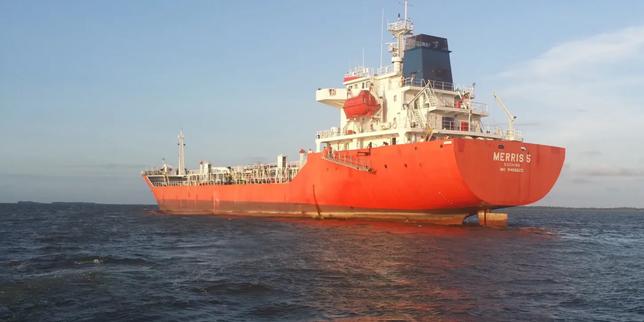
When a senior Iranian official mentions "explicit costs," they are often looking toward the Bab el-Mandeb and the Strait of Hormuz. Iran has mastered the art of asymmetric maritime warfare. They don't need a blue-water navy to cause a global recession; they only need a few sophisticated sea mines and a handful of fast-attack boats.
If the ceasefire in Lebanon fails and Israel moves into a more aggressive phase of operations, expect to see an immediate uptick in maritime "incidents." This is Iran’s primary lever against the West. By making the transport of oil and cargo prohibitively expensive through insurance hikes and security risks, they force the international community to pressure Israel for a de-escalation. It is a cynical, effective, and deeply dangerous strategy that treats the global economy as a bargaining chip.
The Fallacy of the Perfect Ceasefire
There is no such thing as a clean ceasefire in a conflict involving non-state actors and ideological proxies. The technicalities of these agreements are often written in a way that allows for "self-defense" or "anti-terror operations," phrases that are broad enough to drive a tank through.
The Iranian Parliament’s stance is that any Israeli movement, even one aimed at preventing a direct threat, constitutes a violation. This creates an impossible environment for peacekeeping. If the "cost" of monitoring a border is a regional war, the monitors will simply stop watching. This is exactly what Tehran wants—a return to a shadowed status quo where they can rebuild Hezbollah’s capabilities under the cover of a nominal peace.
We are currently in a period of extreme volatility where the silence of the guns is not a sign of peace, but a period of reloading. The "explicit costs" Qalibaf warns of are already being calculated in the war rooms of the Middle East. The question is no longer whether those costs will be paid, but who will be forced to foot the bill when the first missile breaks the silence.
Tactical Shifts in Proxy Coordination
Recent reports suggest that Iran is shifting its coordination efforts. Instead of relying solely on Hezbollah, they are diversifying their proxy portfolio. We are seeing increased cooperation between the Houthis in Yemen and various militias in Iraq. This "unified front" strategy is designed to ensure that if one limb is cut off—as Hezbollah has been significantly trimmed—the body of the resistance remains functional.
This diversification makes the ceasefire even harder to maintain. If a group in Iraq fires a rocket at an Israeli target in response to a strike in Lebanon, who is held responsible? Iran will claim it has no "command and control" over these groups, while the groups will claim they are acting in solidarity with Lebanon. It is a shell game of accountability that allows Tehran to project power while maintaining a thin veneer of diplomatic deniability.
The Failure of International Mediation
The international community, led by the United States and France, has attempted to provide a framework for a lasting peace. However, these frameworks often ignore the fundamental ideological drive of the Iranian leadership. To the IRGC, the struggle against the "Zionist entity" is not a border dispute that can be settled with a pen and a map; it is a core tenet of their revolutionary identity.
Diplomats often mistake a tactical retreat for a change in strategy. When Iran agrees to a ceasefire or tells its proxies to stand down, it is usually because they need time to assess damages and bridge the gaps in their supply lines. The "strong responses" mentioned by Qalibaf are the insurance policy that guarantees they will be allowed that time.
The current ceasefire is not a solution; it is a stay of execution. As long as the underlying power dynamics remain unchanged, the threat of a larger conflagration remains. The "costs" are accumulating, and the "strong responses" are being staged. The Middle East is waiting for the other shoe to drop, and Qalibaf has just made it clear that Iran’s finger is on the trigger.
The path forward requires a recognition that Tehran views the region as a zero-sum game. Every concession by their adversaries is viewed as a weakness to be exploited, and every strike is viewed as an existential threat that justifies a massive escalation. In this environment, the only real deterrent is a credible threat of force that exceeds Iran's willingness to sacrifice its assets. Until that balance is struck, the warnings from the Iranian Parliament will continue to serve as the drumbeat for the next phase of the conflict.
Observe the movement of high-level Iranian envoys across the "Shiite Crescent" over the next several weeks. Their travel patterns and the rhetoric following their meetings will provide a more accurate forecast of the ceasefire's longevity than any official communique from a ministry of foreign affairs. The real war is being fought in the shadows, and the "explicit costs" are being negotiated in blood.