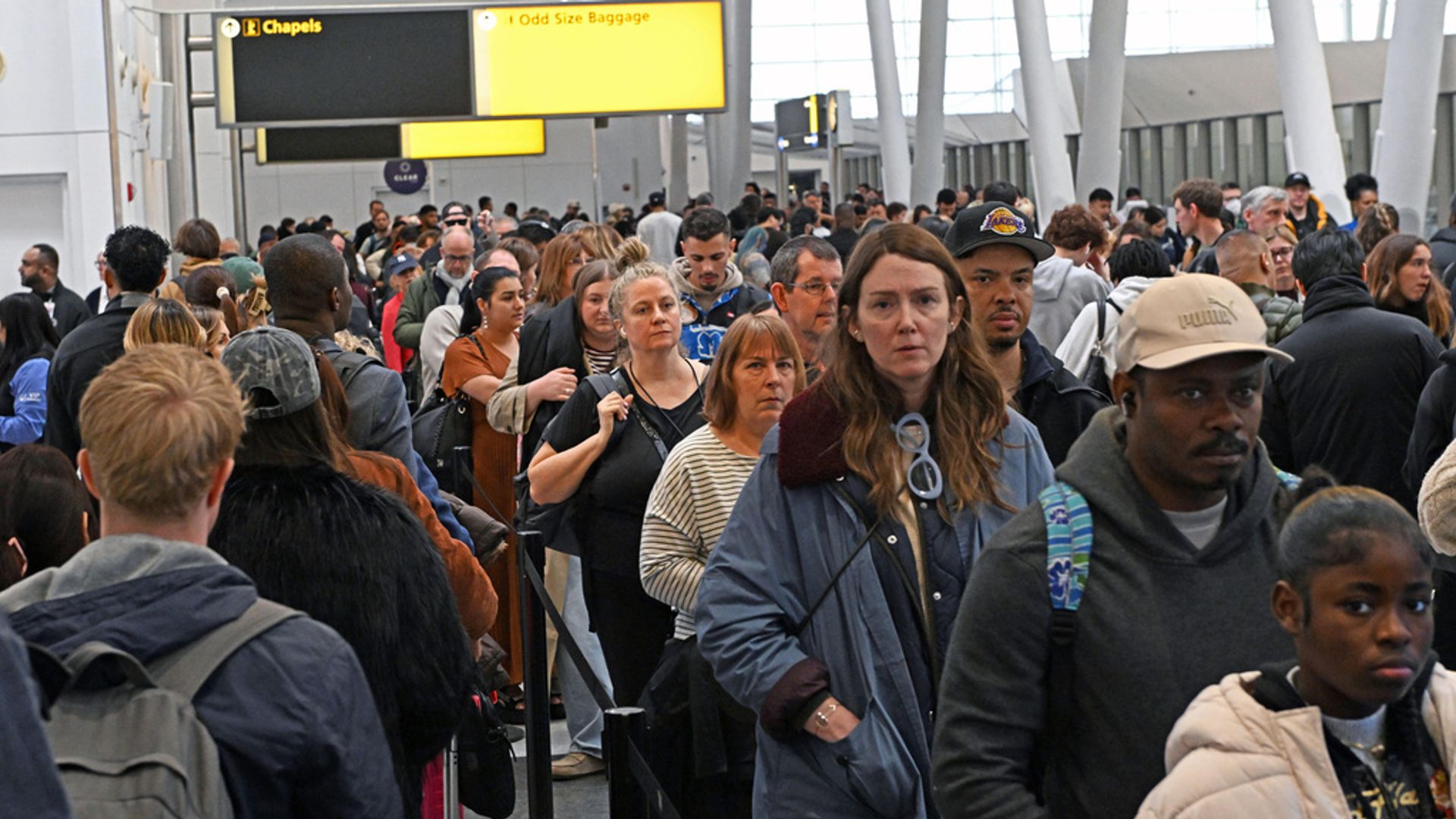
Fear-mongering is the cheapest currency in aviation. Every few years, a transport executive or a union boss steps to a podium to warn that the sky is literally falling—or rather, that the planes won't be able to leave the ground. The latest alarmist rhetoric suggests that US airports face imminent shutdowns because security queues are too long and the system is breaking under the weight of "unprecedented" demand.
It is a calculated performance. They want more federal funding, more bloated subsidies, and less accountability for their own operational failures.
The threat of a total shutdown is a ghost story told to keep passengers from demanding a better product. If an airport closes, it isn't because there are too many people; it's because the legacy infrastructure is being managed by a monopoly that has no incentive to innovate. We don't have a capacity problem. We have a "logic" problem.
The Myth of the Overwhelmed Terminal
The standard narrative claims that if wait times at TSA checkpoints exceed a certain threshold, the airport becomes a "safety risk" and must shutter. This is a fundamental misunderstanding of how space and flow work.
The "safety risk" cited by officials usually refers to crowd crushing or fire code violations in the departures hall. But notice the solution is always "give us more money for staff" rather than "fix the flow." Most US airports are designed like 1950s bus stations with a glossy coat of paint. They funnel thousands of people into a single bottleneck—the security theater—and then act surprised when a line forms.
I have spent two decades analyzing logistics for transit hubs. I have seen airports in Singapore and Doha handle double the density of US hubs with half the friction. Why? Because they treat passengers like data points to be moved, not like cattle to be corralled.
The "long wait times" are a feature, not a bug. They justify the existence of expedited programs like Clear and TSA PreCheck. If the standard line moved in ten minutes, nobody would pay $189 a year to skip it. The system is incentivized to remain slightly broken.
Why Long Lines Aren't the Problem
If you ask the average traveler what’s wrong with flying, they point at the line. They are wrong. The line is a symptom. The disease is centralized processing.
- The Single-Point Failure: US airports rely on a centralized security model. Every passenger, regardless of risk profile or destination, is forced through the same narrow throat. If one x-ray machine breaks, the entire terminal backs up.
- Artificial Scarcity: Transport bosses claim they can't find staff. In reality, they can't find people willing to work high-stress, low-wage jobs in a toxic environment. Instead of automating the mundane—like bin return systems or automated tray loading—they cry for more "boots on the ground."
- The Buffer Zone Fallacy: We are told to arrive three hours early. This actually creates the shutdown risk. By forcing everyone to congregate in the unsecured "landside" area for hours, airports create a massive security target and a logistical nightmare.
Imagine a scenario where security is decentralized at the gate, or where biometric scanning happens as you walk through the entrance. The "shutdown" threat evaporates. But that would require a massive shift in how the TSA operates, and bureaucracies don't like shifts; they like budgets.
The Counter-Intuitive Truth: We Need Fewer Airports, Not More
The "transport boss" warning about shutdowns is usually protecting a regional hub that shouldn't exist. The US is littered with inefficient, under-utilized airports that suck resources away from the major arteries.
Instead of trying to keep every struggling mid-tier airport on life support, we should be leaning into a "hub-and-spoke" model that actually works—or better yet, high-speed rail for anything under 400 miles.
The reason JFK, ORD, and LAX are "breaking" is that they are clogged with short-haul flights that could be handled by a train. We are using a 737 to do the job of a bus, and then we're shocked when the terminal feels crowded.
- Fact: Short-haul flights (under 500 miles) account for nearly 30% of US domestic departures.
- Reality: Removing these from the runway would instantly resolve the "congestion" that leads to these threatened shutdowns.
Stop Asking for More Staff
"People Also Ask" columns are filled with queries like "How can I check airport wait times?" or "Is the TSA hiring?"
You’re asking the wrong questions. You should be asking why you are still taking your shoes off in 2026. You should be asking why the technology used at the border—which can scan a shipping container at 30 miles per hour—isn't being used on your carry-on bag.
The solution isn't more TSA agents. The solution is the elimination of the checkpoint.
We have the technology for "frictionless" security. Millimeter-wave sensors can be embedded in hallways. AI-driven facial recognition can verify identity without a human squinting at a driver's license. But implementing this would mean admitting that the current $10 billion annual TSA budget is largely a jobs program.
The "Safety" Shield
Whenever an industry insider wants to shut down debate, they pull the "Safety" card. "We might have to shut down for safety," they say. It’s an unassailable argument because no politician wants to be responsible for a lapse.
But let’s be brutally honest: most airport "safety" protocols are theater. They exist to make the public feel safe, not to actually mitigate risk. The "long wait times" are only a safety risk because the airports refuse to manage the crowd. They have the data. They know exactly how many people are coming. They know when the peaks are.
If a private theme park managed its lines as poorly as a major US airport, it would go out of business in a week. Airports don't go out of business; they just ask for more tax dollars.
The Real Cost of Compliance
The threat of a shutdown is a distraction from the real crisis: the erosion of your time.
The "transport boss" isn't worried about your flight being canceled. They are worried about their liability. If they shut down a terminal, they can blame "external factors" or "staffing shortages." If they keep it open and a terminal reaches a certain density, they have to deal with a PR nightmare.
By accepting the premise that "demand is too high," you are accepting a lower standard of living. Demand isn't too high; the supply of efficient, modern infrastructure is too low.
We are told to be grateful for a seat on a cramped jet and a two-hour wait in a hallway that smells like stale Cinnabon. We are told that the system is "fragile."
It’s not fragile. It’s antiquated.
What You Should Actually Do
Stop looking at the wait time apps. They only serve to increase your anxiety and validate the system's incompetence.
- Demand Decentralization: Support policies that move security to the gate or implement "walk-through" tech.
- Stop Defending the Monopoly: The TSA has no competition. Until airports are allowed to privatize security (the SPP program exists but is hamstrung by red tape), nothing will change.
- Call the Bluff: The next time a transport boss warns of a shutdown, look at their quarterly earnings or their budget request. The correlation is 1:1.
The system isn't failing; it's doing exactly what it was designed to do: maximize revenue while providing the bare minimum of service. A "shutdown" wouldn't be a disaster; it would be the first honest moment in the history of American aviation. It would force a total rebuild of a system that is currently held together by duct tape and fear.
Stop fearing the shutdown. Start demanding the obsolescence of the people who threaten it.


