The air in Chengdu’s Taikoo Li district usually carries a specific scent—a mixture of expensive perfume, spicy Sichuan peppercorns from nearby eateries, and the ozone hum of a city that never stops building its own future. On a Monday night that should have been unremarkable, the Apple Store stood like a glowing, transparent cube, a temple of silicon and symmetry. Inside, the usual rhythm of the evening was unfolding. Students were testing the pressure sensitivity of digital pencils. Tourists were snapping selfies against the minimalist stone walls.
Then the glass doors swung open, and the atmosphere shifted.
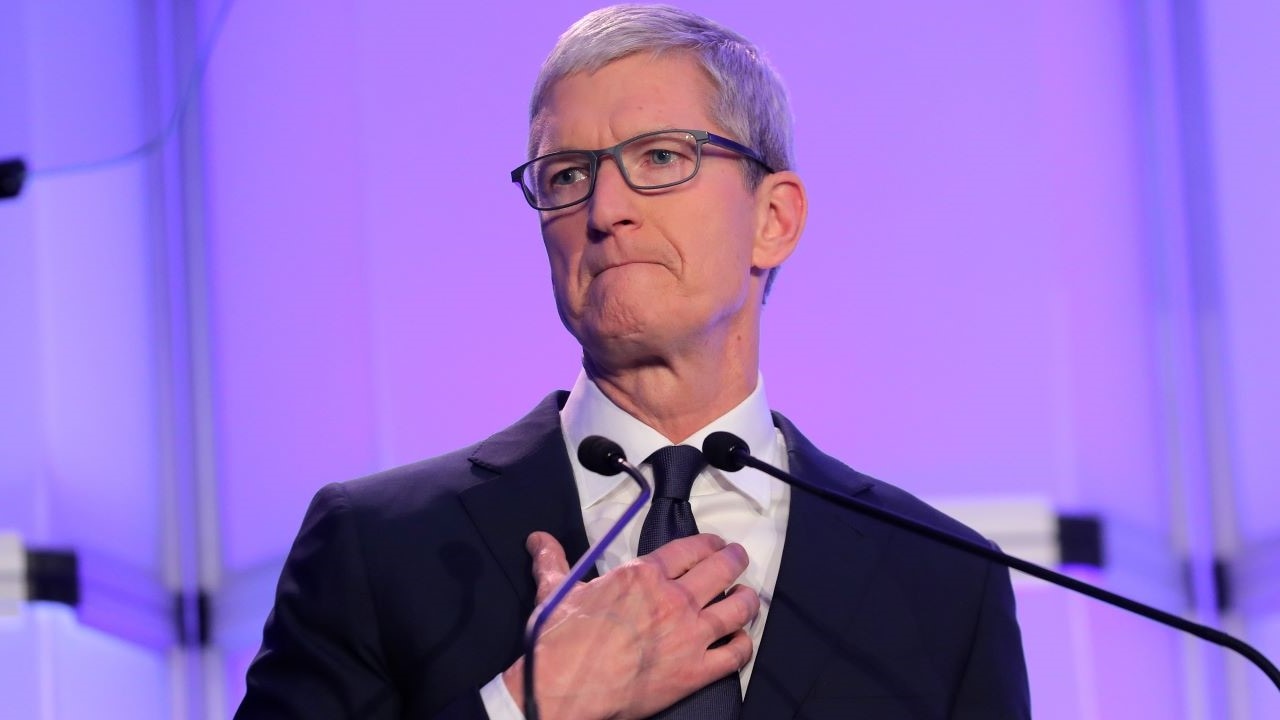
It wasn't a security breach. There were no sirens. Instead, there was a sudden, sharp intake of breath that rippled through the room. Tim Cook, the man who sits at the helm of a $3 trillion empire, walked in. He didn't arrive with the booming theatricality of a movie star. He arrived with a wave and a soft-spoken greeting, wearing a casual navy zip-up that made him look less like a global titan and more like a retired professor who just happened to be passing through.
This was not a scheduled press junket. There were no podiums. There were no teleprompters.
The Stakes Behind the Handshake
To understand why a billionaire standing in a retail store in southwestern China matters, you have to look past the shiny glass tables and into the invisible tension of the global supply chain. This wasn’t just a visit; it was a diplomatic maneuver disguised as a stroll.
For months, the headlines had been grim. Talk of "de-risking" and "decoupling" dominated the financial wires. Analysts sat in glass towers in New York and London, tapping out reports about Apple moving production to Vietnam or India. The narrative was one of retreat—a cooling of a decades-long romance between Cupertino and China.
But narrative is often a poor substitute for reality.
As Cook moved through the crowd, he stopped to watch a tournament of Honor of Kings, a game that serves as a cultural heartbeat for millions of young Chinese players. He wasn't just looking at a screen. He was looking at a bridge. By cheering for a local gaming tournament, he was signaling something that a thousand corporate press releases could never convey: Apple isn't leaving. It is doubling down.
Consider the logistics. Apple doesn't just "make" iPhones in China. It has spent thirty years weaving itself into the very fabric of the country’s industrial identity. You cannot simply pull a thread that deep without the whole sweater unraveling. Cook knows this. He is the architect of that very supply chain. To him, the store in Chengdu isn't just a point of sale; it’s a physical manifestation of a partnership that is too big to fail and too complex to simplify.
The Human Currency of Presence
There is a specific kind of magic that happens when a person of that stature chooses to show up.
A teenager named Li (a hypothetical name for a very real type of fan) stood near the back of the crowd, clutching an iPhone 15. To Li, Tim Cook isn't a spreadsheet of quarterly earnings. He is the personification of an aspiration. When Cook stopped to take a selfie with a group of fans, the distance between a boardroom in California and a sidewalk in Chengdu vanished.
Presence is the ultimate currency in business. You can send an email. You can hop on a Zoom call. You can issue a statement via a spokesperson. But when you physically put your feet on the ground in a city thousands of miles from home, you are making a deposit of trust. You are saying, I am here. I see you. You still matter.
The crowd in Chengdu felt that. They swarmed him not with anger or political grievances, but with the frantic energy of a rock concert. They held up their devices like digital torches. They shouted his name. In that moment, the geopolitical friction between Washington and Beijing didn't disappear, but it became secondary to the shared language of a product.
The Invisible Bridge
The visit coincided with a broader push for Apple to reinforce its ecosystem in the world’s largest smartphone market. Sales had been under pressure. Local competitors were surging, offering devices that appealed to a renewed sense of national pride. The "cool factor" of the iPhone was being tested by the "pride factor" of domestic brands.
So, Cook did what he does best: he humanized the brand.
He didn't talk about market share or gross margins. He talked about the creators. He praised the developers. He visited a local school to see how iPads were being used to teach children about traditional culture. He was playing the long game.
Business is often treated as a cold calculation of numbers. But the numbers are just a lagging indicator of human behavior. If a student in Chengdu feels a personal connection to the brand because they saw the CEO smiling in their local store, that connection will outlast a dozen marketing campaigns.
The complexity of the relationship is staggering. On one hand, Apple is trying to diversify its manufacturing to avoid being over-reliant on a single region. On the other hand, China remains the most sophisticated manufacturing hub on the planet, with a talent pool and infrastructure that cannot be replicated overnight. It is a dance on a tightrope.
The Weight of a Smile
Critics might call it a stunt. They might point to the timing and say it’s a desperate attempt to shore up falling numbers. But stunts don't usually involve the CEO of the world's most valuable company wandering into a retail store on a random evening.
There is a weight to it.
When Cook left the store, disappearing back into the sea of black SUVs and the neon glow of Chengdu, he left behind more than just a memory for the people who were there. He left a message for the markets, for the politicians, and for the consumers.
The message was simple: the glass walls are still standing.
The world is loud. It is full of people shouting about "the end of an era" or "the shift of the century." It is easy to get lost in the noise of the macro. But sometimes, the most important thing happening in global commerce isn't happening in a summit or a trade hearing.
Sometimes, it’s just a man in a navy zip-up, standing in a glowing glass box, reminding the world that he’s still in the game.
The crowds eventually thinned out. The Honor of Kings tournament ended. The employees began the nightly ritual of wiping fingerprints off the glass tables, erasing the physical evidence of the hundreds of hands that had reached out to touch the future. But the energy remained. The air in Taikoo Li still smelled of peppercorns and ozone, but for a few hours, it also tasted like the stubborn, persistent hope of a world that refuses to be divided by a map.
The glass doors locked. The lights stayed on.
Imagine the quiet of the store after the doors close—the silence of a thousand screens waiting for the next touch, and the lingering heat of a crowd that just realized the world is much smaller than they were told.