The headlines are bleeding. Analysts are wringing their hands over "disruption" in West Asian airspace. They point to rerouted flight paths and the suspension of routes as a sign of a failing system. They call it a crisis for global aviation.
They are wrong.
What you are witnessing isn't a collapse. It is the most aggressive and necessary stress test the aviation industry has faced in a decade. While the "lazy consensus" mourns the loss of efficiency, the reality is that these disruptions are exposing the fragile, over-leveraged nature of the hub-and-spoke model that Gulf carriers have used to monopolize the skies.
For years, we’ve been sold a lie. The lie says that a "connected world" requires three or four massive desert airports to function as the lungs of global transit. It turns out, when those lungs catch a cold, the rest of the world shouldn't have to stop breathing.
The Myth of the Indispensable Hub
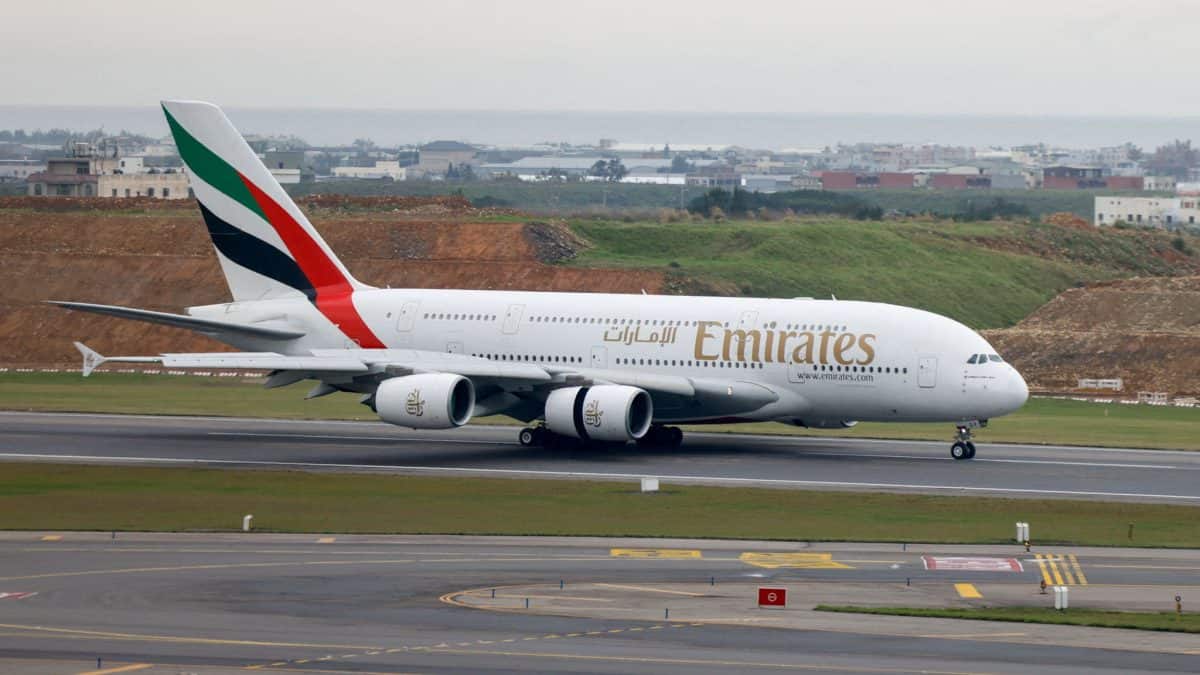
The competitor narrative suggests that when Emirates, Qatar Airways, or Etihad pause flights, the world loses. In reality, the world learns how to bypass them.
The "Golden Age" of the Gulf hub was built on cheap fuel, cheap labor, and a geographical fluke. By positioning themselves exactly halfway between London and Sydney, or New York and Mumbai, these carriers turned a layover into a mandatory tax on global movement.
But look at the data the mainstream media ignores. During these periods of "limited flights," we see a massive surge in ultra-long-haul (ULH) interest. Travelers aren't staying home; they are demanding direct routes that bypass the conflict zones entirely.
- Point-to-point is the predator.
- The hub is the prey.
When a war disrupts a corridor, it forces a market correction. It pushes Boeing and Airbus to stop obsessing over "people movers" like the A380 and start perfecting the efficiency of the A350-1000 and the 787 Dreamliner. These disruptions are the catalyst for an era where you never have to see the inside of a terminal in Doha or Dubai again. That isn't a crisis. That’s progress.
The Risk Management Charade
Industry insiders love to talk about "safety first." It’s a great shield. But let’s be brutally honest about the economics of rerouting.
When an airline "resumes limited flights," they aren't doing it because the skies are magically safer. They are doing it because the cost of burning extra fuel to fly around a conflict zone has finally been balanced against the astronomical cost of keeping a $400 million airframe sitting on the tarmac.
The Real Math of Rerouting
Imagine a flight from London to Singapore.
- Normal Path: Direct, efficient, high margin.
- Disrupted Path: Adds 90 minutes of flight time.
- The Burn: An extra 10,000 to 15,000 kg of fuel.
The "insider" secret? Airlines don't eat that cost. You do. They use "geopolitical instability" as a blanket excuse to hike surcharges across the board, even on routes that don't fly anywhere near the affected airspace. I’ve seen carriers maintain "war risk" surcharges for years after a conflict has cooled. It is a profit center disguised as a precaution.
Your "Safety" Is a Statistical Red Herring
The common question asked is: "Is it safe to fly through West Asia right now?"
The brutally honest answer? It’s as safe as the insurance premiums allow it to be. The moment a Lloyd’s of London underwriter decides the risk-to-reward ratio is off, the planes stop. Not a second before.
The media focuses on the "bravery" of carriers resuming service. Bravery has nothing to do with it. It is a cold, calculated bet on probability. By framing this as a struggle for "global connectivity," carriers distract you from the fact that they are essentially gambling on the precision of anti-aircraft systems.
The Death of the "Efficiency" Obsession
We have spent twenty years optimizing aviation for a world that no longer exists. We optimized for a world of open borders, cheap energy, and geopolitical stability.
These "disruptions" are the slap in the face the industry needed.
The current "limited flights" are a symptom of a desperate attempt to cling to an obsolete strategy. The future belongs to the airlines that can operate in a fractured world. This means smaller planes, more frequent direct flights, and a total abandonment of the "mega-hub" philosophy.
If you are a passenger, stop looking for when the old routes will "return to normal." Normal was a fluke. Normal was a period of unnatural calm that allowed the hub-and-spoke model to metastasize.
The Actionable Truth for the Modern Traveler
Stop asking "When will the flights resume?" and start asking "Who is flying around the mess?"
- Prioritize Airframes over Brands: If you’re flying long distance, book on an A350 or a 787. These planes give carriers the flexibility to reroute without a fuel stop. A 777-300ER might be a workhorse, but in a disrupted sky, it’s a liability.
- The "Middle Man" Discount is Dead: The era of getting a $600 round-trip to Asia by stopping in the Gulf is ending. The fuel penalties for rerouting have killed the margins. If you see a "deal" now, check the fine print for 14-hour layovers. They are using your time to pay for their extra fuel.
- Bet on the Periphery: Look at carriers based in places like Istanbul, Singapore, or even Helsinki. They are the ones actually innovating their flight paths, while the "big three" Gulf carriers are stuck trying to defend their sand-castle hubs.
The Fallacy of "Global Impact"
The competitor article claims this is "disrupting global aviation."
No. It is disrupting Western and Gulf aviation.
While the traditional giants are pivoting and panicking, other sectors are thriving. Direct trans-Pacific routes are booming. Regional carriers in Africa and Southeast Asia are picking up the slack. The "global" nature of this disruption is a narrative pushed by those who stand to lose the most: the legacy players who thought they owned the sky between 30,000 and 40,000 feet.
I have sat in the boardrooms where "disruption" is discussed. The tone isn't one of concern for the passenger. It’s a frantic scramble to protect share prices. They don't want you to realize that you don't need them. They need you to believe that without their desert hubs, the world stops turning.
The sky isn't falling. It's just getting decentralized.
The industry isn't "resuming limited flights" out of a sense of duty to the global traveler. They are doing it because their entire business model is a house of cards built on the assumption that they could indefinitely control the crossroads of the world.
That control is gone. The disruption isn't the problem; it's the solution. It’s the market’s way of telling us that the "mega-hub" experiment has failed.
Don't wait for the old world to come back. It isn't coming. Buy a direct ticket and let the hubs burn through their remaining relevance.