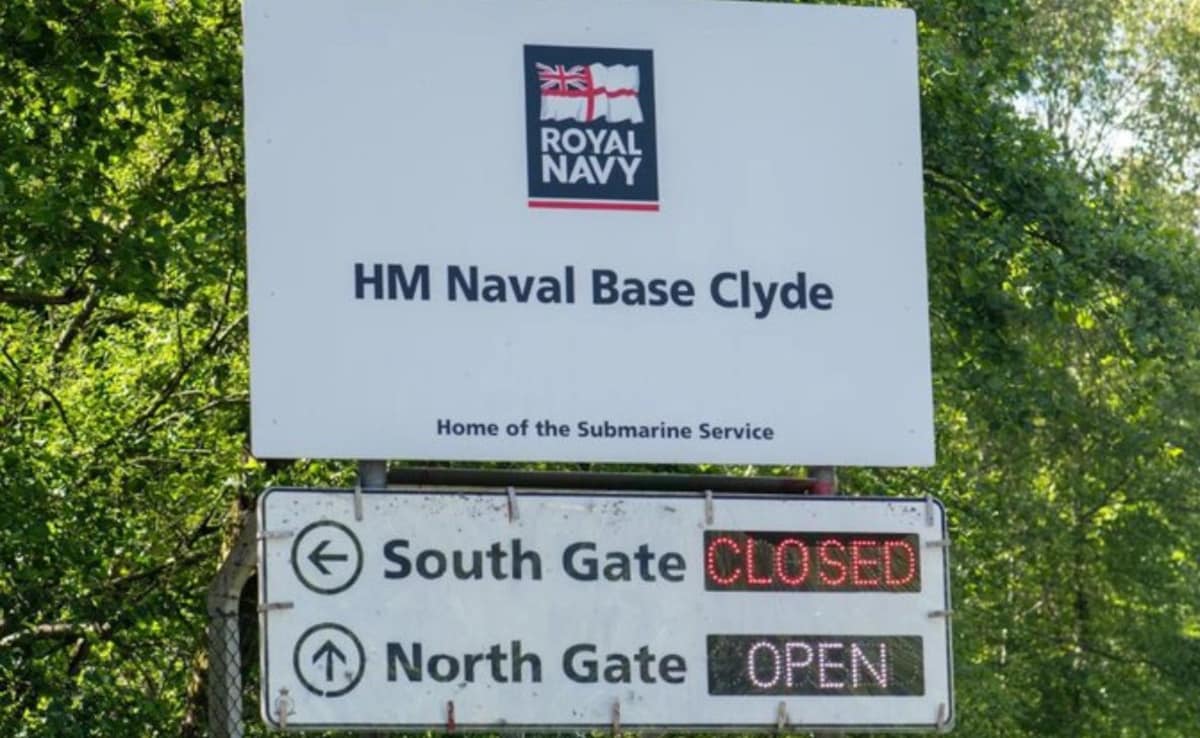
National security isn't just a buzzword for politicians; it's a physical reality that occasionally gets tested by the strangest of circumstances. When two men, including an Iranian national, were picked up by Police Scotland for trying to get into one of the most sensitive military sites in the United Kingdom, it wasn't just a local police blotter entry. It was a massive red flag. Her Majesty’s Naval Base (HMNB) Clyde, specifically Faslane, isn't some coastal warehouse. It’s the home of the UK’s strategic nuclear deterrent. You don't just wander up to the gates of a place housing Vanguard-class submarines armed with Trident missiles because you're lost.
The incident involved a 30-year-old Iranian man and a 25-year-old man whose nationality wasn't immediately broadcast with the same urgency. They weren't just loitering; they were actively attempting to gain access. This happened against a backdrop of heightened global tensions where state-sponsored espionage and "lone wolf" probing of infrastructure are genuine, daily threats. While the initial reports might seem like a simple trespass case, the geography and timing suggest something far more calculated.
Why Faslane is a Magnet for Trouble
If you want to understand the gravity of an arrest at HMNB Clyde, you have to look at what’s behind the wire. Faslane is the operational hub for the entire submarine service. It’s where the Continuous At-Sea Deterrent (CASD) lives. One submarine is always at sea, somewhere in the world, ready to respond to a nuclear strike. The other three are usually docked or undergoing maintenance right there in the Gare Loch.
Security at the base is handled by a layered system of Ministry of Defence Police, Royal Navy Police, and high-end technological surveillance. When someone gets close enough to be "trying to enter," they’ve already bypassed several layers of "you shouldn't be here" signs and perimeter monitoring. The arrest of an Iranian national in this specific context naturally triggers every alarm bell in the intelligence community. Iran has been increasingly bold in its overseas operations, and while there’s no immediate proof these men were IRGC assets, the optics are terrible.
The Reality of Probing Attacks
Security experts often talk about "probing." It’s a simple concept. You send someone to a restricted area to see how long it takes for the police to arrive. You check which gates are manned by private contractors versus armed military police. You see if you can talk your way past a first checkpoint.
In this case, the men were stopped before they caused actual damage, but the intent remains the primary question. Were they mapping response times? Were they testing the alertness of the guards during a specific shift change? People often assume spies look like they do in movies—slick, tech-heavy, and invisible. In reality, a lot of intelligence gathering is done by people who look like they’re just making a mistake. They play the "clueless tourist" or the "confused delivery driver" card. Police Scotland and the MoD don't really buy those excuses when you’re at the gates of a nuclear sub base.
The Legal Fallout and Public Safety
Under the Protected Sites order of the Serious Organised Crime and Police Act 2005, entering or even attempting to enter Faslane is a criminal offense. It’s one of the few places in the UK where "trespass" isn't just a civil matter. It carries significant jail time.
- Initial detention by MoD Police.
- Handover to Police Scotland for formal charging.
- Intelligence screening to check for foreign intelligence service links.
The 30-year-old and 25-year-old were processed through the Scottish legal system, but the real work happens behind the scenes. The Home Office and MI5 will have been all over their digital footprints the moment their names were logged. If you’re an Iranian national in the UK, you’re already under a different level of scrutiny due to the current diplomatic climate between London and Tehran. Trying to walk into Faslane is basically asking for a one-way ticket to a high-security interrogation room.
Why You Should Care About This Breach
You might think a couple of guys getting caught at a gate doesn't affect your daily life. You're wrong. These incidents dictate the level of "security theater" and actual security we all live with. When a breach like this happens, it leads to increased checkpoints, more surveillance, and higher military spending.
It also highlights a massive vulnerability in how we perceive "threats." We expect a cyberattack or a missile. We don't always expect two guys in a car trying to bluff their way into a base. It's the "low-tech" threats that often keep base commanders awake at night because they’re unpredictable.
What Happens Next for Base Security
Expect a quiet but firm "hardening" of the perimeter at HMNB Clyde. This usually involves:
- Increased patrols on the A812 and surrounding access roads.
- Enhanced biometric checks for all civilian contractors entering the base.
- A review of local CCTV to see where these individuals were staying and who they were talking to before they made their move.
The incident serves as a stark reminder that the UK's most sensitive sites are under constant observation. Whether it's peace protesters—who have a long history at Faslane—or foreign nationals with potentially darker motives, the fence line is the front line.
If you live near a sensitive site or work in a sector tied to national defense, stay frosty. Report unusual drone activity or people taking photos of gate configurations. Most of the time it’s nothing. But as we saw with this arrest in Scotland, sometimes it’s very much something. Keep your eyes open and don't assume the authorities have everything under a microscope 24/7. They rely on the "see something, say something" rule more than they’d like to admit.