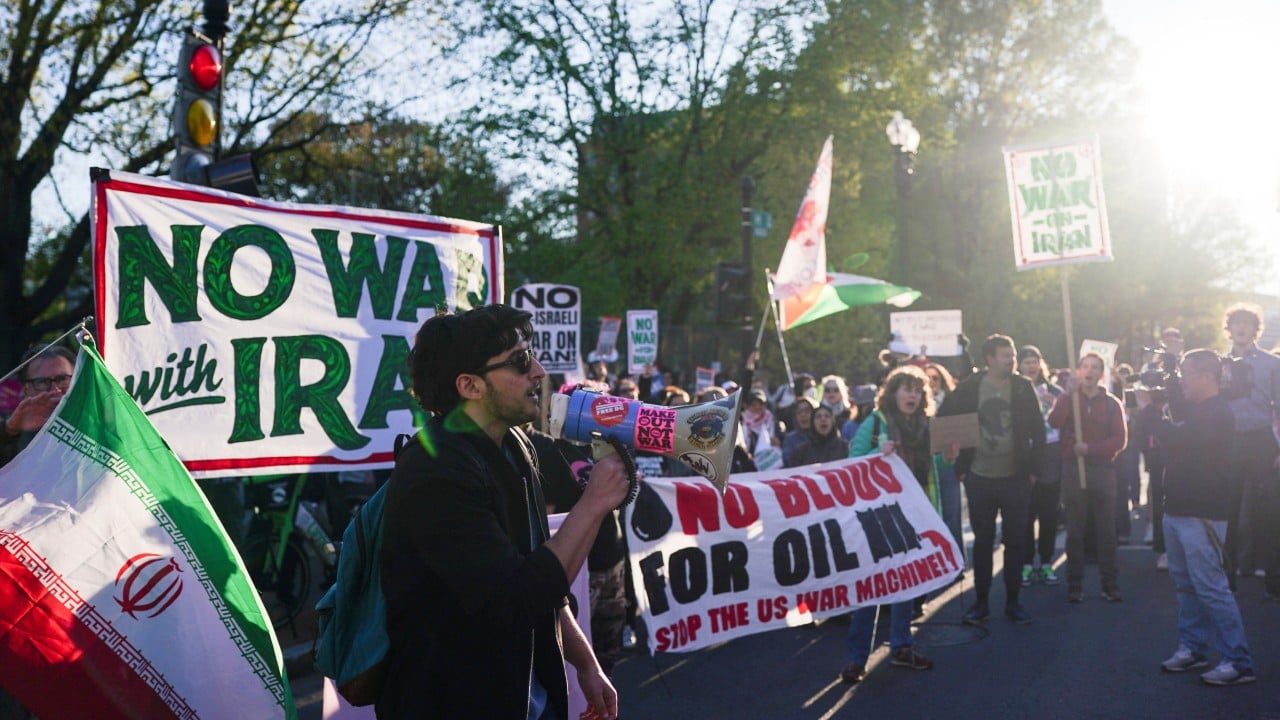
The kinetic exchange between Israel and Hezbollah has moved beyond a border skirmish into a systematic dismantling of the tacit "rules of engagement" that previously governed the Levant. This acceleration directly threatens the informal non-aggression pact between the United States and Iran, a fragile equilibrium that relied on the geographic containment of conflict. When tactical strikes in Lebanon exceed specific thresholds of intensity or reach, they cease to be localized military actions and instead become variables in a broader geopolitical cost-benefit equation that forces Tehran and Washington toward direct friction.
The Triad of Deterrence Erosion
The stability of the Middle East currently rests on three specific pillars of deterrence, all of which are undergoing rapid degradation due to the widening scope of Israeli operations.
- Proximal Containment: The assumption that conflict can be restricted to a specific "gray zone" (e.g., Southern Lebanon) without triggering a regional conflagration.
- Symmetry of Pain: The belief that both sides can absorb a certain level of tactical loss without escalating to total war.
- Third-Party Insulation: The ability for the United States and Iran to maintain a diplomatic or intelligence-level firewall that prevents their proxies’ actions from mandating direct state-on-state confrontation.
Israeli strikes are currently testing the elasticity of the second pillar. By targeting high-value command structures and deep-tier logistics in the Beqaa Valley and beyond, Israel is shifting the metric from "tit-for-tat" exchanges to a strategy of systematic degradation. This forces Hezbollah—and by extension, Iran—into a "use it or lose it" dilemma regarding their precision-guided munitions (PGM) stockpile. If the attrition rate of Hezbollah’s strategic assets exceeds their replacement rate or their perceived deterrent value, the rational actor choice shifts toward mass deployment before the capability is neutralized.
The Cost Function of Regional Expansion
Every Israeli strike in Lebanon carries a hidden premium paid by the United States in the form of diplomatic capital and increased risk to its regional footprint. The relationship between Israeli kinetic action and U.S. risk is not linear; it is exponential.
A "buffer zone" strike (within 10-15km of the Blue Line) carries a low risk of forcing a U.S.-Iran confrontation. However, "depth strikes" (targeting Beirut or the Syrian-Lebanese border) trigger a different set of geopolitical triggers. These strikes signal an intent to fundamentally alter the regional power balance rather than merely secure a border. This forces Iran to recalculate its "Strategic Patience" policy. If Tehran perceives that its primary deterrent—Hezbollah’s capability to devastate Israeli population centers—is being permanently erased, the informal ceasefire with the United States becomes a liability rather than a shield.
The United States faces a "Security Dilemma" bottleneck. Supporting Israel’s right to self-defense is a foundational policy, yet every escalation in Lebanon increases the likelihood of Iranian-backed militias in Iraq and Syria resuming attacks on U.S. bases. This creates a feedback loop where Israeli tactical successes in the north generate U.S. strategic vulnerabilities in the east.
Mechanics of a Failed Ceasefire
The informal U.S.-Iran ceasefire was never a signed document; it was a series of observed behaviors. These included the cessation of drone attacks on U.S. outposts and the measured calibration of uranium enrichment levels. This arrangement is predicated on the "Rational Actor Model," which assumes both parties prefer a cold peace to a hot war.
Israeli strikes disrupt this model by introducing an unpredictable third variable. If Israel pursues a "Total Victory" scenario in Lebanon, the Iranian leadership faces an existential threat to its regional "Forward Defense" doctrine. The logic of Forward Defense is to keep the fight away from Iranian soil by using proxies. If the proxies are dismantled, the fight moves toward Tehran. To prevent this, Iran may feel compelled to authorize "out-of-theater" escalations, such as targeting maritime corridors in the Persian Gulf or accelerating the final stages of its nuclear program to gain immediate leverage.
The breakdown of the ceasefire would likely follow this sequence:
- Stage 1: Proxy Resumption. Resurgence of attacks by the Islamic Resistance in Iraq against the Al-Tanf garrison and other U.S. assets.
- Stage 2: Precision Escalation. Hezbollah deploys heavy payloads (Fateh-110 or similar PGMs) against critical Israeli infrastructure (Hafia port, power grids), necessitating a massive Israeli ground entry.
- Stage 3: Direct Attribution. A strike occurs that cannot be blamed on a proxy, forcing the U.S. and Iran to communicate through kinetic signals rather than backchannels.
The Asymmetry of Objectives
A primary friction point in the current landscape is the divergence of objectives between the United States and Israel. The U.S. objective is Regional De-escalation and Maritime Stability, prioritized to avoid a pre-election energy price spike and to keep the focus on the Indo-Pacific. The Israeli objective is Strategic Realignment, based on the belief that the October 7th attacks proved that "containment" is a failed policy.
Israel’s tactical successes—decapsitating leadership and destroying tunnel networks—create a "Victory Paradox." The more successful the strikes are in the short term, the more they destabilize the regional status quo that the U.S. is trying to preserve. This divergence makes it difficult for Washington to provide the "off-ramp" necessary to keep the U.S.-Iran ceasefire intact.
The Intelligence Gap and Miscalculation Risk
The greatest threat to the ceasefire is not a deliberate choice by Tehran or Washington to go to war, but a miscalculation of the other side’s "Red Lines." Red lines are notoriously opaque in the Middle East. For Israel, the return of displaced citizens to the north is a non-negotiable domestic requirement. For Iran, the survival of Hezbollah’s core military capacity is a non-negotiable regional requirement.
These two requirements are currently mutually exclusive.
If Israel believes Iran will not intervene regardless of the damage done to Hezbollah, they may overreach. Conversely, if Iran believes the U.S. will restrain Israel from a full-scale invasion, they may allow Hezbollah to increase its fire-rate beyond what the Iron Dome can handle. When both sides operate on flawed assumptions of the other's restraint, the probability of a "Black Swan" event—a single strike with a mass casualty count—increases, which would render the U.S.-Iran ceasefire obsolete overnight.
Strategic Forecast: The Pivot to Kinetic Diplomacy
The period of "Quiet Diplomacy" has reached its point of diminishing returns. The upcoming months will likely see a shift toward "Kinetic Diplomacy," where the U.S. and Iran use limited, controlled military displays to signal their limits.
The survival of the ceasefire depends on whether Israel can achieve its goal of a "Buffer Zone" without triggering a "Regime Survival" response from Hezbollah. If the strikes continue to expand in geographical scope and lethality, the U.S. will be forced to choose between a direct confrontation with Iran to protect its regional interests or a significant distancing from Israeli military strategy in Lebanon.
The most probable outcome is a sustained high-intensity conflict that remains "below the threshold" of total regional war but effectively ends the era of U.S.-Iran de-escalation. Analysts should monitor the frequency of "unclaimed" strikes on Iranian logistics hubs in Syria and the movement of U.S. carrier strike groups as the primary indicators of this shifting balance. The ceiling for escalation is rising, and the floor for diplomacy is falling.
The strategic play for regional players is no longer the prevention of conflict, but the management of its contagion. Expect a shift toward "Hard Containment" where the U.S. increases its defensive posture in the Gulf to signal to Iran that while it may not control Israeli actions in Lebanon, it will exact a high price for any retaliation against U.S. interests. This creates a fractured landscape where the Levant remains a hot theater while the broader U.S.-Iran relationship enters a period of high-stakes, armed stand-off.