The steam from the green tea rose in thin, wobbling ribbons, catching the pale light of a shuttered room in Islamabad. It is a quiet, rhythmic sight. But inside that room, the air was heavy enough to choke. Men in dark suits and others in clerical robes sat across from one another, separated by a table that might as well have been the width of the Atlantic Ocean. They were there to bridge a chasm. Instead, they watched the tea grow cold.
When we talk about geopolitics, we usually talk about "entities" and "states." We discuss "Tehran" and "Washington" as if they are monolithic blocks of stone. They aren't. They are rooms full of tired people with families waiting at home, carrying the weight of millions who will never know their names. In this specific room in Pakistan, the latest attempt to thaw a forty-year frost ended not with a handshake, but with a sharp, echoing silence.
The headlines will tell you the talks failed because of "excessive demands." That is a sanitized, bloodless phrase. It hides the reality of the friction.
The Weight of the Ask
Imagine you are negotiating the sale of your family home. You need the money to survive. The buyer arrives and tells you that not only must you lower the price by half, but you must also hand over your car, change your religion, and promise never to speak to your neighbors again. You would walk away. To you, those demands are absurd. To the buyer, they are the only way to ensure you don't use the house to build something they fear.
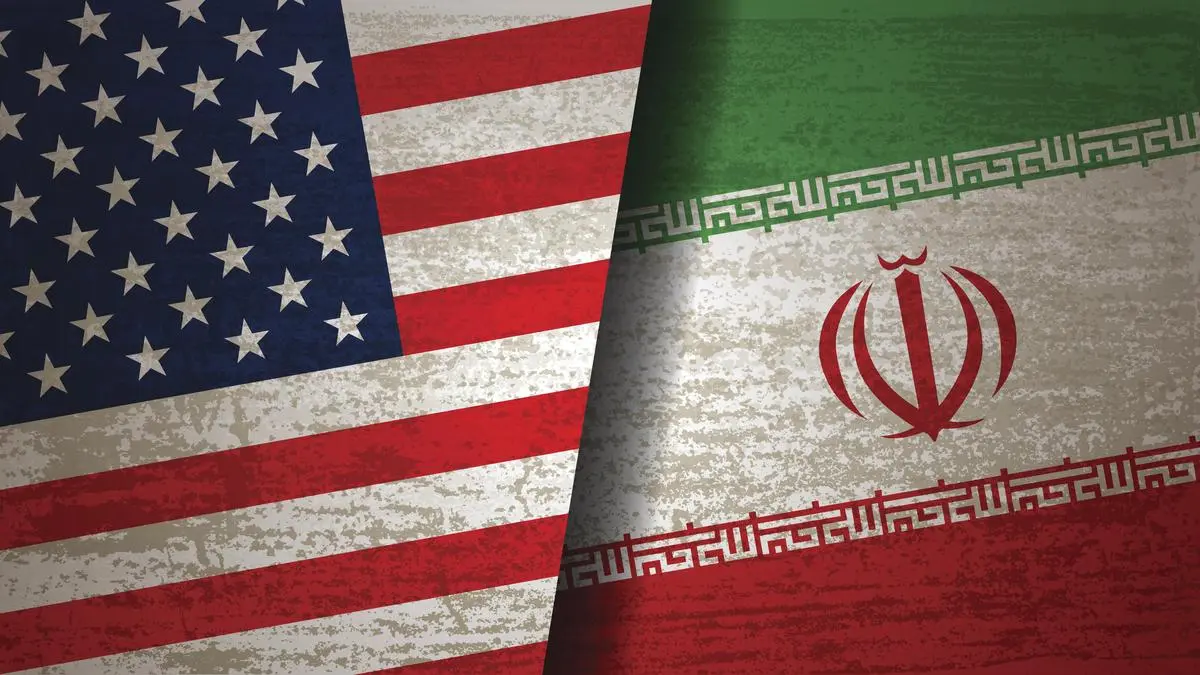
This is the fundamental knot of the US-Iran relationship.
The Iranian delegation arrived in Pakistan looking for a tether to the global economy. They are presiding over a nation where the currency, the rial, often feels like sand slipping through a sieve. For a father in Isfahan, these talks weren't about "centrifuges" or "uranium enrichment levels." They were about whether he could afford the imported medicine his daughter needs or if the price of bread would double again by Tuesday.
On the other side of the table, the American representatives carried a different kind of pressure. They are haunted by the ghosts of 1979 and the complexities of a Middle East that feels like it is standing on a powder keg. For them, every concession is a potential political suicide note back in D.C. They aren't just negotiating with Iran; they are negotiating with a skeptical Congress and a nervous set of allies in the Gulf.
The "excessive demands" cited by Tehran likely centered on the permanence of sanctions relief. Iran wants a guarantee that a future American president won't simply tear up the deal with a single tweet. The U.S., constrained by its own internal legal structures, cannot easily give a promise that outlasts an election cycle.
It is a deadlock of trust.
The Islamabad Conduit
Why Pakistan? Geography is rarely accidental.
Pakistan has long played the role of the quiet middleman, the neighbor who keeps the fence repaired even when the families on either side are shouting. It is a delicate dance. By hosting these back-channel talks, Islamabad attempted to prove that it remains a vital gear in the machinery of global stability.
But even the most skilled host cannot force guests to eat if they aren't hungry for peace.
The setting was intended to be a neutral ground, a place where the shadows are long and the press is kept at a distance. In these corridors, the language isn't the soaring rhetoric of the United Nations. It is the language of "red lines" and "carrots."
Consider the "red line." It is a metaphor we use so often we forget its physical violence. To draw a red line is to say: If you step here, the talking stops and the bleeding starts. In Islamabad, the red lines were drawn so close together that there was no room left for anyone to stand.
The Human Cost of "No Deal"
While the diplomats pack their leather briefcases and head to the airport, the "dry facts" of the failure begin to ripple outward.
Let's look at a hypothetical merchant in the Grand Bazaar of Tehran. We will call him Ahmad. Ahmad sells carpets. For years, his business has been a ghost of its former self. He cannot export easily. He cannot process payments through international banks. He watched the news from Islamabad with a flickering hope. A deal meant a return to the world. It meant his son wouldn't have to consider emigrating to Europe just to find a job that pays a living wage.
When the news broke that the talks ended without a breakthrough, Ahmad didn't scream. He just pulled the metal grate down over his shop a little earlier than usual.
Failure in diplomacy isn't a single explosion. It is a slow, grinding erosion of hope.
The U.S. position remains firm: total transparency and a rollback of nuclear capabilities are the entrance fee for any meaningful economic relief. To Washington, these aren't "excessive." They are "essential." They view the Iranian government’s refusal as a sign of bad faith, a lingering desire to maintain a "threshold" nuclear status that keeps the region on edge.
The Mirage of the Middle Ground
There is a common misconception that international relations are like a business deal where both parties meet in the middle. If I want ten dollars and you want to give me zero, we agree on five.
But how do you find the middle ground on a question of existence?
Iran views its nuclear program and its regional influence as its only shield against "regime change." The U.S. views that same program and influence as the primary threat to the global order. There is no "five dollars" in this equation. There is only "yes" or "no."
In Pakistan, the answer was "not yet."
The tragedy of the "not yet" is that it is often a precursor to "too late." As the talks stalled, the centrifuges in facilities like Natanz continued to spin. Every day without a deal is a day where the technical reality on the ground changes, making a future deal even harder to reach. The "breakout time"—the period it would take for Iran to produce enough material for a weapon—shrinks. As it shrinks, the American and Israeli appetite for a military "solution" grows.
We are watching a slow-motion collision.
The Invisible Stakes
It is easy to get lost in the jargon of the JCPOA or the intricacies of the IAEA inspections. But the real story of the Islamabad failure is about the invisible stakes.
It is about the security of the Strait of Hormuz, a narrow strip of water through which a massive chunk of the world’s oil flows. If these talks continue to fail, the risk of a "miscalculation" in those waters skyrockets. A nervous captain on a destroyer, a stray drone, a misunderstood signal—these are the things that turn a diplomatic stalemate into a global energy crisis.
It is also about the precedent of international law. If the world’s superpower and a major regional power cannot find a way to communicate through a third party, it signals a breakdown in the very idea of a "rules-based" world. It suggests that the only thing that matters is raw power.
The negotiators in Pakistan weren't just arguing about sanctions. They were arguing about the shape of the next decade.
The Sound of the Door Closing
There was no grand press conference at the end. No dramatic walkout captured by a dozen cameras. There was just the sound of a heavy door closing and the dull roar of jet engines.
The "excessive demands" cited by Tehran are a shield. They allow the leadership to tell their people that they stood strong against the "Great Satan." Conversely, the "unreasonable stance" of Iran allows Washington to tell its voters that they are being "tough on terror." Both sides get to keep their pride.
But pride is a poor substitute for a functioning economy or a stable region.
The tea in that Islamabad room is cold now. The cups have been cleared away. The table is empty. Outside, the world moves on, oblivious to the fact that a small window of opportunity just slammed shut.
Somewhere in a suburb of Maryland, a policy analyst is already drafting a memo on "containment strategies." Somewhere in Tehran, a scientist is checking the pressure on a valve. And in the markets of Isfahan, the price of milk just went up again.
The most dangerous thing about a failed conversation isn't the silence that follows. It's what people start doing to fill that silence.
The tragedy isn't that they couldn't agree. The tragedy is that they have forgotten how it feels to try.