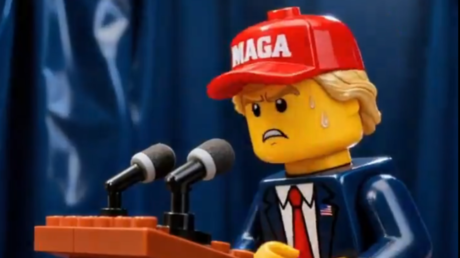
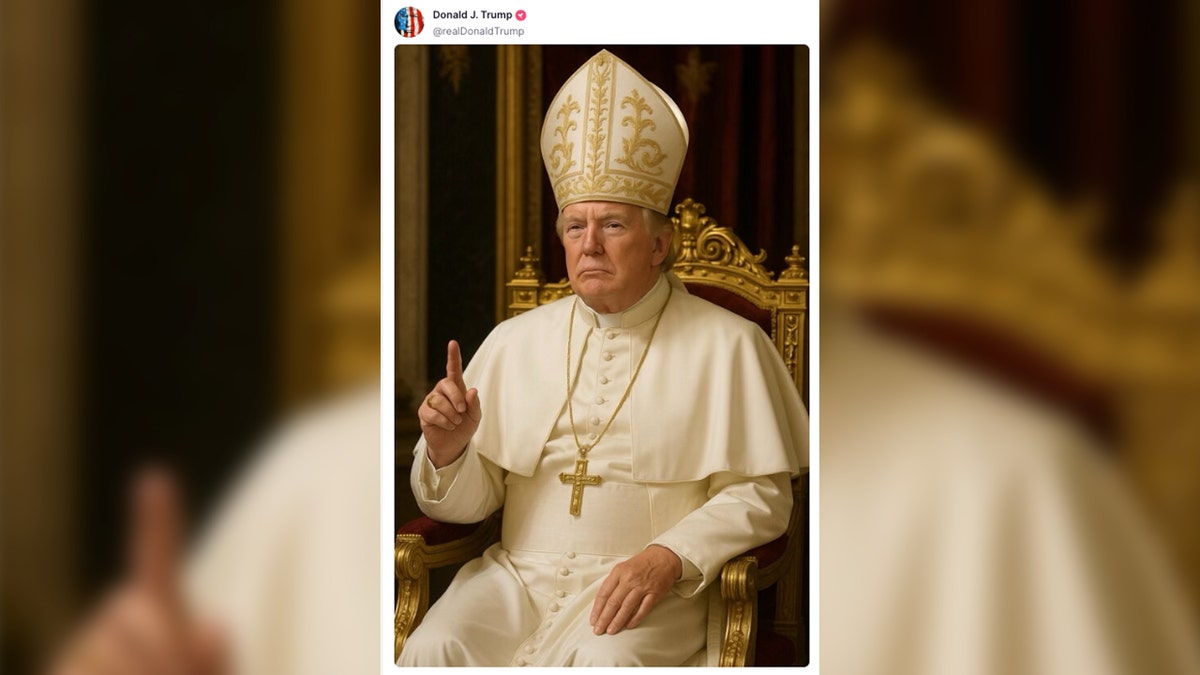
The tension between the Holy See and the executive branch of the United States operates on a structural misalignment of objectives: the Papacy manages a global, multi-century moral framework, while the Presidency operates on a four-year cycle of nationalistic populism. When Donald Trump attacks Pope Francis, he is not merely engaging in a personal spat; he is testing the elasticity of the Catholic vote, a demographic that remains the most critical "swing" constituency in American elections. The institutional defense of the Pope by Catholic leaders is a calculated effort to preserve ecclesiastical authority against a political movement that seeks to redefine religious identity as a subset of partisan loyalty.
The Triad of Institutional Defense
Catholic leadership operates through three distinct channels when reacting to executive-level hostility. Each channel serves a specific strategic purpose in maintaining the Church’s influence within the American body politic.
1. The Theological Sovereignty Defense
The primary mechanism utilized by bishops and cardinals is the assertion that the Pope’s mandates on migration, climate change, and economic equity are not political suggestions but doctrinal imperatives. By framing the Pope’s comments as "universal morality," leaders attempt to insulate the Church from being treated as a standard political NGO. When a political figure attacks these positions as "partisan," the Church responds by asserting a jurisdictional boundary. The logic is simple: if the Pope is reduced to a mere political actor, the Church loses its tax-exempt moral high ground.
2. The Flock Cohesion Mandate
The American Catholic population is not a monolith. It is split almost exactly down the middle between Republican and Democratic affiliations. Institutional leaders view harsh attacks on the Pope as a "stress test" for lay loyalty. If the leadership remains silent, they risk a permanent shift where the layperson’s political identity supercedes their religious identity. The defense of the Pope is an operational necessity to prevent the "Protestantization" of the American Catholic—where individual political preference dictates theology rather than the reverse.
3. The Diplomatic Buffer
The U.S. Conference of Catholic Bishops (USCCB) acts as a diplomatic bridge. Their defense of the Pope often utilizes "soft" language to de-escalate while simultaneously reinforcing red lines. This allows the Church to continue negotiating with the administration on specific legislative goals, such as school vouchers or anti-abortion measures, even while the head of their institution is under rhetorical fire.
The Mechanical Failure of Populist Attacks on the Papacy
Donald Trump’s strategy relies on a "Direct-to-Consumer" model of communication, bypassing traditional gatekeepers. However, this model encounters significant friction when applied to the Catholic Church for several structural reasons.
- The Infallibility Residual: Even for non-devout Catholics, the office of the Papacy carries a residual cultural weight. Attacking the person of the Pope often triggers an ancestral defense mechanism that overrides current political grievances.
- The Global vs. Local Paradox: Trump’s "America First" doctrine is diametrically opposed to the Catholic "Universal Church" (Catholicus) model. The friction is not just over policy; it is over the definition of the "In-Group." For Trump, the in-group is the national citizen; for Francis, it is the global human person.
- The Institutional Durability Factor: The Papacy operates on a "Time Horizon of Centuries." Political cycles are blips in this timeline. Catholic leaders recognize that the current administration is a temporary variable, whereas the Petrine Office is a constant. This allows the Church to absorb hits that would destroy a standard political opponent.
Quantifying the Catholic Voter Disruption
To understand why these attacks matter, one must look at the electoral geography. The "Rust Belt" (Pennsylvania, Michigan, Wisconsin) contains a high density of white, working-class Catholics.
The strategy employed by Trump is to peel away the "Cultural Catholic" (who prioritizes national identity) from the "Parish Catholic" (who prioritizes church teaching). If the attacks on the Pope become too severe, the "Parish Catholic" may move into a state of "Electoral Apathy," where they simply do not vote. A 2% shift in Catholic turnout in these states is mathematically sufficient to flip an entire national election. Consequently, when Catholic leaders defend the Pope, they are effectively signaling to this 2% that the administration has crossed a line into "anti-Catholic" territory, which serves as a potent deterrent to Trump’s base expansion.
The Cost Function of Silence
For a Bishop, the decision to criticize a sitting President who aligns with the Church on "Culture War" issues (such as judicial appointments) involves a complex cost-benefit analysis.
- Variable A: Policy Alignment. The administration provides the Church with favorable rulings on religious liberty.
- Variable B: Moral Integrity. The administration’s attacks on the Pope undermine the Church’s internal hierarchy.
- Variable C: Financial Patronage. A significant portion of the wealthy donor class in the American Church is aligned with the Trump platform.
The "Cost of Silence" becomes too high when Variable B threatens to destroy the structural integrity of the Church’s authority. If the Pope can be mocked without consequence, the Bishop’s own authority over his diocese is diminished. Therefore, the defense is rarely about the specific content of the Pope’s message and almost always about the preservation of the Office.
Logical Flaws in the Populist Critique
The critique leveled against Pope Francis by the administration often centers on the claim that the Pope "does not understand the border" or "is being used by the left." This analysis is flawed because it ignores the Church’s long-standing "Subsidiarity and Solidarity" framework.
The Church does not view the border through a Westphalian lens of state sovereignty alone. It views the border as a point of contact between humans. When Trump frames the Pope’s comments as "disgraceful," he is using a shame-based political tactic against an institution that literally invented the Western concept of confession and absolution. The tactic is ineffective because the Church possesses its own internal system for defining "disgrace" and "grace," making it immune to external moral shaming.
Structural Implications for the 2024-2028 Cycle
The escalation of rhetoric suggests a permanent decoupling of the "Religious Right" into two camps: the Evangelical-Nationalist camp and the Catholic-Institutionalist camp.
- Evangelical-Nationalist: This group views the leader as a "Cyrus" figure—a flawed vessel used for a divine purpose. Their loyalty is to the outcome, not the person or an institution.
- Catholic-Institutionalist: This group views the institution as the primary vessel of truth. When the leader of that institution is attacked, it is viewed as an attack on the vessel itself.
The "Catholic Defense" of the Pope is the first major signal that the alliance between these two camps is fraying. The Church is signaling that it will not be a "Junior Partner" in a populist coalition if that role requires the subordination of the Papacy to a nationalistic agenda.
Tactical Divergence in Clerical Responses
Not all defenses are equal. There is a clear divergence in how different "tiers" of leadership respond:
- The Curial Response: High-level Vatican officials use the language of international law and human rights. They position the Pope as a global statesman.
- The USCCB Response: They focus on "Civility" and "Dialogue." This is a defensive posture designed to keep the doors of the White House open.
- The Local Parish Response: This is where the real impact occurs. The defense of the Pope here is often framed through the lens of the "Gospel of Matthew," emphasizing the "Least of These." This is the most dangerous level for a politician, as it activates the moral conscience of the individual voter.
The Mechanism of Rhetorical Escalation
The relationship follows a predictable feedback loop:
- Pope Francis issues a statement on a global crisis (Migration/Climate).
- The Administration interprets this as a direct critique of "America First" and launches a counter-attack.
- Catholic Leadership issues a "Defense of the Office," which the administration interprets as "Partisan Bias."
- The Result: A hardening of the "Catholic Middle," making them less susceptible to the administration’s future messaging.
This loop creates a "Political Sunk Cost" for the administration. The more they attack, the more they alienate the very institutional power they need to maintain a majority coalition.
Strategic Recommendation for Institutional Navigation
To maintain institutional relevance in an era of high-velocity populism, Catholic leadership must shift from a "Reactive Defense" to a "Proactive Jurisdictional Assertion."
This requires the abandonment of the "both-sides" rhetoric that has characterized the USCCB for the last decade. Instead, the Church must lean into its role as a "Third Way" actor—one that rejects both the secularism of the left and the nationalistic idolatry of the right. The defense of the Pope should not be framed as a defense of a man, but as a defense of a "Non-State Moral Authority."
By asserting that the Papacy is a sovereign entity that exists outside the American political binary, the Church can force political actors to engage on the Church’s terms, rather than allowing the Church to be dragged into the administration’s chosen battlefield. Failure to do so will result in the total absorption of Catholic identity into the broader American cultural war, rendering the Church a mere precinct of the Republican or Democratic parties. The strategic play is to leverage the "Petrine Office" as an unmovable object against the "Populist Force," forcing the political class to recognize that the Catholic vote is not "owned," but "leased" on the condition of institutional respect.