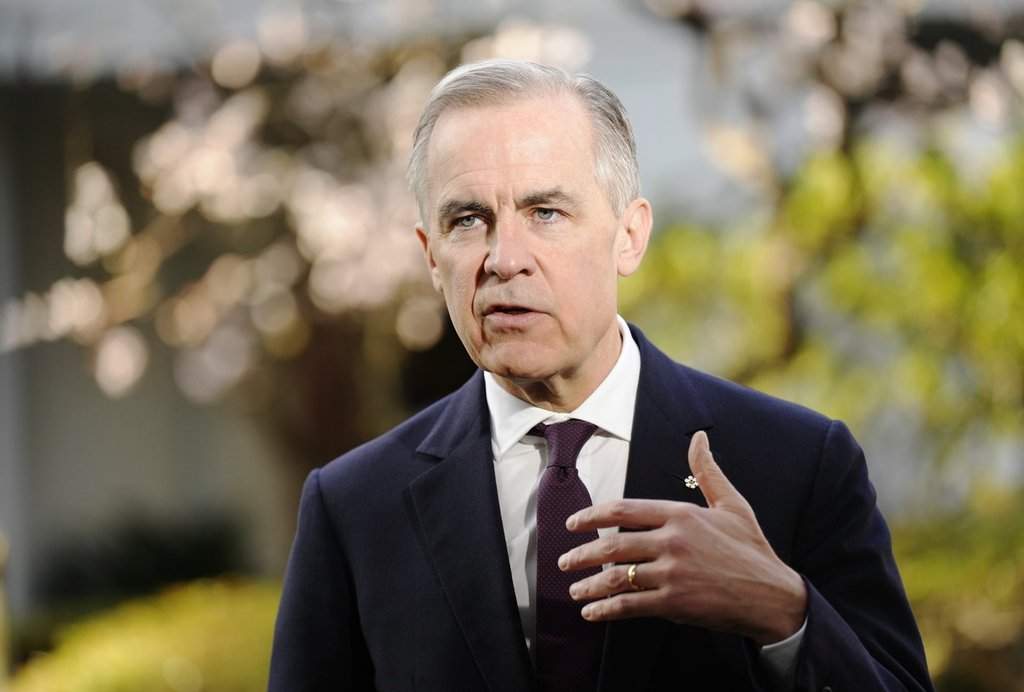
Mark Carney is a man who exists in the spaces between the headlines. He is the former governor of the Bank of England, a climate envoy for the United Nations, and a perennial whisper in the corridors of Canadian power. To the public, he is a series of data points and policy shifts. To the political establishment, he is a shadow cabinet member without a seat. But lately, he has become something else entirely. A traveler.
The news cycle tracks him like a satellite. Recently, sources confirmed his coordinates: London, then Italy. These are not just pins on a map. They represent the quiet exhale of a man who has spent the last several weeks tethered to the side of a Prime Minister whose political oxygen is running thin.
Consider the optics of a transatlantic flight. While the average person worries about legroom or the price of a gin and tonic, a figure like Carney carries the weight of expectation in his carry-on. He had just finished a high-profile stint advising Prime Minister Justin Trudeau on a "growth strategy"—a term that sounds like corporate jargon until you realize it is the difference between a country being able to afford its future or mortgaging it away.
The Weight of the Suit
When a man of Carney’s stature goes on vacation, it isn't just about poolside reading. It is a tactical retreat. He had been a constant fixture at the Liberal Party’s caucus retreat in Nanaimo, British Columbia. There, he wasn't just a guest speaker; he was a Rorschach test for the Liberal caucus. To some, he was a savior—a technocratic godsend who could stabilize a sinking ship. To others, he was an interloper, a man from the world of global finance trying to speak the language of the doorstep.
The transition from a high-stakes political retreat to the cobblestones of London is jarring. London is a city that remembers him. It is where he steered the UK through the choppy waters of the post-2008 era and the initial shocks of the Brexit vote. Walking through the City of London, Carney isn't just a tourist. He is a ghost of a previous administration, a reminder of a time when the world felt slightly more predictable, if no less precarious.
But why Italy?
Italy is where the frantic pace of global governance goes to die. It is the land of dolce far niente—the sweetness of doing nothing. For someone whose life is measured in basis points and carbon credits, the sheer, unyielding stillness of an Italian afternoon is the ultimate luxury. It is a necessary distance. You cannot see the shape of a mountain when you are standing on its peak. To understand the political landscape of Canada, or the economic fragility of the G7, Carney needs the silence of the Mediterranean.
The Invisible Stakes
There is a tension in these travels that the "sources" mentioned in the wire reports don't quite capture. That tension is the "Will he or won't he?" of Canadian politics. Every time Carney boards a plane, the rumor mill in Ottawa grinds faster. Is he staying away to let the current storm pass? Or is he clearing his head before he dives into a leadership race that could define the next decade of North American policy?
The stakes are invisible but immense.
If Carney is the "Special Advisor" to the Prime Minister, his absence is notable. It suggests a man who is providing counsel but keeping his exit strategy polished. It’s the behavior of a consultant, not a convert. When you are a consultant, you can go to Italy. When you are a politician, you go to a county fair in a rainstorm to eat a lukewarm hot dog.
Carney’s choice to head to the UK and Italy speaks to a specific kind of globalism. It is a reminder that while politics is local, power is increasingly nomadic. He can influence the trajectory of a nation’s economy from a villa just as easily as he can from a boardroom in Toronto. This reality creates a friction with the voters he might one day lead. People want to know that their leaders feel the same gravity they do. They want to know that when the economy hurts, the person in charge isn't looking at a sunset in Tuscany.
The Human Toll of the Technocrat
We often forget that these figures are, at their core, human beings. We see the tailored suits and the calm, measured delivery at the podium, and we assume they are made of different stuff. We assume they don’t get tired. We assume they don’t feel the crushing boredom of a fourteen-hour flight or the mild anxiety of a delayed connection.
But the human element is exactly why this vacation matters.
The Liberal caucus retreat was a pressure cooker. The government is trailing in the polls. The cost of living is a banshee scream that won't stop. The housing crisis has turned a generation of Canadians into skeptics. Carney walked into that room as the "expert." He was expected to have the answers that the career politicians had lost. That kind of pressure leaves a mark. It drains the battery.
Imagine the quiet of an Italian evening. The air is thick with the smell of jasmine and old stone. The phone sits on a heavy wooden table, screen down. For a moment, the Prime Minister’s problems are four thousand miles away. The "growth strategy" is just a document in a cloud. The polls don't exist here. There is only the wine, the light, and the realization that the world will keep turning whether you are at the helm or not.
This isn't just a trip; it’s a recalibration.
The Return
Eventually, the vacation ends. The plane will touch down in a country that is still arguing about the same things it was arguing about when he left. The rent will still be too high. The carbon tax will still be a political lightning rod. The questions about Carney’s own ambitions will have only grown louder in his absence.
He returns not just with a tan, but with a perspective that only distance provides. He has seen the world from the outside again. He has remembered what it feels like to be a private citizen in a foreign land, shielded by the anonymity that wealth and status provide.
The real story isn't that Mark Carney went to Italy. It's that he felt he could leave. In the high-stakes poker game of Canadian politics, leaving the table is always a gamble. It signals a certain level of comfort—or perhaps, a profound indifference to the noise.
As he moves from the ancient history of Rome back to the pressing urgency of the 24-hour news cycle, the question remains: is he coming back to help, or is he just checking the time before the next flight out?
The shadows in Ottawa are getting longer. The man in the suit is back. And the silence he brought home from Italy might be the loudest thing about him.
Would you like me to analyze the potential economic impact of Carney's proposed growth strategy on the Canadian dollar?