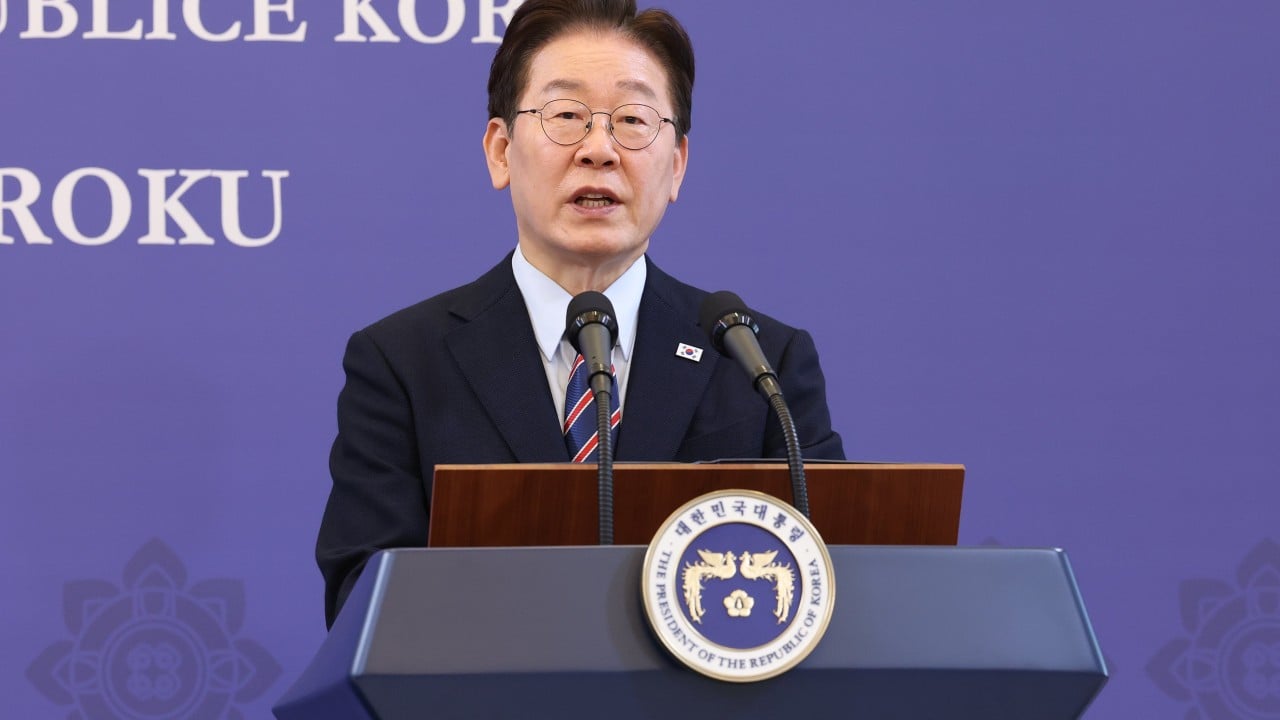
The media loves a good diplomatic explosion. When South Korean President Yoon Suk Yeol’s remarks regarding historical trauma and the Holocaust hit the wires, the reaction followed a weary, predictable trajectory. Israel expressed "deep disappointment." Pundits screamed about historical revisionism. Analysts began counting the minutes until the inevitable clarification from the Blue House.
Everyone is focused on the "gaffe." Everyone is missing the mechanics. For a deeper dive into similar topics, we suggest: this related article.
The standard narrative suggests that a world leader misspoke, offended a key partner, and created a crisis out of thin air. This is a naive reading of how modern geopolitics operates. In the high-stakes theater of international relations, "outrage" is rarely an organic emotional response. It is a currency. It is a tool for leverage.
Yoon’s comments weren't just a slip of the tongue; they were a Rorschach test for how we perceive historical parallels in the 21st century. The outrage that followed wasn't about a lack of history education in Seoul. It was about the rigid, often suffocating monopoly on historical victimhood that governs global discourse. For broader information on this development, extensive analysis is available on NPR.
The Myth of the Unique Tragedy
The core of the backlash stems from the idea that the Holocaust is incomparable. For decades, the "uniqueness" of the Shoah has been a cornerstone of Western moral architecture. When an Asian leader attempts to draw parallels between European history and the brutal colonial history of the Pacific, the West—and Israel—reflexively views it as a dilution of the Holocaust’s significance.
This is a logical fallacy.
Acknowledging the horror of one event does not require the erasure of another. South Korea carries the deep, unhealed scars of the Japanese occupation. The "comfort women" system, the forced labor, the cultural erasure—these are not "Holocaust-lite." They are their own specific brand of hell. When Yoon makes a linguistic or conceptual bridge between these traumas, he isn't trying to downgrade the Holocaust. He is trying to upgrade the world's understanding of Asian suffering.
The "outrage" from Jerusalem serves a specific function: it reinforces the boundaries of what can and cannot be compared. It’s a gatekeeping exercise. If every tragedy is allowed to be compared to the Holocaust, the Holocaust loses its status as the ultimate moral North Star for Western diplomacy. Israel knows this. Seoul knows this. The clash is the point.
Why Domestic Optics Trump Global Manners
Critics argue that Yoon is "clumsy" on the world stage. I’ve spent enough time in policy rooms to know that "clumsy" is often code for "refuses to follow the established script."
President Yoon is currently navigating a domestic minefield. South Korea is caught in a vice between a rising China, a belligerent North Korea, and a fading American hegemony. In this environment, hyper-nationalism isn't a bug; it's a feature. Yoon needs to project a South Korea that is no longer the "shrimp among whales."
By centering Korean historical trauma—even at the risk of offending a powerful partner like Israel—Yoon is signaling to his base that the Korean experience is the primary lens through which he views the world. It’s a "Korea First" philosophy that mirrors the populist shifts we see in the US, Hungary, and India.
The Western press treats this like a PR disaster. It isn't. To the target audience in Seoul and Gyeonggi, seeing their president stand his ground on the gravity of their national history—even when criticized by the international community—is a win. It looks like strength, not a mistake.
The Leverage Game: Beyond the Apology
Watch the follow-up. In the coming weeks, you will see a flurry of "cooperation agreements" and "security dialogues" between Israel and South Korea.
This is the hidden benefit of the "diplomatic row." A crisis creates a void that must be filled with concessions. By "offending" Israel, Yoon has actually created a scenario where Israel must engage more deeply to "rectify" the relationship.
Israel needs South Korean tech and manufacturing. South Korea needs Israeli defense systems and cybersecurity expertise. Neither side is going to let a disagreement over historical framing tank a multi-billion dollar trade relationship. The outrage is the opening move in a negotiation for better terms on the next deal.
If you think these leaders are genuinely "shocked" or "hurt" by these exchanges, you’ve never seen a trade delegation in action. They are cold, calculating actors playing for percentage points.
The Fallacy of the "Sensitive Leader"
We have been conditioned to believe that the "correct" way for a leader to behave is to be a bland, cautious diplomat who never says anything remotely controversial. This is the "safe" approach, and it’s exactly why most international summits are useless photo ops.
The idea that Yoon should have "known better" assumes that the goal of a president is to make everyone happy. It’s not. The goal is to advance national interests. Sometimes, advancing those interests requires breaking the seal on uncomfortable conversations.
By forcing a conversation about the comparability of historical traumas, Yoon is challenging the Eurocentric view of history. He is saying, "Our pain is just as valid, just as systemic, and just as worthy of global remembrance as yours."
Is it provocative? Yes. Is it "wrong"? Only if you believe history is a closed book written by the victors of 1945.
Stop Asking if He Was "Wrong"
The media keeps asking: "Was Yoon's comparison accurate?"
This is the wrong question. In politics, accuracy is secondary to utility. The real question is: "What does this comment allow South Korea to do next?"
It allows them to push back against Japanese historical revisionism with a new level of aggression. It allows them to claim a higher moral ground in the Pacific. It allows them to decouple their national identity from the shadow of the US-Israel-Europe moral axis.
We are witnessing the birth of a more assertive, less apologetic Asian diplomacy. It’s going to be loud. It’s going to be offensive to Western ears. And it’s going to be the new normal.
The Cost of the "Clean" Narrative
There is a downside to this contrarian approach, and it’s one I’ve seen play out in a dozen different industries. When you use "outrage" as a tool, you eventually hit diminishing returns. If everything is a historic tragedy, then nothing is.
But we aren't there yet. Right now, the global hierarchy of suffering is still very much intact, and leaders like Yoon are the only ones willing to throw a wrench in the gears.
The "crisis" in Seoul-Israel relations is a manufactured storm. It will pass, the memos will be filed, and the trade of high-tech weaponry will continue unabated. The only thing that has changed is that the world now knows South Korea is no longer interested in playing the role of the quiet, apologetic junior partner.
Stop waiting for the apology. Start watching the trade data. That’s where the real story is written.
Diplomacy isn't about being polite; it's about managing the friction of competing truths. Yoon just turned up the heat to see who would melt first. Spoiler alert: it won't be him.