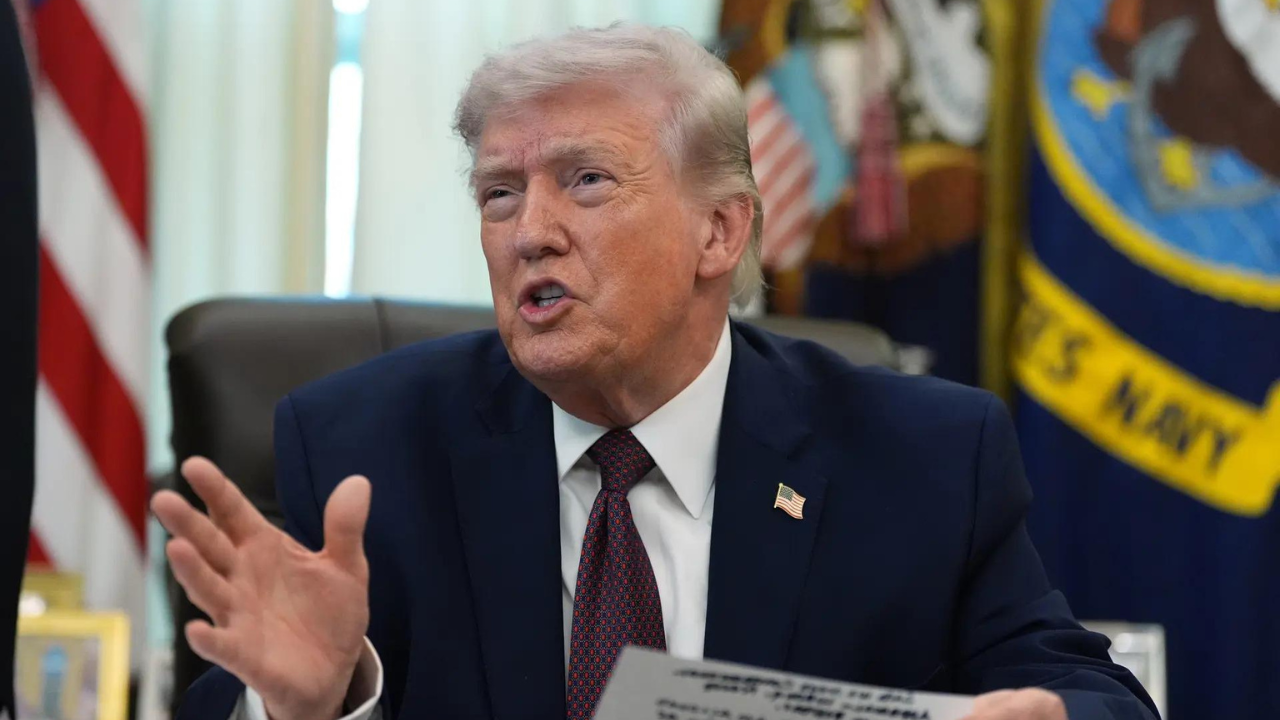
The white-knuckle standoff in the Persian Gulf has shifted from active bombardment to a volatile, high-stakes game of chicken. President Donald Trump’s last-minute agreement to a two-week ceasefire with Tehran on April 7, 2026, was not a sudden outbreak of pacifism, but a calculated pivot born from a grim realization: the U.S. military could destroy Iranian infrastructure, but it could not easily force open the world’s most critical maritime artery.
Despite the temporary silence of the guns, the threat of "bigger, better shooting" remains the administration’s primary diplomatic tool. Trump’s warnings on Truth Social make it clear that the U.S. fleet remains in a "hair-trigger" posture. The core of this crisis isn't just about regional hegemony; it is a desperate attempt to untangle a global economic knot that has seen Brent crude surge past $100 a barrel and left 2,000 ships stranded in a geopolitical dead zone.
The Illusion of Victory and the Hormuz Trap
For six weeks, Operation Epic Fury pounded Iranian targets. Defense Secretary Pete Hegseth claimed the Iranian military was "combat ineffective," yet the Strait of Hormuz remained a graveyard for global trade. This is the central paradox of the conflict. You can sink a navy and crater an airfield, but you cannot "bomb" a waterway into being safe for commercial insurance.
Iran’s leverage was never its ability to win a conventional war; it was its ability to make the Strait of Hormuz uninsurable. By sowing mines and utilizing mobile missile batteries, Tehran effectively locked the door to 20% of the world’s oil supply. Trump’s initial "annihilation" rhetoric met the cold reality of a global supply chain that was beginning to fracture. The two-week truce, brokered by Pakistan, is less a peace treaty and more a tactical pause to see if the Iranian leadership—now operating under a decimated command structure following the early-war strikes—can actually deliver on a reopening of the waterway.
The Nuclear Wildcard and the "Dust" Agreement
One of the most startling claims from the Oval Office involves the "Nuclear Dust" agreement. Trump has asserted that the U.S. is working with Iran to remove nearly 1,000 pounds of enriched uranium. However, intelligence veterans and international monitors are skeptical. Removing high-grade nuclear material during a hot war is a logistical nightmare, and there is zero evidence that the Iranian "10-point proposal" includes the total surrender of their nuclear program.
The administration’s insistence on "complete and total regime change" has also softened into a more transactional demand for "the real agreement." This shift suggests that the U.S. has recognized the high cost of a "forever war" in the Iranian interior. Occupation was never on the table, and the threat to destroy "an entire civilization" drew unprecedented condemnation from allies and even domestic supporters.
The Economic Cost of Brinkmanship
The financial markets have reacted with violent swings. While the ceasefire news initially saw oil prices dip 13%, the market remains skeptical. Goldman Sachs analysts have warned that if the Strait does not see a "complete, immediate, and safe opening" by the weekend, Brent crude will likely average $100 for the remainder of 2026.
The damage is already systemic:
- Stranded Seafarers: Approximately 20,000 sailors are currently trapped on vessels within the Gulf.
- Insurance Blackouts: Marine insurers have effectively withdrawn coverage for the region, meaning even a "clear" Strait won't see traffic until security guarantees are ironclad.
- Infrastructure Decay: U.S. strikes on Kharg Island have crippled Iran’s ability to export its own oil, even if the lanes open, removing millions of barrels from the daily global tally.
The Separate Skirmish in Lebanon
A major flaw in the current ceasefire is its narrow scope. Prime Minister Benjamin Netanyahu has been explicit: the deal between Washington and Tehran does not include Lebanon. As U.S. and Iranian officials prepare to meet in Pakistan, Israeli jets continue to strike Hezbollah targets in Tyre and southern Lebanon.
This creates a dangerous "escalation ladder." If Iran feels its primary proxy is being dismantled while its own hands are tied by a ceasefire, the temptation to "accidentally" strike a tanker in the Strait or allow a "rogue" militia to fire a drone remains high. The Pakistani mediators have suggested the truce is comprehensive, but the reality on the ground in Beirut says otherwise.
The Shooting Warning and the Path Forward
Trump’s rhetoric—threatening to resume "shooting" if the Strait isn't fully operational—serves a dual purpose. It satisfies a base that demands strength, but it also signals to the global energy market that the U.S. is willing to assume the role of a maritime policeman, even if it means violating centuries-old norms of free navigation.
There is even talk of the U.S. and Iran entering a "joint business" arrangement to collect transit fees, a move that would fundamentally alter international maritime law. This is the "transactional" Trump at work: turning a war zone into a toll booth. Whether the Iranian leadership, battered but still defiant, will accept such a humiliation in exchange for the survival of their remaining infrastructure is the question of the month.
The next 96 hours will determine if this is the start of a new regional order or merely the eye of a much larger storm. If tankers do not begin moving through the Traffic Separation Scheme by Sunday, the "Power Plant Day" threats will likely return to the President’s social media feed, and the fragile peace will evaporate before the ink on the Pakistani memo is dry.
The military objective was to defang Iran; the economic reality is that a muzzled dog can still block the door.


