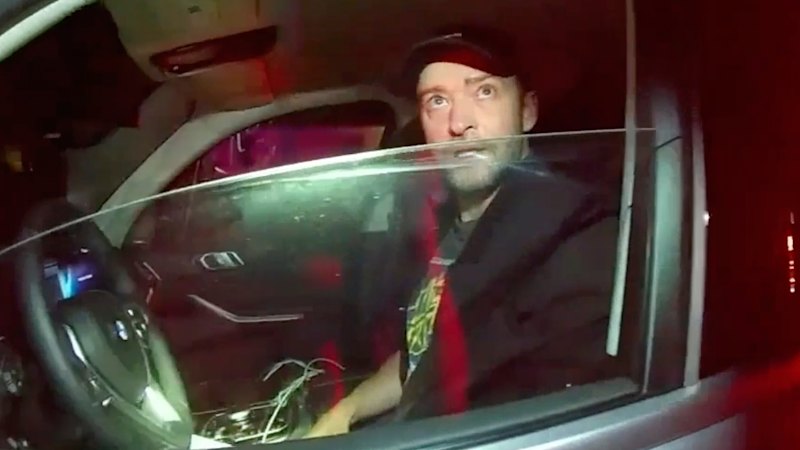
The arrest of a high-profile individual for driving under the influence (DUI) typically generates a media cycle focused on reputation damage and celebrity narrative. This focus obscures the underlying mechanical and physiological data points that determine the legal outcome of such encounters. A roadside stop is not a conversation; it is a systematic data collection process governed by the National Highway Traffic Safety Administration (NHTSA) Standardized Field Sobriety Test (SFST) battery. Understanding the efficacy of these tests requires a breakdown of the three-pronged sensory-motor evaluation designed to detect the physiological signatures of Central Nervous System (CNS) depressants.
The Tripartite Failure Mechanism
The SFST is a diagnostic tool consisting of three specific tests: the Horizontal Gaze Nystagmus (HGN), the Walk-and-Turn (WAT), and the One-Leg Stand (OLS). These are validated through a "probability of impairment" matrix rather than a binary pass-fail switch. Discover more on a similar topic: this related article.
1. Horizontal Gaze Nystagmus (HGN)
The HGN is the most statistically reliable component of the battery, with an estimated 88% accuracy rate in detecting blood alcohol concentration (BAC) at or above 0.08%. Nystagmus is an involuntary jerking of the eyeball that occurs naturally as the eye gazes to the side. Under the influence of alcohol, this jerking becomes pronounced and occurs at lower angles of deviation.
The officer looks for three specific clues in each eye: Further reporting by NPR explores related views on this issue.
- Lack of Smooth Pursuit: The eye "rachets" or jumps while following a moving stimulus rather than gliding.
- Distinct and Sustained Nystagmus at Maximum Deviation: The jerking is clearly visible when the eye is held at the outer limit for four seconds.
- Onset of Nystagmus Prior to 45 Degrees: The eye begins to jerk before reaching a 45-degree angle, which correlates strongly with high BAC levels.
Because this is an involuntary neurological response, it cannot be "gamed" through willpower or athletic ability, making it the primary objective data point in police footage.
2. Divided Attention Tasks: WAT and OLS
While the HGN measures neurological signals, the Walk-and-Turn and One-Leg Stand measure "divided attention." Impairment manifests as an inability to process mental instructions and physical motor movements simultaneously.
The Walk-and-Turn test involves nine heel-to-toe steps along a straight line, a turn, and nine steps back. The "cost function" of this test is high because it requires the brain to manage:
- Instructional Stage: Maintaining a restrictive stance while listening to complex directions.
- Walking Stage: Balancing while executing precise motor movements and counting out loud.
Failure occurs when the subject exhibits two or more of eight specific clues, such as starting before instructions are finished, losing balance during the turn, or failing to touch heel-to-toe.
The One-Leg Stand requires the subject to hold one foot approximately six inches off the ground while counting by thousands (one-thousand-one, one-thousand-two) until told to stop. This evaluates both the inner ear’s vestibular system and the cognitive load of rhythmic counting.
Physiological Variables and the False Positive Margin
A rigorous analysis must acknowledge that "hard tests" are not exclusively hard because of alcohol. The SFST battery assumes a "standard" human body, which introduces variables that can mimic impairment.
- Orthopedic Interference: Back, leg, or inner ear injuries directly degrade performance on the WAT and OLS. A subject with a history of meniscus tears or chronic lower back pain will struggle with the "heel-to-toe" requirement regardless of sobriety.
- Environmental Stressors: Roadside conditions are rarely optimal. Sloping pavement, wind, high-intensity strobe lights from patrol cars, and passing traffic create a "noise" floor that can interfere with a subject's vestibular focus.
- Age and Body Mass: NHTSA guidelines note that individuals over 65 years of age or those 50 pounds or more overweight may have inherent difficulty with the balance-based portions of the battery.
In the case of Justin Timberlake, the refrain that the tests were "hard" reflects a subjective reaction to a high-stakes cognitive load. However, from a forensic perspective, the difficulty is the point. The tests are designed to exceed the cognitive threshold of an impaired brain.
The Sequential Logic of a DUI Arrest
The arrest process follows a cascading logic gate. Each stage provides the "probable cause" necessary to move to the next, more invasive stage of testing.
Phase One: Vehicle in Motion
The observation of "operational cues" such as weaving, drifting, or delayed reaction at traffic signals. This establishes the initial suspicion.
Phase Two: Personal Contact
The officer looks for "sensory cues" including the odor of alcoholic beverages, bloodshot eyes, and slurred speech. This phase determines if the subject will be asked to exit the vehicle.
Phase Three: Pre-Arrest Screening
The administration of the SFSTs. If the subject "fails" the HGN and exhibits multiple clues on the WAT, the probability of impairment reaches a legal threshold for arrest. At this point, the subject is typically asked to submit to a chemical test (breath, blood, or urine).
The Strategic Function of Refusal
In many jurisdictions, a subject may refuse the chemical test. This is a high-stakes legal calculation. Refusal denies the prosecution the "gold standard" of evidence—a quantified BAC number. However, this refusal triggers "implied consent" penalties, usually resulting in an automatic administrative license suspension.
From a defense strategy standpoint, a refusal shifts the burden of proof back to the subjective interpretation of the officer and the video footage of the SFSTs. If the video shows the subject performing reasonably well despite the officer's claims of failure, the "reasonable doubt" margin widens. Conversely, if the video shows obvious staggering or an inability to follow basic syntax, the refusal of a breathalyzer may be interpreted by a jury as consciousness of guilt.
Modernizing the Protocol: The Rise of ARIDE and DRE
As the consumption of non-alcoholic intoxicants (cannabis, prescription stimulants, or narcotics) increases, the standard SFST battery faces limitations. Alcohol is a classic CNS depressant with predictable effects on eye movement. Other substances may not cause HGN but will severely impact cognitive timing and pupil dilation.
Law enforcement is increasingly utilizing ARIDE (Advanced Roadside Impaired Driving Enforcement) and DRE (Drug Recognition Expert) protocols. These involve:
- Vertical Gaze Nystagmus (VGN): Checking for up-and-down jerking, often associated with high doses of alcohol or certain drugs.
- Lack of Convergence: The inability of the eyes to cross when following a stimulus toward the bridge of the nose.
- Modified Romberg Balance Test: Estimating the passage of 30 seconds with eyes closed and head tilted back, measuring internal clock distortions.
The Biological Reality of "One Martini"
A common defense in high-profile cases is the "minimal consumption" claim. However, the rate of metabolism is a fixed biological constraint. The average human body metabolizes alcohol at a rate of approximately 0.015% BAC per hour.
| Variable | Impact on Impairment |
|---|---|
| Weight | Higher body mass provides more water to dilute alcohol, lowering BAC. |
| Stomach Content | Food slows the absorption of alcohol into the bloodstream but does not stop it. |
| Duration | Spacing drinks over four hours creates a different peak BAC than consuming them in one hour. |
If a subject claims to have had "one martini" but fails the HGN and displays "nystagmus prior to 45 degrees," the biological data contradicts the verbal testimony. The HGN does not lie, even if the subject believes they are acting sober.
Analyzing the Video Evidence
When evaluating police footage of a celebrity arrest, the viewer should ignore the emotional cues—the pleading, the frustration, or the "do you know who I am" tropes. Instead, focus on the Technical Fail Points:
- The "Start" Command: Did the subject begin the test before the officer finished the instructions? (Indicates poor impulse control/cognitive impairment).
- The "Turn" Mechanics: Did the subject pivot as instructed, or did they lose balance and take extra steps?
- The "Count": Did the subject miss numbers or stop counting?
These are the metrics that will be debated in a suppression hearing. If the officer deviated from the strict NHTSA phrasing or administered the test on an uneven surface, the entire evidentiary value of the footage can be challenged.
The legal reality for Timberlake, or any individual in this position, rests on the intersection of neurological data and procedural perfection. The "hard" nature of the tests is a deliberate feature of a system designed to exploit the diminished cognitive bandwidth of an impaired brain.
The most effective defense strategy in these cases is not to argue that the subject was "sober," but to demonstrate that the environmental or physiological variables created a "false positive" on a test that is fundamentally a laboratory experiment conducted on the side of a highway.
Would you like me to analyze the specific legal precedents for challenging HGN results in a high-profile DUI defense?